
Chuan Grove Review 2026: From S$2.07m, 550 Units
Chuan Grove guides S$2,300-2,600 psf into a D19 resale band of S$2,024-2,470. In a finished Serangoon estate, the premium buys a lease and a wait.
By Invest Singapore Editorial · Updated August 27, 2026 · 9 min read
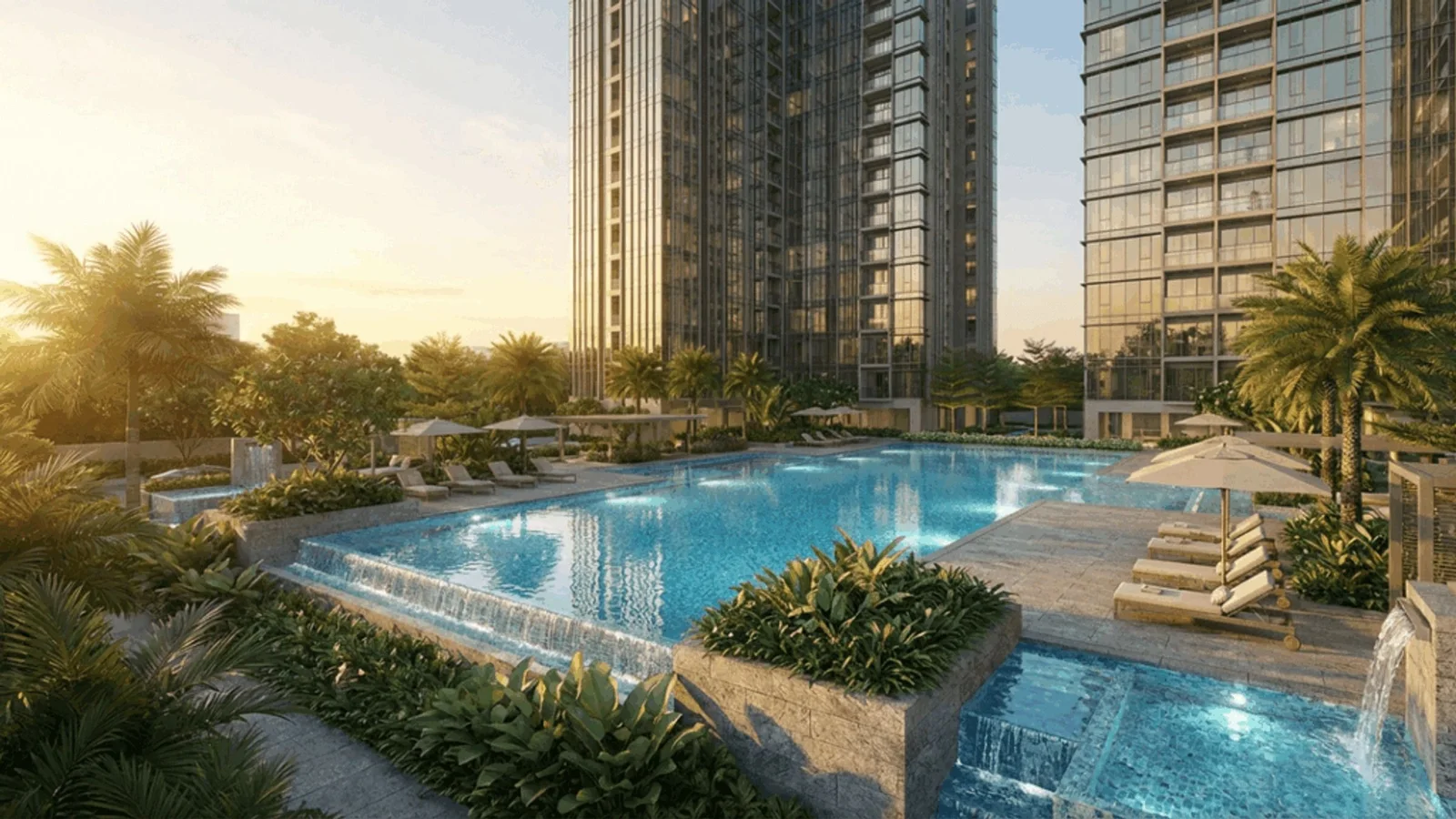
Quick answer: Chuan Grove is 550 units on the former Chuan Grove tender site at Lorong Chuan, guiding S$2,300 to S$2,600 psf for completion around 2030. In a mature Serangoon estate that guide runs straight into the D19 resale band of S$2,024 to S$2,470, so the premium a buyer pays here purchases a new lease and a four-year wait, and very little else.
The bands overlap
| Reference | psf (S$) |
|---|---|
| Chuan Grove launch guide | 2,300 - 2,600 |
| D19 resale, 2025-26 | 2,024 - 2,470 |
| OCR average, 2026 | 1,725 - 2,210 |
Read the first two rows against each other. From S$2,300 to S$2,470 the launch and the resale market are quoting the same money. A buyer at the bottom of Chuan Grove’s range is not paying a new-launch premium at all; they are paying an ordinary Serangoon price for a unit that will not exist for four years.
That is unusual and it deserves to be the headline rather than a footnote. It does not make the project bad. It makes the decision unusually clean, because the two options are priced closely enough that the comparison is about what you get rather than about what you can afford.
What four years costs, stated plainly
The honest way to frame this is as a trade with two known sides.
What the buyer gives up: occupation from now until around 2030, and the rent or the housing they would otherwise have had in that period. For an investor that is four years of yield forgone on capital already committed through progressive payments. For an owner-occupier it is four more years of whatever they are living in now.
What the buyer receives: a lease that starts at 99 years instead of one that has already run for a decade or two, a new building with a defects liability period, and current specification. In a district where financing and CPF rules will not trouble a lease for many decades, the first of those matters least in the short run and most in the long one.
There is no third item on that list, because Serangoon does not have one. In a precinct under construction the buyer would also be receiving a location that improves. Here the location is finished, and it is finished for the resale stock too.
What the Circle Line position is worth
Lorong Chuan sits on the Circle Line with Serangoon interchange close by, and that is a genuinely strong transport position: the Circle Line reaches the fringe of the central area without passing through it, and the interchange adds the North East Line for direct access into town.
The point to be careful about is that this is an estate-level advantage, not a project-level one. Every completed condominium within the same walk enjoys the identical connection, and has enjoyed it for years. It is already inside the S$2,024 to S$2,470 resale band, which is precisely why that band is where it is. A buyer paying the launch premium is not buying the Circle Line; the Circle Line is the reason the alternative costs what it costs.
That distinction matters at resale as much as at purchase. A future buyer comparing this development against a neighbouring one will find transport identical on both sides and will decide on the building: the layout, the condition, the facilities, the remaining lease. The launch’s advantage on the fourth of those is real and it decays slowly, which is the honest long-run case for paying the premium here.
Five hundred and fifty units in a settled estate
Serangoon is a mature town and mature towns absorb new supply differently from developing ones. There is no precinct filling up, no wave of incoming households, no employment centre opening nearby. Demand is a steady replacement flow: families upgrading within the estate, households moving to be near relatives, and buyers priced out of the central regions who want an established address.
Into that steady market the project introduces 550 units at once, around 2030. That is a meaningful addition to a district where new completions are occasional rather than continuous, and the whole of it reaches the resale and rental markets in the same period.
For an owner-occupier the effect is limited to the first year or two of neighbourhood churn. For an investor it is the central timing question: the first leasing window will be the most competitive one this development ever has, because it is the only moment when 550 identical-age units are available simultaneously. Underwriting a yield on stabilised assumptions skips exactly the period the buyer will actually live through.
Why a mature estate is the hardest place to sell a launch
| New precinct | Mature estate like Serangoon | |
|---|---|---|
| The buyer’s alternative | Other launches, all completing later | Completed stock, viewable and occupiable now |
| What the premium buys | Lease, building, and a location that changes | Lease and building only |
| How the comparison is made | On plans and forecasts | On a viewing, this weekend |
The third row is the one that matters most in practice. A buyer here can walk into the competing product. They can see the ceiling heights, the actual view from the actual floor, the state of the common areas and the way the estate feels at 7pm on a Tuesday. No showflat competes with that on equal terms, and no brochure forecast survives it.
That cuts both ways. If the completed stock is tired, the new building wins the comparison on its merits and the small premium looks like good value. If it is well maintained, the launch has to justify four years and a similar price against something the buyer can have immediately.
What is missing from the file
The launch material available for this page does not name a developer. For 550 units and a 2030 completion, that is the counterparty whose balance sheet finishes the building and whose team handles defects afterwards. It should be established in writing before a booking fee, alongside their completed projects and delivery dates.
The overlap this page describes is worth a few hundred psf. Foreign ownership is worth S$1,242,000 against the S$2,070,000 floor, at the 60% additional buyer’s stamp duty tier and before buyer’s stamp duty, which settles which number a non-resident should model first. The ABSD guide has the tiers and the remission order the five treaty nationalities.
The opposite case in the same region, a new estate where the competing product is other launches rather than resale, is Lentor Gardens Residences. Booking procedure is in the new launch guide, how the outer regions are classified at all in the CCR, RCR and OCR guide, and the four-year penalty for leaving early in the seller’s stamp duty ladder.
The test to apply is simple and it can be done in an afternoon. View three completed condominiums within the same walk, at the same price per square foot the launch is asking, and decide whether the new building is worth four years and a marginally higher number than any of them. If it is, the premium here is well earned. If two of the three feel like better homes today, the overlap in the tables above has already told you the answer.
The developer question deserves one final line, because it is the only variable on this page that a buyer cannot research from public transaction data. Everything else here: the resale band, the station, the estate, the overlap, is observable. Who is building the thing is not, until somebody puts it in writing, and on a purchase where the premium over walk-in stock is this thin, the identity of the party responsible for the building’s quality is a disproportionate share of what the premium is supposed to buy.
Frequently Asked Questions
Barely, and that is the point. The launch guides S$2,300 to S$2,600 psf while D19 resale over 2025 and 2026 ran S$2,024 to S$2,470. The two bands overlap between S$2,300 and S$2,470, so at the bottom of the launch range a buyer is paying resale money, and at the top, paying a premium of only a few hundred psf over stock they could occupy immediately.
A fresh 99-year lease and a wait until around 2030. In a mature Serangoon estate that is close to the entire list. The station, the mall, the schools and the bus network already exist and already serve the completed condominiums the buyer is choosing between, so the new project adds a new building rather than a new location.
Because the alternative is real and available today. In a new precinct a buyer comparing launches is choosing between things that will all exist in 2030. Here the competing product can be viewed this weekend, inspected, and moved into next month, which makes the four-year wait a cost the buyer can price precisely rather than an abstraction.
Indicated entry runs from about S$2,070,000 to S$2,925,000 on a guide of S$2,300 to S$2,600 psf, for 550 units on a 99-year leasehold title with completion indicated around 2030, on the former Chuan Grove government land sale site.
The launch material available for this page does not name a developer entity, describing it only as a joint venture consortium. On a 550-unit project funded through progressive payments to 2030 that identity should be obtained in writing, with a delivery record, before a booking fee is paid.
Circle Line access with Serangoon interchange nearby, which is a genuinely strong position and also one the surrounding resale stock already enjoys. It supports the estate's prices generally; it does not distinguish the new project from the buildings next to it.
Get your Singapore property shortlist
Share your budget and target region. We respond within one business day.