
Coastal Cabana EC Review 2026: From S$1.20m, 500 Units
Coastal Cabana is the cheapest entry in the pipeline and cannot be rented out: a five-year MOP from 2030 means no whole-unit rent until the mid-2030s.
By Invest Singapore Editorial · Updated August 27, 2026 · 9 min read
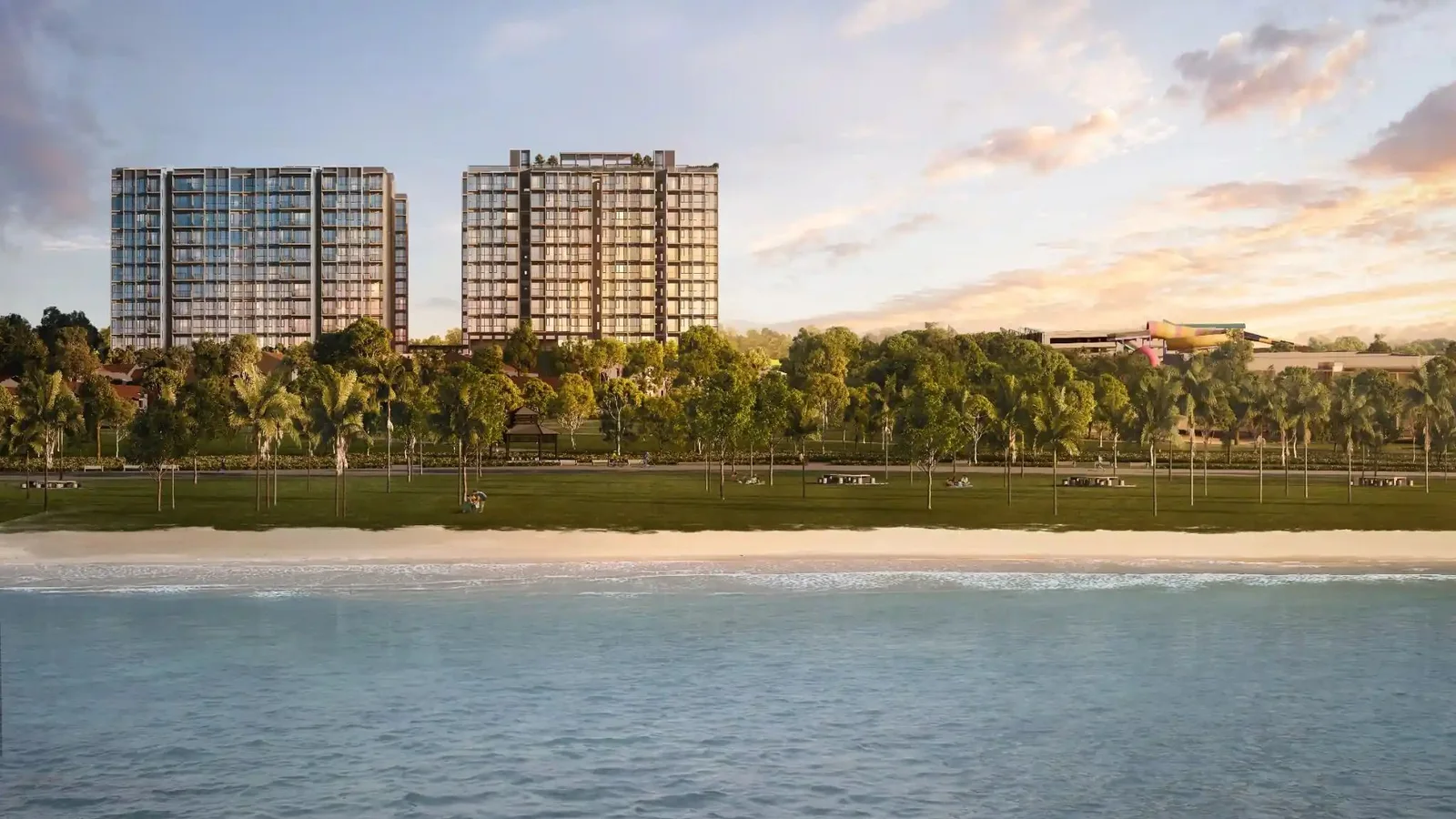
Quick answer: Coastal Cabana EC is 500 executive condominium units on the Loyang and Pasir Ris coast, from about S$1,200,000 at S$1,200 to S$1,400 psf, completing around 2030. It is the cheapest entry in this pipeline, and it is the one nobody can rent out: the five-year occupation period means no whole-unit rent until roughly 2035.
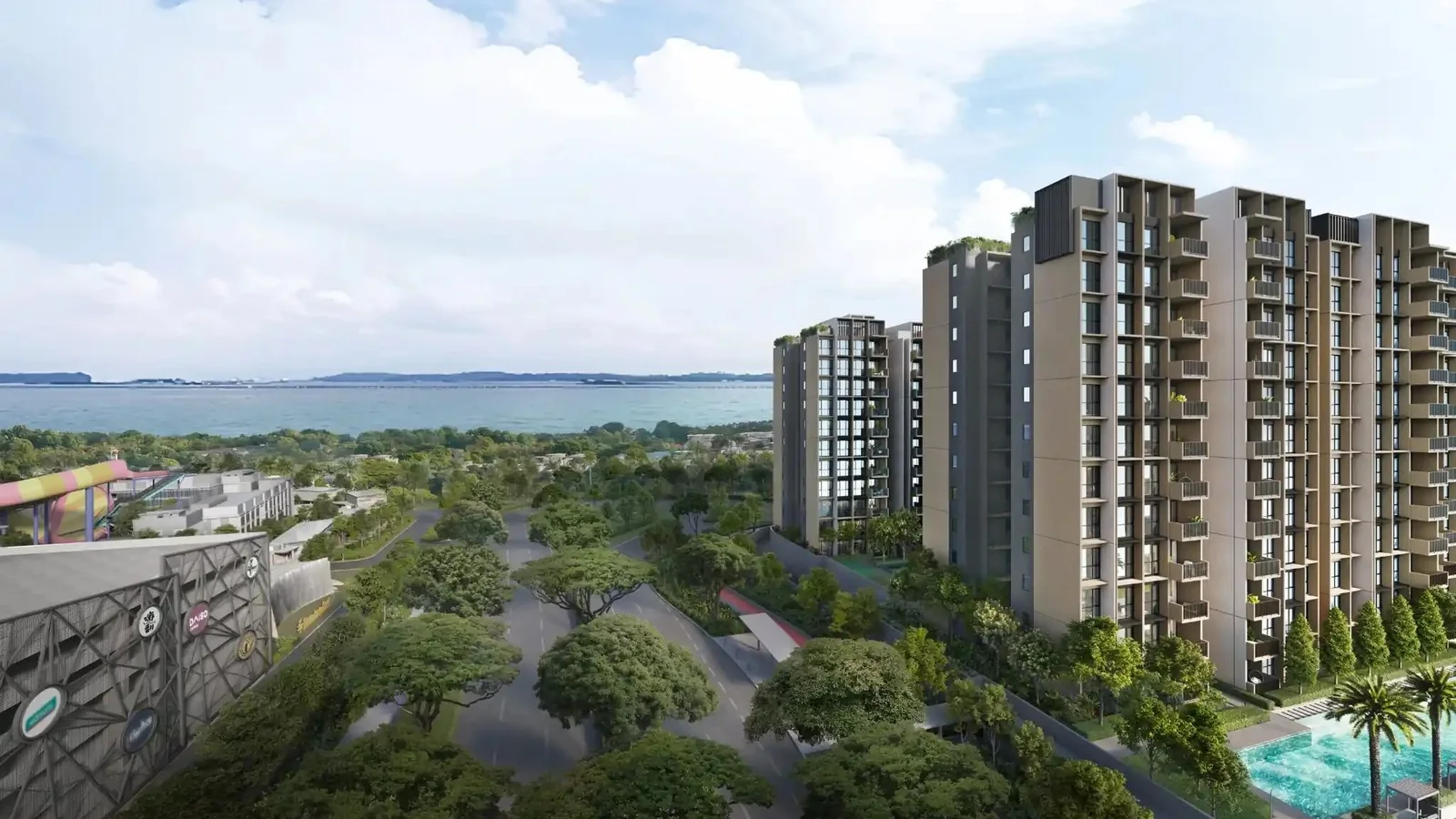
The restriction is the product
An executive condominium looks like a condominium and is built like one, with the same facilities, the same strata title and the same private developer. What differs is that it is sold under public housing eligibility rules and carries public housing restrictions for the first ten years of its life.
Those restrictions are not fine print. They are the reason the price is lower, and they define what an owner may do:
| Period from completion | What the owner may do |
|---|---|
| Years 0-5 | Live in it. The whole unit may not be let, and it may not be sold. Individual rooms may be rented. |
| Years 5-10 | Sell to Singapore citizens and permanent residents. Let the whole unit. |
| After year 10 | Fully privatised: sell to anyone, including foreign buyers. |
With completion indicated around 2030, an owner buying today reaches the first of those thresholds around 2035 and the second around 2040. That is the actual shape of the investment, and everything else on this page follows from it.
Why a yield figure here is meaningless
Launch material for executive condominiums routinely carries rental yield bands, because the template that produces the page is the same template that produces a private condominium page. For the first five years of ownership that number describes an impossibility.
The arithmetic is simple and worth doing explicitly. A buyer paying about S$1,200,000 today funds the purchase through progressive payments to roughly 2030, then holds an occupied home for five more years. Across that decade the asset produces no whole-unit rent at all. Whatever the gross yield band says, the cash flow from this apartment before the mid-2030s is negative by the amount of the mortgage, the maintenance and the property tax.
That is not a criticism of the product. It is a description of it. An EC is a subsidised route into private-style housing for Singaporean households who intend to live there, and the discount to comparable private stock is the compensation for the decade of restriction. The mistake is to buy it on private-condominium logic and then discover the logic does not apply.
Where the value is actually captured
The return on an EC arrives in two steps, both at the end.
Year five: the resale market opens. The buyer pool widens from nobody to Singapore citizens and permanent residents, and the unit begins trading against ordinary resale stock rather than being locked. Historically this is where EC prices reprice most sharply, because the discount that existed to compensate for illiquidity is no longer justified once the illiquidity ends.
Year ten: privatisation. The development leaves the public housing framework entirely and can be sold to foreign buyers on the same terms as any condominium. The pool widens again.
An owner who holds through both steps captures the entry discount and exits into an unrestricted market. An owner who needs to leave in year three cannot, at any price. There is no mechanism, no penalty payment and no hardship route that converts an EC into a liquid asset before its time.
What eligibility means at the door
Because the buyer pool at launch is restricted, so is the queue. Purchasers must form an eligible household under HDB rules: at least one Singapore citizen, a qualifying family nucleus, and a household income within the published ceiling.
Two practical points follow. First, this page cannot be a foreign-buyer page in the way the rest of the pipeline can. Additional buyer’s stamp duty at the foreign tier does not arise here because a foreign buyer cannot purchase the unit at all at this stage: a distinction worth stating plainly, because EC pages frequently carry foreign duty calculations copied from private launches, and those calculations describe a transaction that cannot happen.
Second, eligibility is assessed at application and it is a real filter. Households near the income ceiling, or whose composition changes between application and completion, should confirm their position with the relevant authority rather than with a marketing agent.
What the coast adds, and what it costs
The Loyang and Pasir Ris stretch is genuinely coastal and genuinely far. It offers beach and park access, a quieter residential character, and the lowest launch psf in this pipeline at S$1,200 to S$1,400 against a D17 resale band of S$1,056 to S$1,330.
The trade is journey time. This is the eastern edge of the island, and commuting into the central business district is a long trip by any mode. For a household whose work is in the east, or whose life is organised around the local schools and the coast, that is a good bargain and the price reflects it. For anyone commuting daily into town it is a decade-long imposition, and it will be equally unattractive to the resale buyer in 2035.
| Reference | psf (S$) |
|---|---|
| Coastal Cabana EC launch guide | 1,200 - 1,400 |
| D17 resale condominiums, 2025-26 | 1,056 - 1,330 |
| OCR average, 2026 | 900 - 1,190 |
| Ticket | From (S$) | To (S$) |
|---|---|---|
| 500 units, 99-year leasehold, ~2030 | 1,200,000 | 1,750,000 |
Financing an EC is a different exercise
The lending rules for an executive condominium differ from those for a private condominium in ways that shape affordability at the margin, and a household near the eligibility ceiling should check them before committing rather than after.
The mortgage servicing ratio applies. Repayments on the loan for an EC are capped at a proportion of gross monthly income that is tighter than the total debt servicing ratio used for private purchases, so two households with identical incomes can qualify for materially different loan amounts depending on which product they are buying. That cap binds hardest on exactly the households ECs are designed for: those with steady but not large incomes and existing commitments.
Progressive payments still apply, because the building has to be constructed. So the buyer commits at launch, draws down over roughly four years, and reaches full repayment obligations at around the same moment the occupation period begins. The peak monthly cost and the start of the five-year restriction arrive together, and a household that is stretched at that point has no letting option to fall back on.
The practical consequence is that an EC purchase should be underwritten on the assumption that the household lives there and services the loan from earnings alone for the entire first five years. That is the only scenario the rules permit, so it is the only one worth modelling, and the TDSR guide sets out how the ratios are computed and at what assessed rate.
What the 2030 completion means for the estate
Five hundred units completing together on a coastal edge produces the same concentration effect any large development does, with one difference that works in the buyer’s favour: because nobody may let a whole unit, there is no investor cohort listing simultaneously for rent at handover.
That removes the weak first leasing window that troubles private launches of this size. What it replaces it with is a different concentration, five years later, when the occupation period ends for everybody at once and a share of owners becomes free to sell or let in the same year. Whether that produces a soft patch depends on how many owners were waiting for the date rather than living for it.
A buyer can position for that. Holding past the year-five window and into privatisation avoids selling into the cohort, and it is the strategy the product’s structure rewards. Selling in the first months after the restriction lifts is the equivalent of listing at handover in a private development, and it is the one moment when the market will be thickest with sellers who look exactly alike.
Who should buy this
A Singaporean household that wants to live on the eastern coast for at least a decade, can meet the eligibility rules, and values the discount to private stock more than the flexibility it gives up. For that buyer the restrictions cost nothing they would have used, and the two step-ups at years five and ten are pure upside.
It is the wrong purchase for anyone who might need to move, who wants rental income before the mid-2030s, or who is buying on a yield figure. Before deciding, set the EC versus private condominium comparison and the CCR, RCR and OCR guide beside Rivelle Tampines EC, where the binding question is who may buy rather than what they may do afterwards, and read the purchase mechanics in the new launch guide. Then answer one question truthfully: where will this household be living in 2035? Every other judgement on this page follows from that one.
Frequently Asked Questions
Not the whole unit, and not for five years. An EC carries a minimum occupation period of five years from completion, during which the owners must live in it. Individual rooms may be let, but the whole apartment may not. With completion indicated around 2030, an owner buying now receives no whole-unit rent until roughly 2035.
For the first five years of ownership, nothing. Any gross yield quoted against a 2030 completion describes income that cannot legally be earned until the mid-2030s. The honest way to underwrite an EC is as an owner-occupied home with a resale step-up at the end of the restriction, not as a rental asset with a delayed start.
Eligible Singaporean households only. An EC is sold under HDB eligibility rules: at least one Singapore citizen, a qualifying family nucleus, and a household income within the published ceiling. Foreigners cannot buy at launch, and permanent residents can only buy from a resale seller after the five-year occupation period.
After five years it may be sold to Singapore citizens and permanent residents. After ten years from completion the development is fully privatised and may be sold to foreigners as well. Those two dates, not the launch price, are what shape the resale value of an EC.
Entry from about S$1,200,000 to S$1,750,000 on a guide of S$1,200 to S$1,400 psf, for 500 units on a 99-year leasehold title with completion indicated around 2030 on the Loyang and Pasir Ris coast. It is the lowest launch psf of any residential project in this pipeline.
It is half of it. ECs are priced below comparable private condominiums because of the restrictions, and the value is captured at the end of them rather than during. An owner who lives there for a decade collects both the discount at entry and the privatised market at exit. An owner who needs income or flexibility in between has bought the wrong product.
Get your Singapore property shortlist
Share your budget and target region. We respond within one business day.