
Hudson Place Residences Review 2026: From S$1.49m
Hudson Place guides from S$1,750 psf inside the Jurong Lake District, a masterplan that has not been built, sold by a developer that is not named.
By Invest Singapore Editorial · Updated August 27, 2026 · 9 min read
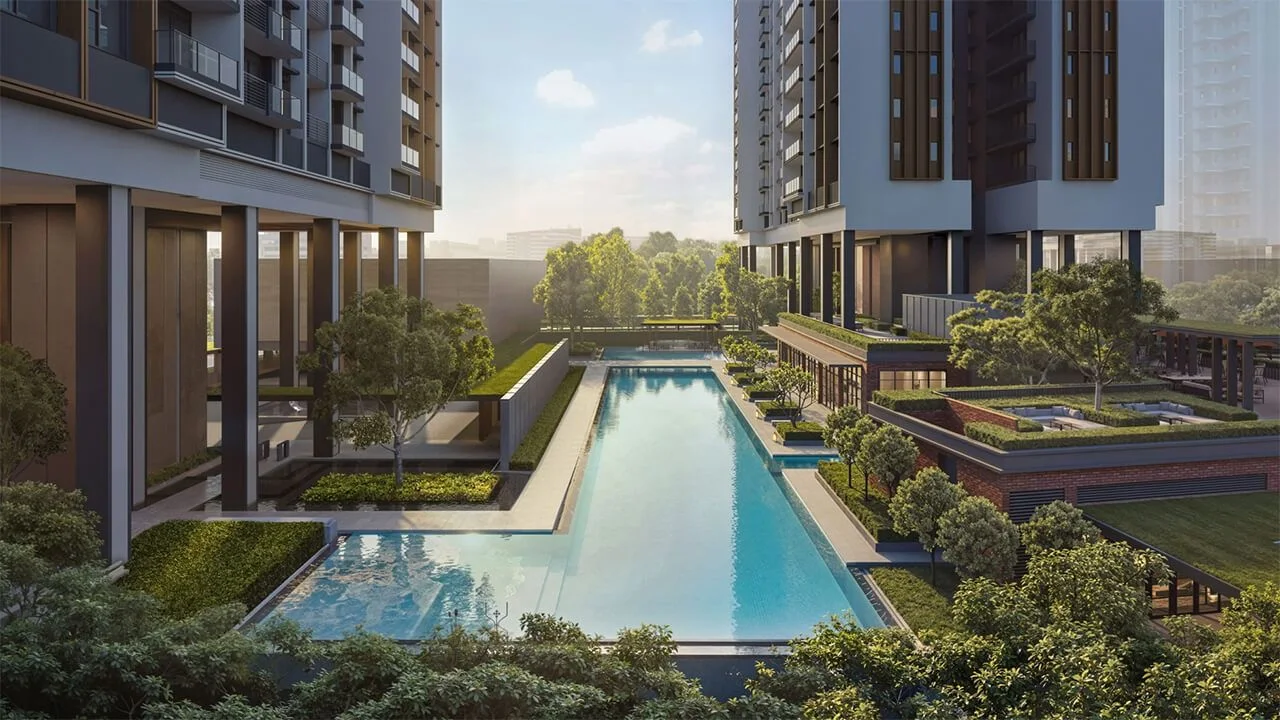
Quick answer: Hudson Place Residences guides from S$1,750 psf for 520 units at the Media Circle fringe of the Jurong Lake District, indicated for completion around 2030. Two things are missing from that sentence and both are the point: the precinct has not been built, and the developer has not been named.
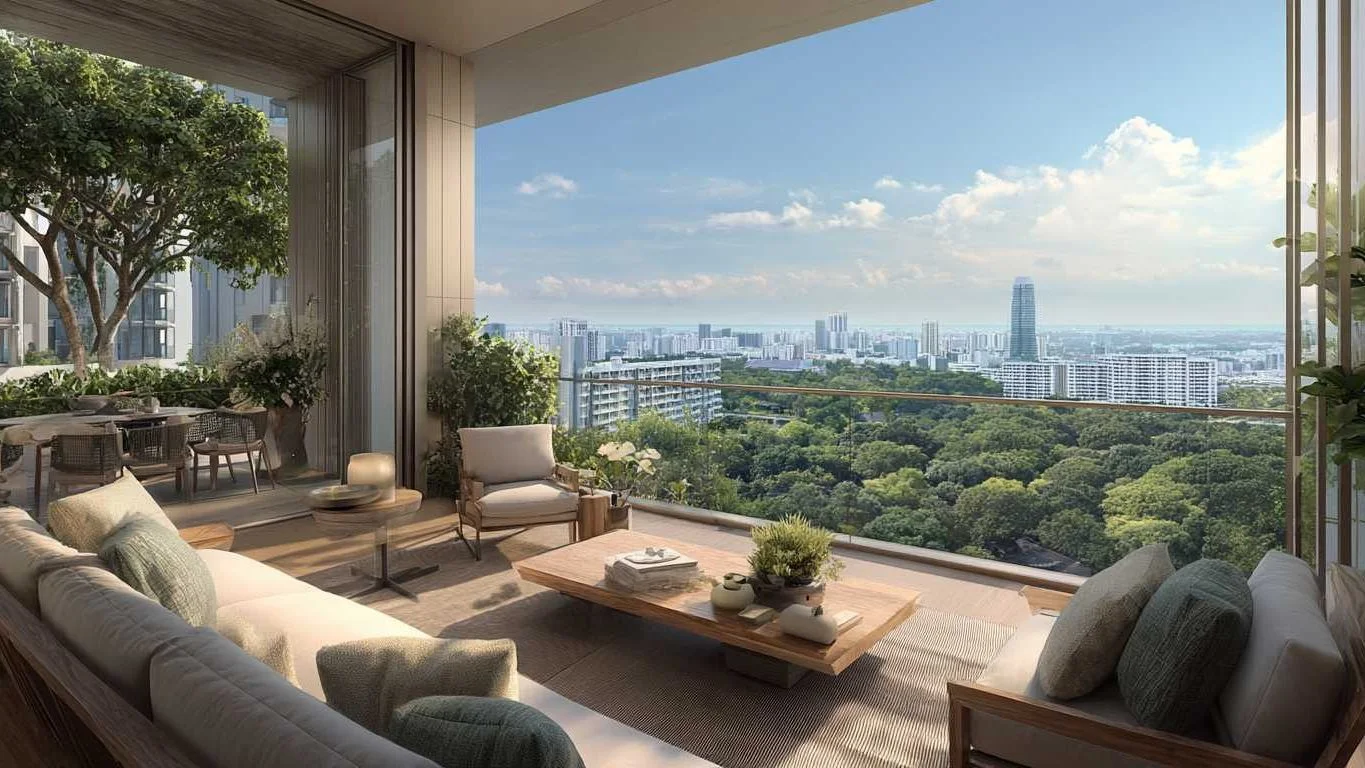
Who is the counterparty?
Every launch asks a buyer to pay for something that does not exist yet. What makes that reasonable is knowing who is obliged to build it. In the material available for this project the developer is described by location rather than by name, there is no company, no group, no listed parent recorded against 520 units and a 2030 completion.
That is not a small omission, because of how a Singapore new launch is actually funded. The buyer pays a booking fee, exercises an option, and then pays in stages against construction milestones for roughly four years. Across that period the buyer is an unsecured creditor of a construction programme. Three ordinary questions have no answer without a name:
- Whose balance sheet finishes the project if costs move?
- Whose defects liability team turns up after keys?
- Whose past completion dates can be checked against what was promised?
None of those can be researched from a placeholder. The first thing to obtain, before comparing psf with anything, is the identity of the developer in writing on the option documents.
What is actually there, and what is programmed?
The Jurong Lake District is the strongest argument for this address and it is entirely forward-looking. The plot sits on the Media Circle fringe of a precinct whose transport, commercial floorspace and public realm are planned rather than delivered.
| Element of the case | State today |
|---|---|
| The plot itself | Real, inspectable |
| Precinct commercial and institutional tenants | Programmed |
| Precinct public realm and connectivity works | Programmed |
| Nearby completed condominium stock to price against | Thin |
| Named developer | Not disclosed in launch material |
A buyer is not wrong to want this. Early positions in Singapore precincts have paid before, and by definition they are only available before the precinct exists. But the case has to be stated honestly: this is a bet on a public programme delivering inside a private hold period, and public programmes have no completion date a buyer can enforce.
Is the discount big enough for the bet?
Lucerne Grand, launching the same year in the same district, guides from S$1,800 psf at Lakeside, where the MRT station has operated since 1988, Jurong Lake Gardens is open, and City Developments Limited is named. Hudson Place guides from S$1,750.
The difference is S$50 psf, about 2.9%, or roughly S$45,000 on a 900 sq ft unit. That is what this market currently charges for the difference between infrastructure that exists and infrastructure that is drawn.
| Reference | psf (S$) |
|---|---|
| Hudson Place launch guide | 1,750 - 2,050 |
| Lucerne Grand launch guide, same district | 1,800 - 2,100 |
| D22 resale, 2025-26 | 1,540 - 1,948 |
| OCR average, 2026 | 1,313 - 1,743 |
Read the first two rows together. A 2.9% discount is thinner than the 8 to 15 percent that stack, floor and facing move effective psf within a single project. In other words the entire compensation for taking masterplan risk is smaller than the variation between two units in the same block. Either the market is confident the precinct arrives, or the discount has not been priced at all.
Note the third row as well: the launch floor of S$1,750 already sits above the D22 resale midpoint. Entry is not cheap in absolute terms. It is cheap only relative to a future that has to happen.
What tickets does that produce?
| Layout basis | From (S$) | To (S$) |
|---|---|---|
| Indicated entry range across layouts | 1,487,500 | 2,179,150 |
One number makes the masterplan debate academic for most overseas buyers. Additional buyer’s stamp duty at the foreign tier is 60%, so the S$1,487,500 entry carries S$892,500 of it before buyer’s stamp duty is added, assessed on the day the option is exercised, years before a single precinct milestone is delivered. The ABSD ladder is therefore the first document to read, ahead of any masterplan diagram. American, Swiss, Norwegian, Icelandic and Liechtensteiner buyers are assessed as citizens instead, by treaty.
Holding a masterplan position
If a buyer takes this position anyway, the useful question stops being whether the precinct arrives and becomes how to be solvent while waiting. Three things follow from the structure of the purchase rather than from any view about Jurong.
Progressive payments run on construction, not on the precinct. The instalment schedule is tied to building milestones, so a buyer funds the tower on the developer’s timetable regardless of what is happening around it. Financing has to be sized for that schedule with no assumption that the address improves in the meantime.
The hold period should outlast the programme, not match it. A precinct that delivers in stages produces value in stages, and the early stages are the least visible. A buyer whose horizon ends at the first completion window is exposed to exactly the period when the plot has neither the discount that attracted them nor the amenity that was supposed to replace it.
The exit is thinner than the entry. At launch the buyer competes with a marketing campaign and a show unit. At resale, in a district where comparable stock is scarce, they compete with a valuer’s difficulty in finding evidence. Thin comparables cut both ways, but they cut hardest against a seller in a hurry.
None of that is an argument against the purchase. It is the shape of the risk, and it is materially different from the risk at a conventional launch, where the location is a known quantity and the only open question is the building.
What would change the answer
This is a page about a project that is mostly still a proposition, so the honest closing is a list of things that would move it rather than a verdict.
- A named developer with a delivery record. This single disclosure converts the purchase from an unquantifiable counterparty risk into an ordinary one.
- Published precinct milestones inside your hold period. If the works that justify the address land after you intend to sell, they are somebody else’s upside.
- A wider discount. At 2.9% below the built alternative, the risk is not being paid for. At a materially wider gap it would be.
- Comparable completed stock nearby. Without it, there is no local resale evidence to price the exit against, only the launch itself.
The built alternative a kilometre away is Lucerne Grand, and reading the two pages together is the shortest way to see what the discount is for. Progress payments and option periods are explained in the new launch guide, the regional bands in the CCR, RCR and OCR guide, and the cost of leaving early in the seller’s stamp duty ladder.
Read plainly, this is a purchase where the two most important facts are both absent from the file: who builds it, and when the precinct around it arrives. Neither absence is disqualifying and both are ordinary at preview stage. What is not ordinary is paying only 2.9% less than the finished alternative next door for the privilege of carrying them, and that is the number a buyer should push on before anything else in the brochure.
Frequently Asked Questions
No developer entity is named in the launch material available for this page. The site sits inside the Jurong Lake District at the Media Circle fringe, 520 units are indicated, and pricing guides from S$1,750 psf, but the counterparty a buyer would be paying progressively for four years is not identified. That is a question to put in writing before a booking fee moves.
A 99-year leasehold unit indicated for completion around 2030, in a precinct that is largely still a plan. Entry runs from about S$1,487,500 to S$2,179,150 across the layouts. The Jurong Lake District rail, road and open-space works that make the location argument are programmed rather than delivered, so the purchase is an early position in a masterplan.
Lucerne Grand at Lakeside guides from S$1,800 psf, S$50 more, and its amenity already exists: the East-West Line station has run since 1988, Jurong Lake Gardens is open, and City Developments Limited is named on the title. The gap between an unbuilt precinct and a built one is therefore about 2.9%, roughly S$45,000 on a 900 sq ft unit.
Delivery on schedule and tenants who actually arrive. The Jurong Lake District case rests on offices, institutions and transport landing near the plot within the buyer's hold period. None of that is contractual, none of it is compensable if it slips, and the buyer carries the timing risk without a discount that reflects it.
The guide of S$1,750 to S$2,050 psf runs against a D22 resale band of S$1,540 to S$1,948 for 2025 and 2026, and an OCR average of S$1,313 to S$1,743. The launch floor is already above the resale midpoint, so the precinct has to arrive for the entry price to look retrospectively cheap.
The identity of the developer, in writing, before anything else: their accounts, their delivery record and their ability to finish a 520-unit project are the risk being carried through progressive payments. After that, the published Jurong Lake District delivery milestones, and whether they fall inside or outside the buyer's own hold period.
Get your Singapore property shortlist
Share your budget and target region. We respond within one business day.