
Vela Bay Review 2026: From S$1.45m, 480 Units
Vela Bay is 72% sold, so 134 units stay with the developer, the seller an early buyer competes against at resale. Plus a district the file got wrong.
By Invest Singapore Editorial · Updated September 23, 2026 · 9 min read
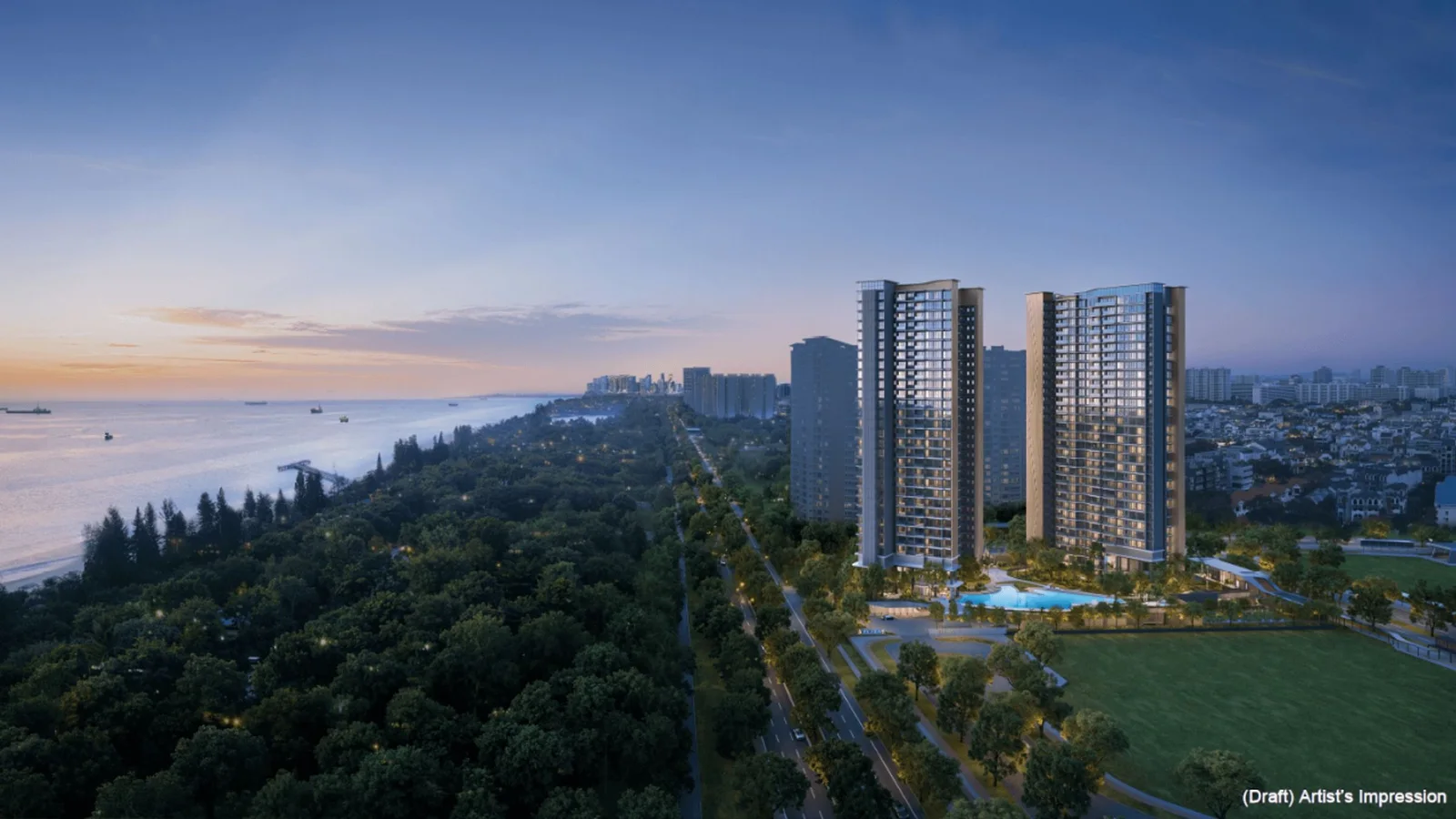
Quick answer: Vela Bay is a 480-unit leasehold project in Bukit Batok West, D23, guiding S$1,700 to S$1,900 psf for completion around 2029, about 72% sold with releases continuing. The consequence worth thinking about is that the remaining 28% is not leftover stock. It is the person an early buyer will be bidding against at resale.
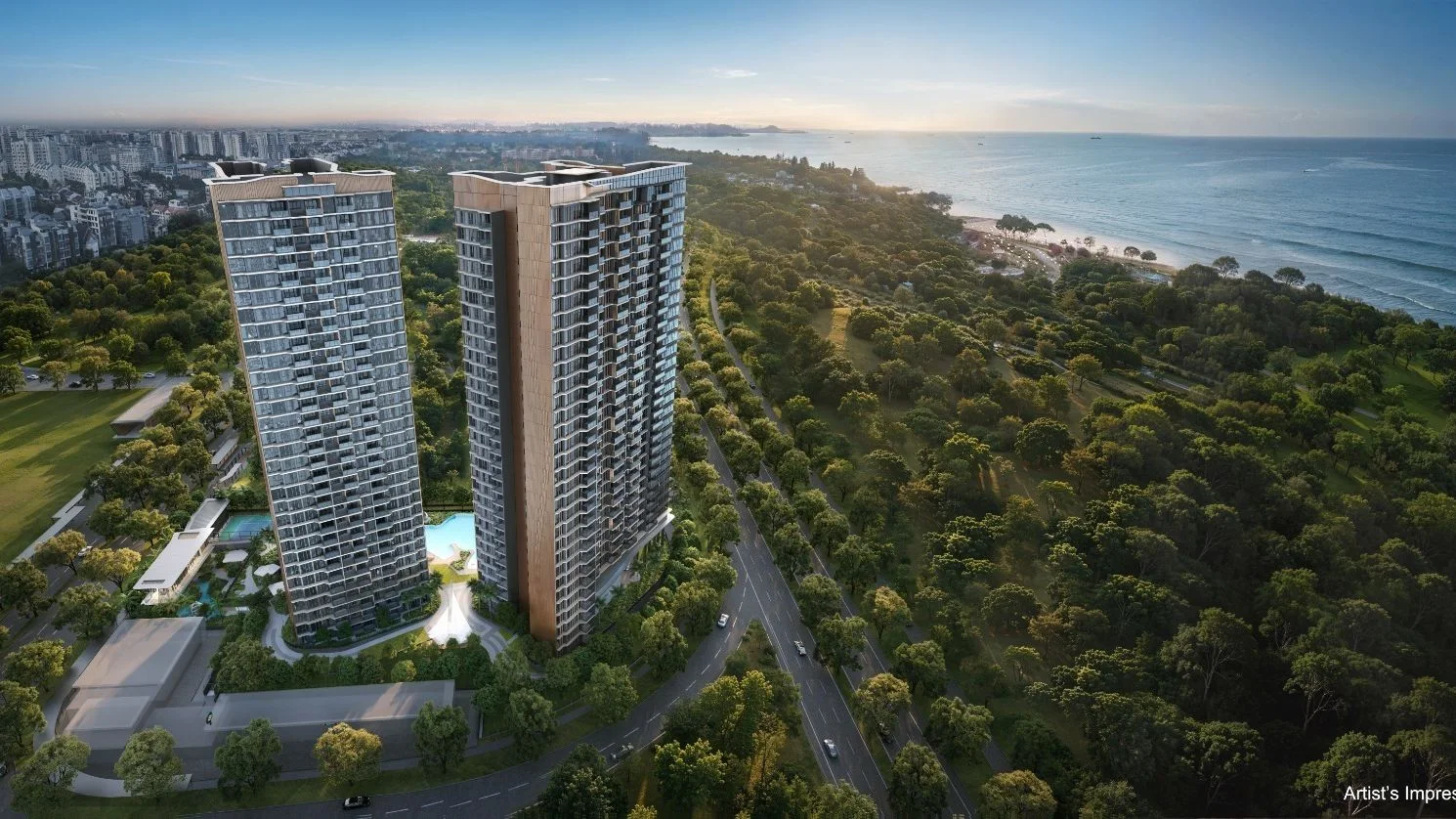
The seller across the table
Sales progress is normally read as sentiment: 72% sold sounds like a project the market likes. It is more useful read as a description of who else will be selling.
Roughly 134 units remain under the developer’s control, released over time. Completion is indicated around 2029, and the first owners looking to sub-sale will typically appear before then. At that moment the market for a unit in this development has two kinds of seller in it.
| The developer | An early buyer sub-selling | |
|---|---|---|
| Cost of waiting | Low; it is inventory | High; mortgage and holding costs |
| Stamp duty position | None on unsold stock | Possibly inside the SSD window |
| Sales apparatus | Show unit, agents, marketing budget | One listing |
| Ability to discount | Reprices the remaining stock | Reprices only that unit |
Only the last row favours the individual, and it is a weak advantage: cutting price is available to both, and the developer’s reluctance to do it visibly is precisely what keeps the list price standing as a public reference the individual cannot undercut without looking distressed.
What this means in practice, and what it does not
It does not mean the project is overpriced or poorly run. Ongoing release is ordinary, and a developer holding stock into completion is often a sign of disciplined pricing rather than weak demand.
It means one specific thing: the window in which an early buyer can exit at a profit is probably not before the developer has sold through. Two consequences follow for anyone underwriting this purchase.
- A sub-sale strategy needs the inventory count more than the sales percentage. Ask how many units, in which stacks, at what current prices.
- The developer’s pricing trajectory is your resale reference. If list prices have risen since launch, an early buyer has room. If they have not moved in a year, the reference is unchanged and there is no room to speak of.
For an owner-occupier none of this is decisive. You buy a home, you live in it, and the developer’s residual is somebody else’s problem.
What the west-region position actually is
Bukit Batok West sits toward the Jurong gateway, and that is the location argument in a sentence: it is close to the largest employment and commercial node being built outside the central area. Whether that is worth paying for depends on a distinction buyers in the west routinely skip.
Proximity to Jurong is not the same as being in Jurong. The employment, the retail and the transport investment are concentrated around the Jurong Lake District and Jurong East, and the value of a Bukit Batok West address is a function of how easily a household reaches them, which is a question about a specific bus route or a specific station walk, not about a district code or a compass direction. Two addresses a kilometre apart can have materially different answers, and the one with the worse answer is usually the cheaper one for exactly that reason.
The tenant pool follows the same logic. Renters in the west price the commute in minutes and transfers, because that is what they experience twice a day. A landlord underwriting a yield here should walk the journey once at 8am before believing any figure in a brochure, and should be aware that the units they compete with at completion will include a substantial block still held by the developer.
Four hundred and eighty units reaching one leasing market
Completion around 2029 delivers the whole development at once, and the arithmetic of that is worth doing before any rental assumption is accepted. If even a fifth of 480 units are bought by investors, that is close to a hundred apartments seeking tenants in the same quarter, in the same estate, with the same finishes and the same lease start.
A tenant in that market has an unusual amount of leverage and no reason not to use it. They can compare identical units, play landlords against each other, and wait a fortnight knowing that more listings will appear. First-year rents in a newly completed development therefore tend to sit below the stabilised level the project was marketed on, and the gap closes over two or three years as the investor cohort thins out and leases stagger.
The compounding factor here is the developer’s remaining inventory. Unsold units that complete unsold do not disappear; they are either sold to buyers who may also let them, or held and leased by the developer. Either way they arrive in the same window as everybody else’s.
For an owner-occupier none of that matters. For an investor it is the difference between the yield in the brochure and the yield in the first two years, and the honest way to underwrite it is to assume the weak window happens and to check the purchase still works if it does.
Where the price sits
| Reference | psf (S$) |
|---|---|
| Vela Bay launch guide | 1,700 - 1,900 |
| D23 resale, 2025-26 | 1,496 - 1,805 |
| OCR average, 2026 | 1,275 - 1,615 |
| Indicated entry across layouts | From (S$) | To (S$) |
|---|---|---|
| 480 units, 99-year leasehold, ~2029 | 1,445,000 | 2,019,700 |
The guide sits above the D23 resale band at its floor and clears it at the top, which is the conventional new-launch position and gives an early buyer little cushion. Overseas purchasers add additional buyer’s stamp duty at the 60% tier, S$867,000 against the S$1,445,000 entry and before buyer’s stamp duty: a charge the developer’s unsold units will carry for their next buyer too, which is part of why inventory of this kind clears slowly. The ABSD guide sets the tiers, and the remission order the five nationalities assessed as citizens.
A note on this page’s own data
Earlier versions of this page carried a title placing the project at Bayshore in D16. The file’s district field, its area, and every benchmark in it describe Bukit Batok West in D23, the west of the island rather than the east coast. The D23 west-region data is internally consistent and has been kept; the Bayshore reference has not. The genuinely coastal D16 parcel is a separate project, covered at Bayshore Road GLS.
The other D23 project, on the nature-reserve flank at Dairy Farm rather than the Jurong side, is Narra Residences. Booking procedure sits in the new launch guide, the west’s position against the central regions in the CCR, RCR and OCR guide, and the schedule that penalises an early sale in the seller’s stamp duty ladder.
The question worth putting to the agent is not how well the project is selling. It is how many units the developer still holds, in which stacks, and at what price they were last released. Those three answers describe the competitor an early buyer will actually face, and unlike almost everything else in a showflat conversation, they are matters of record rather than opinion.
One last practical note about the west. Bukit Batok West is served by the same regional employment story as every other project on this side of the island, and that story is genuinely strong: the Jurong node is the largest commercial development outside the centre and it is being built now. What varies between addresses is the distance to it, measured in minutes on a specific route at a specific hour. That measurement, taken personally rather than read from a map, is worth more than any comparison of launch guides.
Frequently Asked Questions
About 28%. The project was around 72% sold with releases continuing, which on 480 units leaves roughly 134 in the developer's hands. That inventory is the relevant competitive fact: an early buyer wanting to sub-sale before completion around 2029 is quoting against a seller who has more units, more patience and no mortgage.
Because the two sellers are not equal. An individual sub-sale seller has a loan, a stamp duty position and a timetable; the developer has a marketing budget, a show unit and no urgency. Where both are offering similar stacks, the buyer walks into the show unit. Remaining inventory is therefore a ceiling on early resale pricing, not just a statistic about sales progress.
In Bukit Batok West toward the Jurong gateway, in D23, according to the project's own district, area and benchmark data. Earlier page titles referred to Bayshore in D16, which is a different part of the island entirely; the D23 west-region data in the file is internally consistent and the Bayshore reference was not.
Indicated entry runs from about S$1,445,000 to S$2,019,700 on a guide of S$1,700 to S$1,900 psf, on a 99-year leasehold title with completion indicated around 2029. D23 resale over 2025 and 2026 ran S$1,496 to S$1,805 psf.
The launch material available for this page does not name a developer entity, describing it only as a west-region private developer. That is a material gap on a project where the same unnamed party still controls roughly 134 units and will be the buyer's direct competitor at resale.
The release schedule and the price history. How many units remain, in which stacks, at what prices, and how those prices have moved since launch. A developer releasing steadily at rising prices is a different competitor from one holding unsold stock at the original list.
Get your Singapore property shortlist
Share your budget and target region. We respond within one business day.