
Keppel Bay Plot 6 Review 2026: From S$2.56m, 320 Units
Keppel Bay Plot 6 is the only launch here with three completed comparables by the same developer on the same land. Price it off those, not the district.
By Invest Singapore Editorial · Updated August 27, 2026 · 10 min read
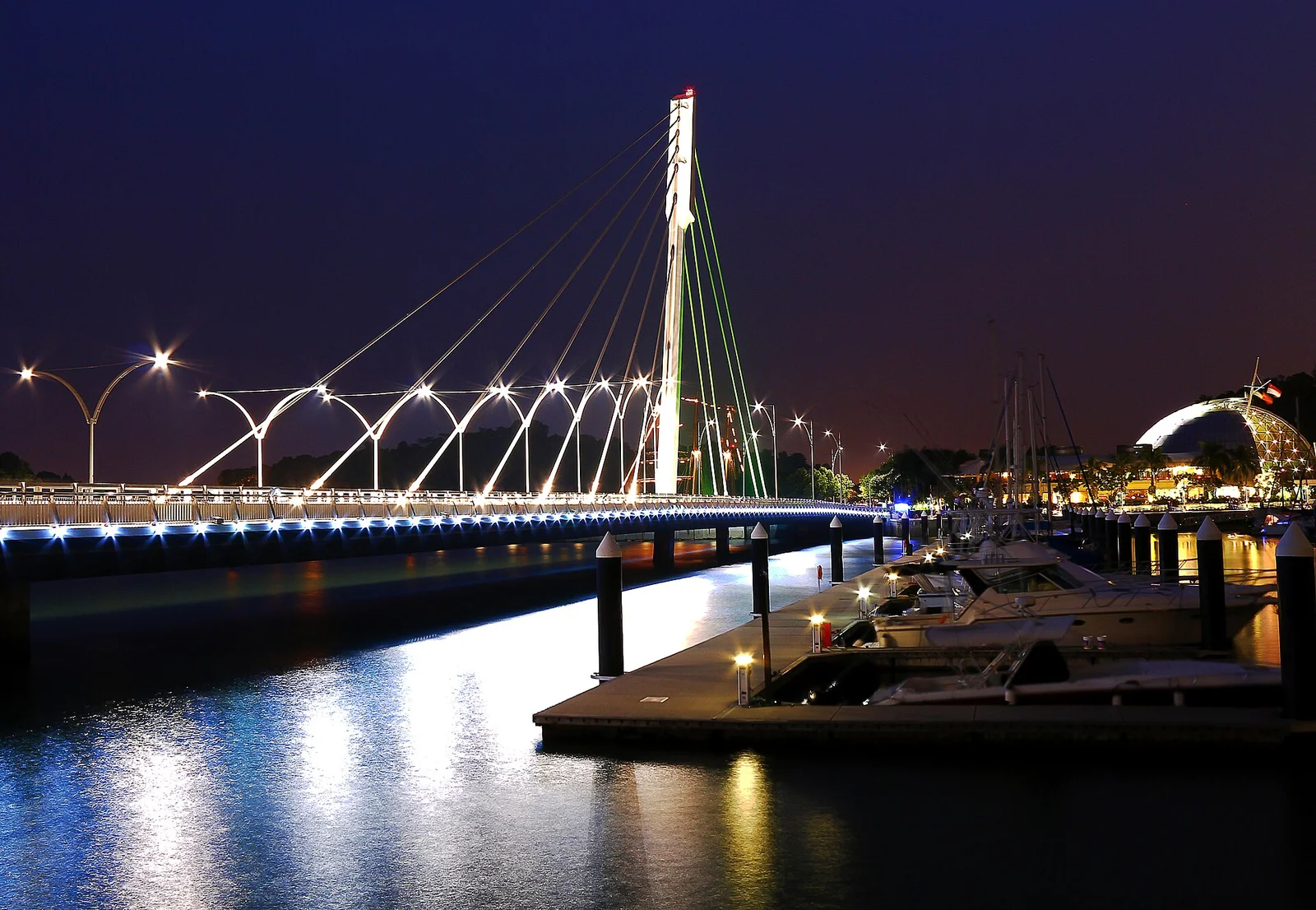
Quick answer: Keppel Bay Plot 6 is 320 units by Keppel Land on the last developable parcel of the Keppel Bay waterfront, guiding S$3,200 to S$4,200 psf from about S$2,560,000. Unusually for a launch, a buyer does not have to guess: the same developer built three phases on this same land, and all three still trade.
Three completed comparables, one developer, one site
The standard difficulty in valuing a new launch is that there is nothing quite like it nearby. Buyers are handed a district resale band, which is an average across buildings of different ages, developers, specifications and positions, and asked to judge a premium against it.
Keppel Bay is the exception. Keppel Land has developed this waterfront since the early 2000s, and the completed phases are still there and still trading:
| Phase | What it contributes to the comparison |
|---|---|
| Caribbean at Keppel Bay | The oldest phase: how the precinct’s earliest stock has held value over two decades |
| Reflections at Keppel Bay | The landmark phase, with the strongest architectural identity |
| Corals at Keppel Bay | The most recent boutique reference, trading around S$2,850 - S$3,450 psf |
That is a genuine resale curve on the same land, built by the same party, subject to the same management standards, the same marina, the same access. It answers questions a district average cannot: how quickly this waterfront’s stock ages, whether the premium at launch survives into resale, and what the market pays for the location once the newness has gone.
A buyer should insist on being shown it. Any agent selling Plot 6 has access to three phases of transaction history, and a pitch that reaches instead for a D4 average is avoiding the most informative evidence available.
What the scarcity claim is, precisely
Keppel Bay Plot 6 is described as the last developable parcel within the precinct, beside the marina. That is worth separating from the general scarcity language every launch uses.
It is a bounded claim about a defined site. The precinct has a perimeter; the plots inside it are known; when this one is built the supply of new Keppel Bay stock is finished. Future buyers who want to live there will be buying from an existing owner, in one of four developments.
That is the strongest form of the argument for paying a premium over the completed phases, and it is checkable rather than rhetorical. It also has a limit worth naming: scarcity of new supply is not scarcity of stock. Four developments’ worth of apartments exist and will keep coming to market as owners move, retire and rebalance. The precinct will not become illiquid because nothing new is built; it will simply stop growing.
Thin trading cuts both ways
A small, expensive, tightly held enclave transacts rarely. That has two consequences a buyer should price at purchase rather than discover at exit.
Price support. With few units changing hands and a buyer pool that specifically wants this location, sellers are rarely forced to compete. Prices tend to hold rather than to be discovered downward, and a patient seller usually finds their buyer.
Exit friction. The same thinness means a seller on a timetable has little leverage. If two owners list similar units in the same quarter, they are most of the market. A valuer working on financing for a prospective purchaser may find few recent transactions to support a number, which can slow or complicate a sale that would be routine elsewhere.
The practical reading is that Keppel Bay rewards owners who choose their moment and penalises those who cannot. That is a well-understood characteristic of prime enclaves and it should shape the holding plan rather than the purchase decision.
What the waterfront actually offers
The setting is the product here and it is worth being specific about what it delivers. This is a marina-side residential precinct on the southern waterfront, adjacent to HarbourFront and the approaches to Sentosa, with water frontage, berthing nearby and a quieter, more contained feel than the city-fringe alternatives at similar prices.
The buyer pool that responds to that is narrow and motivated. Households who want water and calm within a short drive of the central business district find very few alternatives in Singapore, and they will pay for the ones that exist. Households indifferent to the water find the same money buys more space or a better commute elsewhere, and they buy elsewhere.
Neither group is wrong. What matters for an investor is recognising that this asset’s demand is preference-driven rather than commodity-driven, so the relevant question at resale is not what D4 is doing but whether the specific waterfront buyer is active that year.
Four leases, one address
There is a further consequence of a precinct built in phases over two decades, and it is easy to miss because the address conceals it.
Caribbean was developed from the early 2000s, Reflections and Corals later, and Plot 6 will start its 99 years now. So the four developments will run their leases on staggered clocks, and by the 2050s the same waterfront will contain apartments with very different amounts of term remaining.
That has a practical effect on financing rather than on amenity. Bank valuations and the amount of CPF a purchaser may commit both tighten as the remaining lease shortens, most sharply where the term no longer covers the youngest buyer to age 95. When that threshold starts to bite on the earliest phase, its resale pool narrows to buyers who can fund a larger share in cash, while the newest phase is unaffected.
For a buyer of Plot 6 that is a tailwind, and it is part of what the premium over the Corals band is buying. For the comparison exercise recommended above it is also a caution: as the completed phases age, their transaction prices reflect a financing constraint this plot will not face for decades, and the two should not be read as like for like without adjusting for it.
Where the pricing sits
| Reference | psf (S$) |
|---|---|
| Keppel Bay Plot 6 launch guide | 3,200 - 4,200 |
| Corals at Keppel Bay resale, 2025-26 | 2,850 - 3,450 |
| Ticket | From (S$) | To (S$) |
|---|---|---|
| 320 units, 99-year leasehold | 2,560,000 | 5,040,000 |
The guide opens above the Corals band and runs well beyond it. Part of that is the fresh 99-year lease against a phase already some years into its own; part is the last-plot position. Deciding whether the whole gap is justified is exactly the exercise the sibling comparables make possible, and it is the single most useful hour a buyer can spend here.
The duty, on a high absolute ticket
Because entry runs to S$5,040,000, the duty at the foreign tier is correspondingly large: additional buyer’s stamp duty at 60% is S$1,536,000 on the S$2,560,000 floor and S$3,024,000 at the top of the range, in each case before buyer’s stamp duty. On a preference-driven asset with a narrow resale pool, that charge also applies to the next buyer, which is a material part of why prime waterfront stock trades thinly. The tiers are in the ABSD guide, and the five treaty nationalities that escape them in the remission order.
Newport Residences is the comparable Central Region proposition built on tenure rather than on location; the CCR, RCR and OCR guide sets the regional frame and the seller’s stamp duty ladder the cost of leaving early. The decisive material on this page is none of those. It is three phases of Keppel Bay transaction history on the same waterfront, and any agent selling Plot 6 can produce it.
Frequently Asked Questions
It has siblings. Caribbean at Keppel Bay, Reflections at Keppel Bay and Corals at Keppel Bay were built by the same developer on the same waterfront precinct, and all three trade today. No other launch in this pipeline has completed comparables by the same hand on the same land, so a buyer here can price against actual resale curves instead of a district average.
As three points on one curve rather than as a single benchmark. Caribbean is the oldest and shows how the precinct's earliest stock has held value; Reflections is the landmark phase; Corals is the most recent boutique reference, trading around S$2,850 to S$3,450 psf. Together they describe how this specific waterfront has aged, which is the question a D4 district average cannot answer.
Entry from about S$2,560,000 to S$5,040,000 on a launch guide of S$3,200 to S$4,200 psf, for 320 units on a 99-year leasehold title developed by Keppel Ltd through Keppel Land.
It is the final developable parcel within the Keppel Bay waterfront precinct, beside the marina. That is a genuine scarcity claim rather than a marketing one, and it is the main argument for the premium over the completed phases. It also means the precinct's supply is fixed after this project, which is unusual.
Valuation and liquidity. Keppel Bay transacts infrequently because it is small, expensive and tightly held, so a seller may wait, and a valuer may have few recent comparables inside the precinct. Scarcity supports price in a strong market and slows exit in a weak one.
It narrows and deepens it. Waterfront living beside a 200-berth marina appeals strongly to a specific group and is irrelevant to most buyers, which produces a market of few but motivated purchasers. That is favourable when selling into demand and unhelpful when selling on a deadline.
Get your Singapore property shortlist
Share your budget and target region. We respond within one business day.