
Amberwood at Holland Review 2026: From S$2.24m, 233 Units
Amberwood guides from S$2,800 psf, cheapest of four D10 launches. The discount is Holland Plain itself, and a Cross Island Line station that is still drawn.
By Invest Singapore Editorial · Updated August 27, 2026 · 9 min read
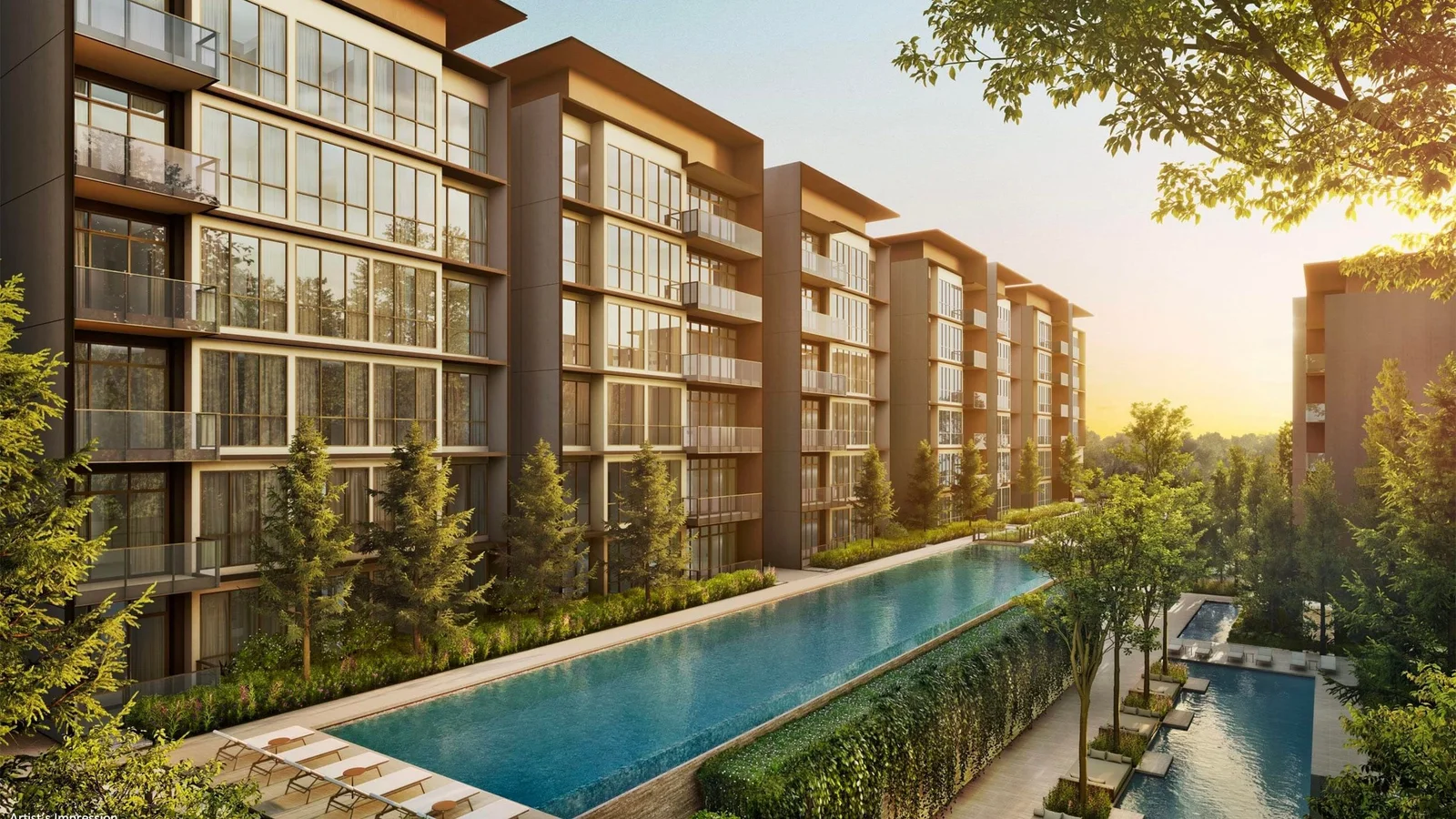
Quick answer: Amberwood at Holland is a 233-unit Sim Lian project guiding from S$2,800 psf on the Holland Link parcel, completing around 2029. It is the cheapest of this site’s four D10 launches, and the discount has a specific cause: Holland Plain is not Bukit Timah yet, and one of the two stations in its transport case has not been built.
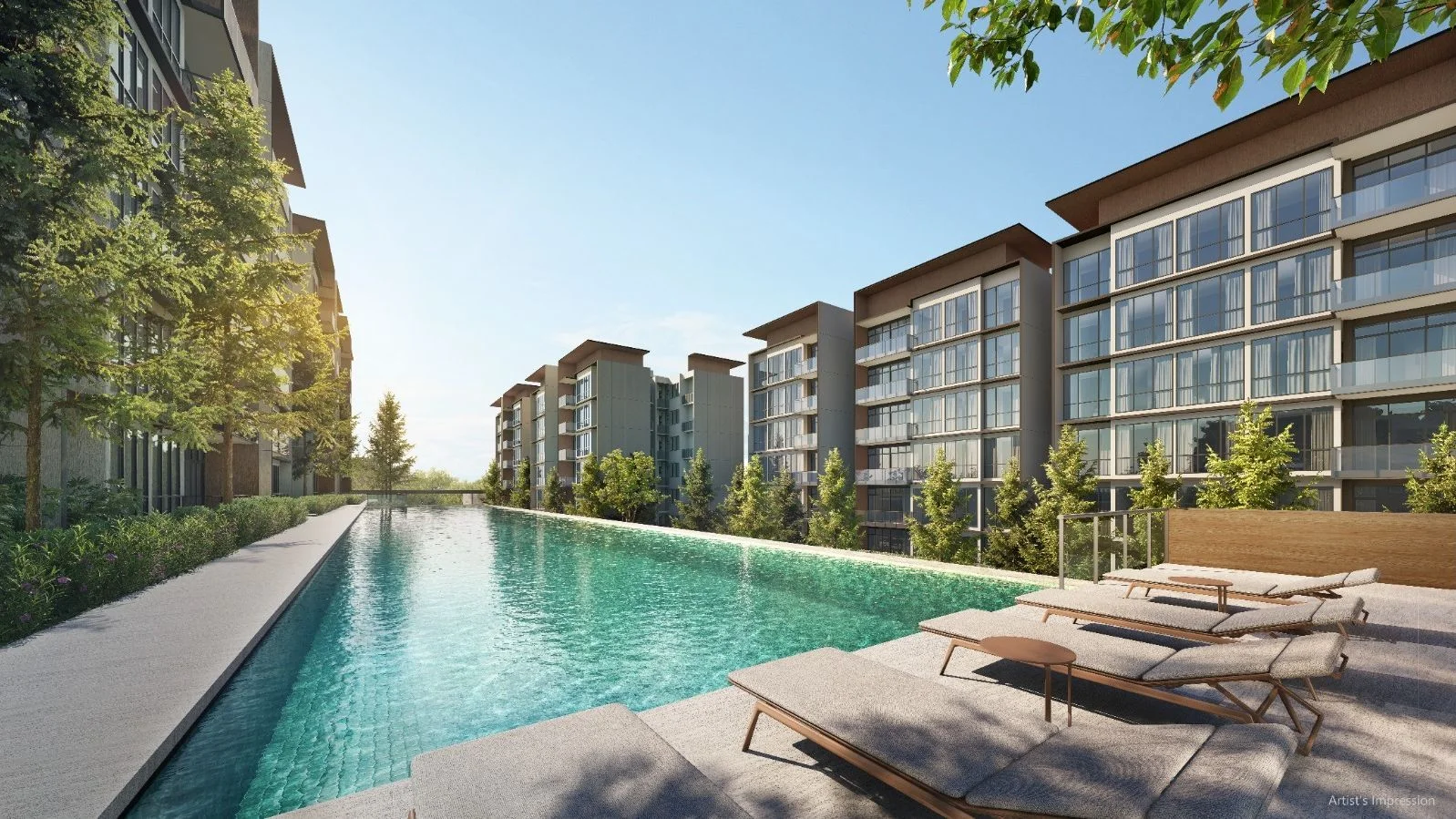
The cheapest D10 ticket, and why
| D10 launch | Guide psf (S$) | What the address is today |
|---|---|---|
| Amberwood at Holland | 2,800 | Holland Plain, precinct under assembly |
| Dunearn House | 3,000 | Established Dunearn Road frontage |
| The Serra Residences | 3,200 | Bukit Timah and Holland corridor |
| Zyon Grand | 3,500 | Established D10 address |
Postal districts in Singapore are administrative, not economic, and D10 is a clear case. The name buys school-belt association and a certain kind of buyer attention, but the streets inside it are not interchangeable. Amberwood is priced S$700 psf below the top of its own district because it sits where the district is being extended rather than where it already is.
That is a legitimate discount for a legitimate difference. The question is only whether it is large enough, and the honest answer depends on a date nobody controls.
One station works, one is drawn
The transport case has two halves. King Albert Park is an operating Downtown Line interchange, and that is the half a buyer can use in 2029 when keys arrive. The Cross Island Line station at Holland Plain is programmed, and it is the half that would turn a discounted address into a normal D10 one.
A buyer should treat these separately rather than reading them as a single sentence in a brochure. The working station sets what the unit is worth at handover and what a tenant will pay. The future station sets what it might be worth later, on a timetable that is not contractual and does not compensate anyone for slipping. If the hold period ends before the second station opens, the buyer has paid for one station and sold on one station.
The land rate is public, which is rare here
The Holland Link site came through a government land sale at roughly S$1,432 psf per plot ratio. That single number does something the collective-sale launches in the same district cannot: it makes the developer’s cost base visible.
Set it against a guide of S$2,800 to S$3,200 psf of saleable area and a buyer can at least frame the question of how much of the price is land, how much is construction and finance across four years, and how much is margin. The two figures are not directly comparable, plot ratio and saleable area are different denominators, but the direction is informative, and it is more than a buyer gets at a project whose land moved privately.
Where the entry sits
| Reference | psf (S$) |
|---|---|
| Amberwood launch guide | 2,800 - 3,200 |
| D10 resale, 2025-26 | 2,464 - 3,040 |
| CCR average, 2026 | 2,100 - 2,720 |
| Indicated entry across layouts | From (S$) | To (S$) |
|---|---|---|
| 233 units, 99-year leasehold, ~2029 | 2,240,000 | 3,200,000 |
Note the overlap. The launch floor of S$2,800 sits inside the D10 resale band rather than above it, which is not where a new launch usually starts. A buyer at the bottom of Amberwood’s range is paying resale money for a new lease, and paying it in a part of the district that is cheaper for reasons the buyer can inspect. That is the strongest thing on this page, and it is worth checking directly against caveats by street before believing it.
At 233 units the project is small enough that sell-through and the maintenance base both behave differently from a 500-unit tower: fewer households carry the same facilities, and the developer has less inventory to release against early sub-sales.
What 233 units means here
Amberwood is small for a Central Region launch, and scale interacts with the precinct argument in a way worth separating out. A 233-unit development sells through faster than a 500-unit one at the same rate of demand, which means less developer inventory hanging over early buyers when sub-sales begin. That is a genuine advantage on a site where the location case is still maturing.
It also means a smaller shared-facility base. Fewer households carry the pool, the gym, the landscaping and the management contract, so the monthly cost per owner runs higher than in a large estate: the standard trade in boutique-scale development, and one a buyer should confirm in the projected management corporation budget rather than assume.
The third effect is on evidence. Two hundred and thirty-three units generate fewer transactions per year than five hundred do, so the resale market for this development will always be thinly traded. In an established address that is unimportant. In a precinct still forming, where a valuer already has few comparables to work with, it compounds: the buyer is holding an asset in a new location with a small transaction history of its own.
What the school belt actually does
Holland and Bukit Timah carry a school-belt reputation that is doing real work in the price, and it is worth being exact about what it buys. Proximity to sought-after primary schools affects admission priority under the registration framework, which in turn affects a specific and motivated group of buyers and tenants: families with a child approaching primary one, on a timetable they do not control.
That produces a demand floor rather than a growth story. It is dependable, it recurs every year, and it is indifferent to interest rates in a way that investor demand is not. It is also narrow. It rewards being inside a distance band and pays nothing for being just outside one, which is why school-belt premiums in Singapore are so sharply local and why a district-level claim about the school belt tells a buyer almost nothing about a particular plot.
For Amberwood the question is therefore specific and answerable: which schools, at what measured distance, and does the address fall inside the bands that matter. That is a map exercise, not a brochure claim, and it should be done before the discount argument is even reached.
Who this suits
A long-horizon buyer who wants the postcode at a discount and treats the Cross Island Line as free optionality rather than as the reason to buy. Someone who needs the address to work on day one should pay the S$200 to S$700 psf and buy the finished street instead.
The discount this page is built on is S$700 psf. An overseas buyer meets a larger number before reaching it: additional buyer’s stamp duty at 60% adds S$1,344,000 to a S$2,240,000 entry, ahead of buyer’s stamp duty, several times the saving that made Holland Plain interesting in the first place. The ABSD ladder sets the tiers; the remission order covers the five treaty nationalities that are charged as citizens. Selling inside four years adds the seller’s stamp duty ladder on top of everything above. Booking procedure is in the new launch guide, and the boutique alternative on an established D10 street is The Serra Residences.
One number would settle most of this page. If a firm construction date for the Cross Island Line station at Holland Plain is published inside a buyer’s intended hold period, the discount stops being compensation for uncertainty and becomes a genuine entry advantage. Until then the honest description of Amberwood is a cheaper D10 address whose cheapness has a documented cause, bought by people who are comfortable owning a postcode slightly before the postcode arrives.
Frequently Asked Questions
Because Holland Plain is not yet the address the district code implies. Amberwood guides from S$2,800 psf against S$3,000 at Dunearn House, S$3,200 at The Serra and S$3,500 at Zyon Grand. All four sit in D10; the other three sit on streets where the amenity, the schools and the stations already exist, and this one sits where a precinct is being assembled.
The Cross Island Line station at Holland Plain is future, not operating. What exists today is the King Albert Park interchange on the Downtown Line. A buyer is therefore paying a D10 price for an address whose transport case has one working half and one drawn half, with completion of the project itself indicated around 2029.
Yes, roughly S$1,432 psf per plot ratio on the Holland Link government land sale parcel, which is unusual and useful: unlike a collective-sale project it lets a buyer see the developer's land cost against a S$2,800 to S$3,200 asking guide rather than taking the price on trust.
Sim Lian Land and Sim Lian Development, delivering 233 units on a 99-year leasehold title. It is the smallest of the D10 launches after The Serra, which matters for the maintenance base and for how quickly the project sells through.
Indicated entry runs from about S$2,240,000 to S$3,200,000. D10 resale over 2025 and 2026 ran S$2,464 to S$3,040 psf and the CCR average S$2,100 to S$2,720, so the launch floor sits inside the resale band rather than above it: a different position from the other three D10 launches.
A buyer with a long horizon who wants a D10 postcode at a discount and can wait for the precinct, and who does not need the Cross Island Line station to open inside their hold period. A buyer who needs the address to work on day one is better served paying the extra S$200 to S$700 psf for a street that already functions.
Get your Singapore property shortlist
Share your budget and target region. We respond within one business day.