
River Modern: Condos from S$2.94m
River Modern is over 90% sold: the remaining stock is what earlier buyers passed over. How to price a residual unit rather than the project.
By Invest Singapore Editorial · Updated August 27, 2026 · 9 min read
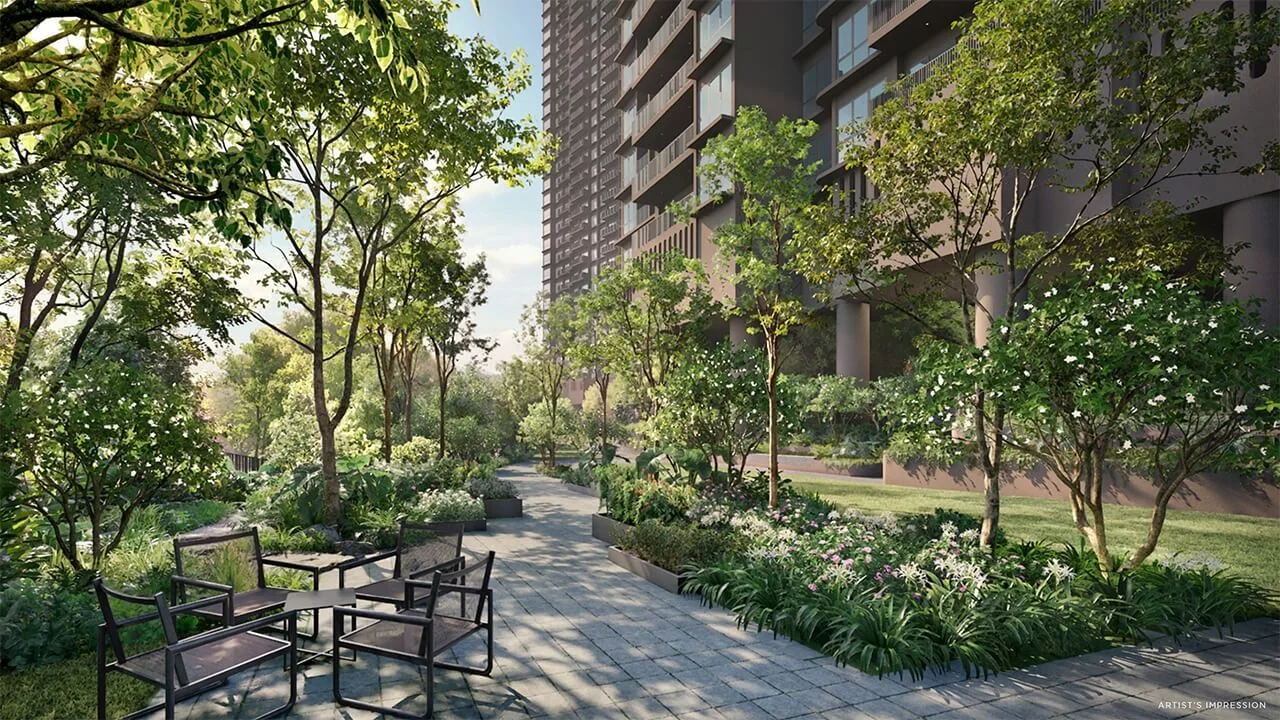
Quick answer: River Modern is 450 GuocoLand units at Robertson Quay, over 90% sold as of March 2026, guiding S$3,266 to S$3,600 psf for completion around 2029. At this point the project decision has already been made by other people. What is left to decide is which of about forty residual units to take, and why the earlier buyers did not take them.
Ninety percent sold changes what you are shopping for
Most guidance about buying a new launch assumes an open price list: a buyer weighing bedroom types, choosing a stack, deciding whether the project itself is worth the premium. None of that applies to the last tenth of a development.
Over 90% of 450 units had gone by March 2026. Somewhere around forty remain, and the composition of that remainder is not random. Every one of them was available to hundreds of earlier buyers who chose something else. Whatever caused that: a facing, a level, a view into the neighbouring block, position beside a lift core, is still true.
This is not an argument against buying. Residual units are frequently fine, and some are only unloved because they were expensive relative to their floor. It is an argument for changing the question from “is this project worth it” to “what is wrong with this particular unit, and is the price right for it”.
The spread inside one bedroom type
At any Singapore launch, effective psf within a single bedroom type moves 8 to 15 percent on stack, facing and level. On a guide starting at S$3,266 psf, that band is several hundred dollars per square foot, which is worth more than most negotiations achieve.
| Reference | psf (S$) |
|---|---|
| River Modern launch guide | 3,266 - 3,600 |
| D9 resale, 2025-26 | 2,874 - 3,420 |
| CCR average, 2026 | 2,450 - 3,060 |
| Indicated entry across layouts | From (S$) | To (S$) |
|---|---|---|
| 450 units, 99-year leasehold, ~2029 | 2,939,400 | 4,050,000 |
A late-stage buyer is, by construction, shopping in the lower half of that internal spread while paying a price set when the better half was still available. Whether that is a problem depends entirely on whether the remaining price list has moved to reflect it. Ask for the original launch price list alongside the current one and compare like stacks; the difference between them is the actual state of the negotiation.
What Robertson Quay is, as a place to own
The address does specific work here and it is worth stating separately from the sales-progress argument, because a residual unit in a good location and a residual unit in an indifferent one are different assets.
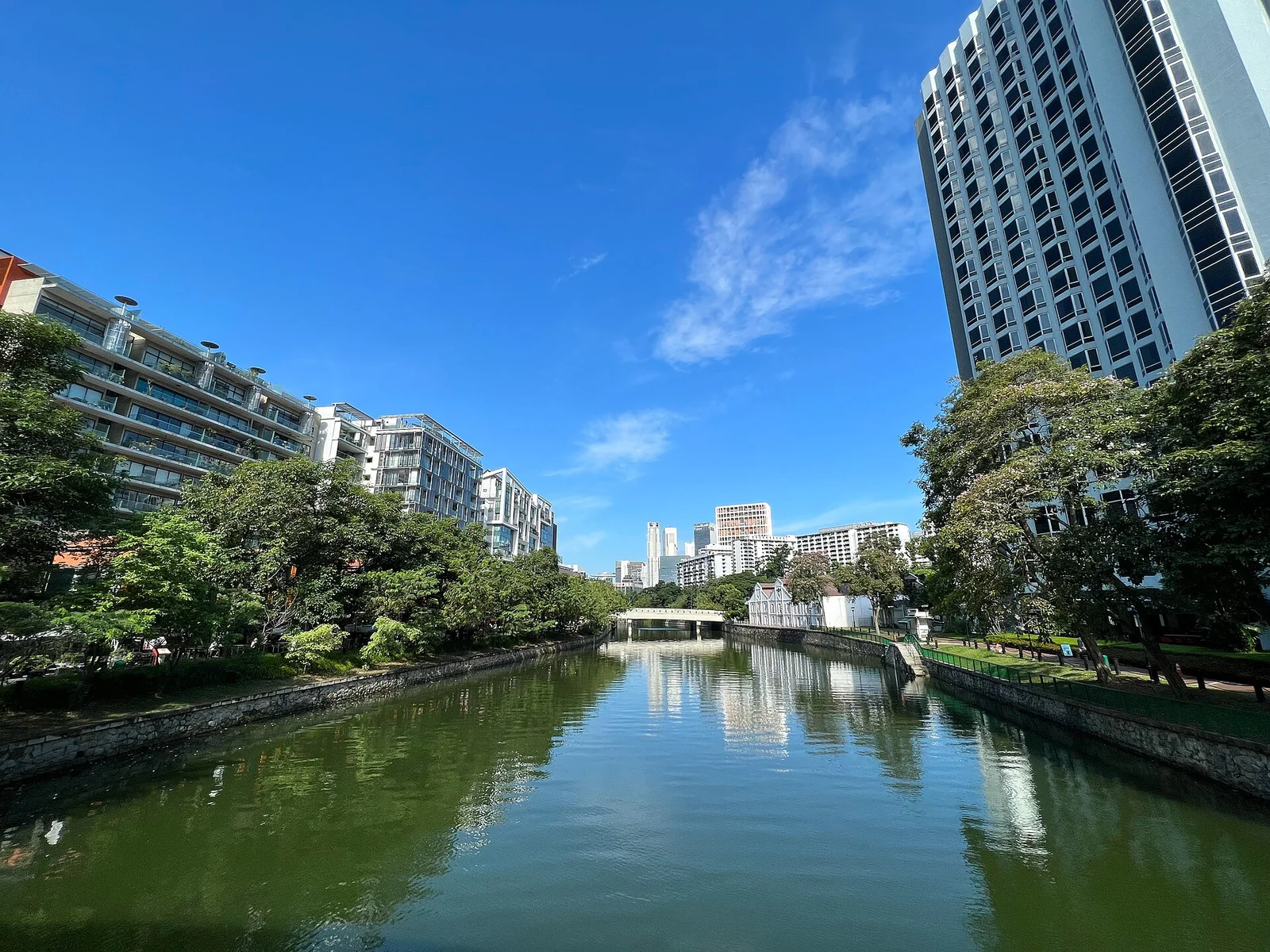
Robertson Quay is a riverside strip of restaurants, bars and low-rise conserved shophouses at the quieter end of the Singapore River, within reach of the central business district without being inside it. What that produces is a genuinely walkable evening economy, which is rarer in Singapore than the marketing suggests, and a resident population that skews toward professionals and couples rather than families.
The trade-offs are equally specific. Riverside dining is an amenity from a distance and a noise source from close by, and which of the two a particular stack experiences depends on its orientation and floor. Weekend crowds behave differently from weekday ones. And the same conserved low-rise fabric that makes the strip pleasant also limits how much the neighbourhood can change, which caps both the downside and the upside of the location over a long hold.
For a late-stage buyer choosing among residual stacks, that means the location question and the unit question are the same question. The right unit here faces the water or away from the noise depending on the buyer, and the wrong one is wrong for reasons that will still be true in 2040.
What a developer’s remaining position signals
GuocoLand holding roughly a tenth of a 450-unit project years before completion is not distress, and it should not be read as one. Developers routinely retain stock deliberately: to hold price discipline, to release into a stronger market later, or simply because the last units are the ones that need a particular buyer.
What it does mean is that the developer remains a participant in this building’s market rather than a departed seller. Their release pricing will be visible to every agent and every valuer working on the development, and it will function as a reference point for sub-sale listings until the last unit clears. A buyer entering now is buying into a market where the largest single holder has both better information and a longer holding capacity than they do.
That is a reason to establish the release schedule at purchase rather than to avoid the project. Ask how many units remain, whether prices have moved since launch, and whether the developer intends to hold into completion. The answers shape the first resale window far more than any view about Robertson Quay does.
What to ask a developer holding a residual
Four questions, in this order, and all of them have documented answers:
- Which stacks sold out first, and at what psf? That establishes the ranking the market applied.
- What is physically different about the units still available? Facing, level, adjacency, outlook. Walk the floor plate, not the showflat.
- Has the price list moved since launch? If not, the residual is being sold at the price the best units commanded.
- What is available other than price? Late-stage flexibility usually shows up in fittings, furnishing credits or completion terms rather than headline psf, because a visible cut reprices everyone who bought earlier.
The picture at handover
Because the project is effectively sold, the competition around 2029 will be other owners rather than the developer. Several hundred households reach completion at once, some of them investors deciding whether to lease or sub-sale in the same quarter. Robertson Quay’s dining and riverside strip supports that market well, but the volume arrives on one date.
For an overseas buyer the negotiation described above sits behind a much larger figure. Additional buyer’s stamp duty at the foreign tier of 60% is S$1,763,640 against the S$2,939,400 floor, before buyer’s stamp duty, and no residual-unit concession will come close to it. The tiers are in the ABSD guide; the remission order names the five nationalities charged as citizens.
The neighbouring D9 site still at land stage, where none of this has happened yet, is River Valley Green. General procedure sits in the new launch guide, where D9 sits against the rest of the island in the CCR, RCR and OCR guide, and the cost of an early exit in the seller’s stamp duty ladder.
The discipline for a late-stage purchase is to stop evaluating the development and start evaluating the unit. The project has already been judged by several hundred people who bought, and the ones who did not buy the unit on offer had their reasons. Finding out what those reasons were, and deciding whether the price now reflects them, is the entire work left to do here.
One last framing that helps at this stage of a launch. The developer has already discovered what this building is worth, unit by unit, by selling nine tenths of it. That price discovery is real information and it is available to the buyer for free, in the order the stacks cleared and the prices they cleared at. A late arrival who studies that record is better informed about the asset than the first buyers were, which is the one genuine advantage of arriving last.
Frequently Asked Questions
Roughly the last tenth. The project was over 90% sold as of March 2026, which on 450 units leaves about forty-odd. Those units are not a random sample: they are what several hundred earlier buyers looked at and passed over, so the remaining choice is a stack-and-floor decision rather than a project decision.
Because within a single bedroom type at any launch, stack, facing and floor move effective psf by 8 to 15 percent. On a S$3,266 psf guide that spread is wider than most buyers' negotiating range, and in late-stage inventory the buyer is choosing from the wrong end of it by definition.
Indicated entry runs from about S$2,939,400 to S$4,050,000, on a guide of S$3,266 to S$3,600 psf, for 450 units by GuocoLand at Robertson Quay on a 99-year leasehold title with completion indicated around 2029.
By what was rejected rather than by what is offered. Ask which stacks sold first and at what psf, then look at what is different about the ones left: the facing, the level, the outlook onto a neighbouring block, the proximity to a lift core or a refuse chute. The discount, if any, should match the defect.
Sometimes, and it is worth asking directly. A developer carrying a small residual against project closeout has a different incentive from one at launch, but the trade is usually specification or fittings rather than headline price, because a visible price cut reprices every earlier buyer's unit.
Mostly the earlier buyers. With over 90% sold years before completion around 2029, the sub-sale and leasing market at handover will be set by several hundred owners deciding at once, not by developer stock. That is a different competitive picture from a project still releasing inventory.
Get your Singapore property shortlist
Share your budget and target region. We respond within one business day.