
River Valley Green Review 2026: From S$2.24m, 470 Units
River Valley Green's land cost 22% more per plot ratio than the parcel next door, yet guides lower. Three explanations, and how to tell them apart.
By Invest Singapore Editorial · Updated September 23, 2026 · 9 min read
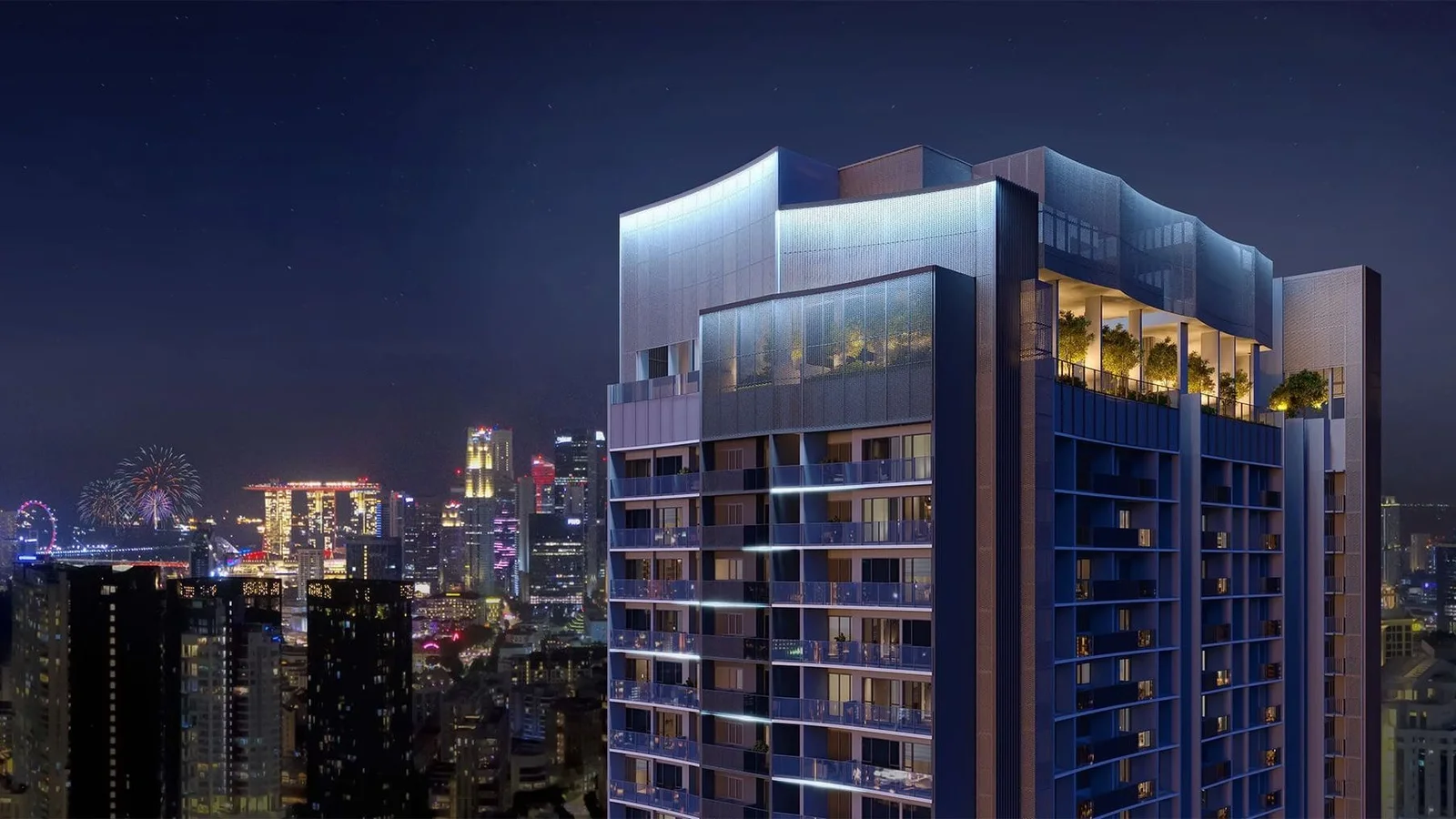
Quick answer: River Valley Green is 470 units in twin 36-storey towers by Sunway MCL and CSC Land Group, on the last government land parcel in this stretch of River Valley, guiding S$2,800 to S$3,500 psf ahead of a Q4 2026 launch. The arithmetic worth checking is that the land cost 22% more per plot ratio than the parcel next door, whose project guides higher.
Two parcels, two land rates, one contradiction
Government land sales publish their results, which makes this comparison possible and unusually direct. Two adjacent parcels in the same corridor, awarded at different times, now carry two projects.
| Parcel B, River Modern | Parcel C, River Valley Green | |
|---|---|---|
| Land rate | The earlier, lower rate | ~S$1,730 psf ppr |
| Winning bid | , | S$750.6 million |
| Launch guide | S$3,100 - S$3,600 psf | S$2,800 - S$3,500 psf |
| Status | Over 90% sold, completing ~2029 | Q4 2026 launch anticipated |
Land is the largest single input into a launch price, and a 22% difference in it is not a rounding error. On the face of it, the parcel that cost more is being marketed more cheaply, which is the opposite of how land cost normally passes through.
Three explanations, and how to tell them apart
The guide moves. This is the likeliest resolution. A pre-launch range is indicative, and the authorised price list is set closer to the launch once the developer has tested demand. A buyer tracking this project should expect the floor to rise and should treat the current S$2,800 as a marketing number rather than a commitment.
The margin is thinner. Possible, and it would have consequences. A developer accepting less on a high land basis has the same inflexibility described at other tightly-bid parcels: little room to discount, a preference for holding stock over repricing it, and a project that needs the location premium to hold.
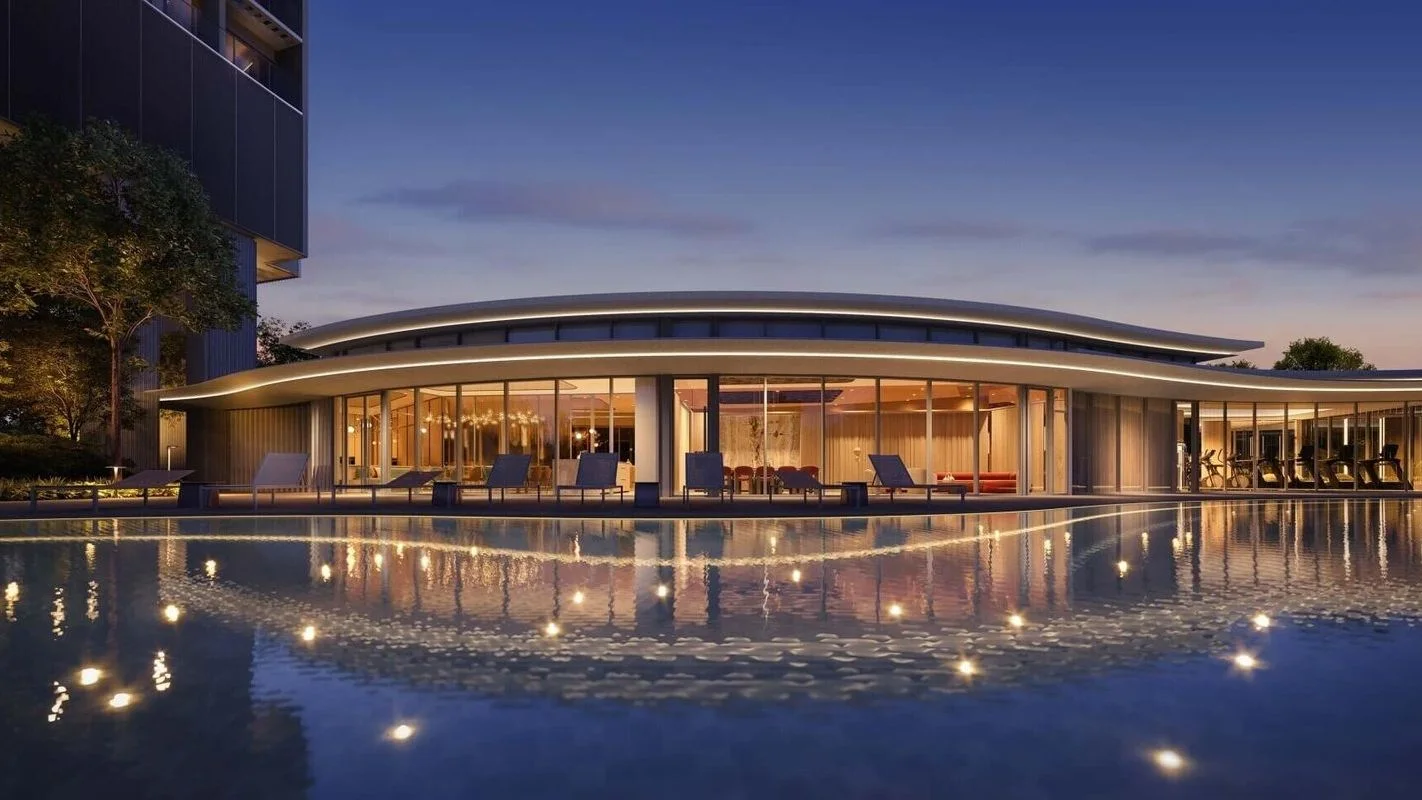
The products differ. Also possible and the easiest to check. Twin 36-storey towers with premium specification are not necessarily comparable, foot for foot, with a neighbouring scheme of different height, layout efficiency and facilities provision. Two projects can quote similar psf and deliver materially different amounts of usable space.
The way to distinguish them is to wait for the price list and then ask the question directly. If the guide has risen, explanation one was correct. If it has not, the developer should be able to say which of the other two applies, and a buyer is entitled to an answer before committing.
What the last parcel argument is worth
The stronger, more durable claim for this project has nothing to do with the land arithmetic. It is that this is the final government land parcel in the stretch, so after it new supply arrives only through collective sales.
That matters because collective sales are slow, uncertain and price-dependent. They require owner consent thresholds, a market willing to pay, and time. A corridor whose government land is exhausted is a corridor whose supply pipeline becomes lumpy and unpredictable rather than programmed.
For an owner holding through the next decade, that is a real supply-side support. It does not guarantee appreciation, demand still has to arrive, but it removes one of the more reliable sources of downward pressure, which is a steady stream of new competing launches on freshly released land.
What the last-parcel claim leaves out
The supply argument is bounded in a way the marketing version of it rarely is, and the boundary is worth stating: the parcel is the last piece of government land in this stretch, which is a narrower claim than being the last piece of land.
River Valley is an old address, and old addresses are made of ageing developments. Any of them with the age, the plot ratio headroom and the owner appetite can be assembled by a developer and rebuilt at a higher density, and the corridor has seen exactly that repeatedly, so the supply pipeline does not close; it changes character.
The difference matters for how a buyer should hold the argument. Programmed government supply is visible years ahead: sites appear on the confirmed and reserve lists, tenders are dated, and anyone can count what is coming. Collective sale supply is invisible until it is nearly certain, arrives in irregular quantities, and depends on a market strong enough for a developer to pay a premium over the existing owners’ individual values.
That asymmetry cuts both ways for an owner here. New competing supply is less predictable, which is a genuine risk to anyone planning an exit on a fixed date. But it is also self-limiting in a way tendered supply is not: collective sales require a rising market to happen at all, so the mechanism that generates new competition is the same one that would be lifting the value of what you already own.
The practical version of this is a question to ask before buying rather than after. Which neighbouring estates are of an age and density that make redevelopment plausible within your intended hold, and how far along, if at all, are they? The en-bloc guide sets out how the process runs and how long it takes.
Nothing on that list is knowable from a brochure, and all of it is knowable from a walk and a few searches of recent transactions in the immediate streets.
The corridor itself
River Valley and the Great World stretch sit in the Central Region, close to Orchard and to the river, and the character is established rather than emerging. Rather than a precinct being assembled, this is an address that has been desirable for a long time and prices accordingly.
The buyer pool is correspondingly broad by Central Region standards: owner-occupiers who want proximity without the CBD, families using the central schools, and investors letting to professionals who value the location’s walkability. Rental demand here is more resilient than in outer-region launches because the tenant base is not dependent on a single employment node.
What the corridor does not offer is a value story. Nothing here is undiscovered, and a purchase has to be justified on the merits of the specific building and the specific price rather than on the location changing.
| Reference | psf (S$) |
|---|---|
| River Valley Green launch guide | 2,800 - 3,500 |
| River Modern, Parcel B | 3,100 - 3,600 |
| Ticket | From (S$) | To (S$) |
|---|---|---|
| 470 units, 99-year leasehold | 2,240,000 | 3,500,000 |
Buying before the price list exists
The project is unlaunched, which puts a prospective buyer in a specific position: able to prepare thoroughly and unable to transact.
The preparation that pays is comparative. Visit the neighbouring completed and near-complete stock, understand what S$3,100 to S$3,600 psf currently buys in this corridor, and form a view about layout efficiency and outlook at the tower heights proposed. When the price list appears, the comparison then takes an afternoon.
For an overseas purchaser the duty needs modelling across the guide range rather than at a point, because the price is not fixed: at the 60% foreign tier, additional buyer’s stamp duty runs from S$1,344,000 on a S$2,240,000 unit to S$2,100,000 at S$3,500,000, in each case before buyer’s stamp duty. The ABSD guide has the tiers, the remission order the treaty exceptions.
River Modern is the built comparable one parcel away, Dorset Road GLS the other parcel in this pipeline where land cost visibly constrains what can be asked, and the CCR, RCR and OCR guide carries the regional definitions. A prospective buyer’s best move here is also the least dramatic one: write down today’s guide band, and compare it with the authorised price list on the day it is issued.
Frequently Asked Questions
The land cost 22% more per plot ratio than the parcel next door, and the guide starts lower. The Parcel C tender that closed on 18 June 2026 drew a winning bid of S$750.6 million, roughly S$1,730 psf per plot ratio, against the Parcel B rate underpinning River Modern. Yet River Modern guides S$3,100 to S$3,600 psf and this parcel guides S$2,800 to S$3,500.
It usually cannot, sustainably. Either the guide will move when the price list is finalised, or the developer is accepting a thinner margin, or the two projects differ in specification, unit mix or efficiency in ways the headline psf hides. A buyer should treat the current range as provisional and ask which of those three explanations applies.
Entry indicated from about S$2,240,000 to S$3,500,000 on a guide of S$2,800 to S$3,500 psf, for 470 units in twin 36-storey towers by Sunway MCL and CSC Land Group, with a Q4 2026 launch anticipated.
Because it closes the supply of new government land in this stretch of River Valley. After it, additions to the area come only through collective sales, which are slower and less predictable. That is a genuine scarcity argument, and it is the strongest one this project has.
River Modern sits on the earlier parcel, is over 90% sold and completes around 2029; this is the later parcel, unlaunched, completing later. One is a residual-stock decision about which unit to take, the other is a pricing decision about a project that has not yet set its prices.
Establish the two land rates and hold the developer's eventual price list against them. If the guide has not moved up by launch, ask specifically what is different about the product, layout efficiency, ceiling heights, facilities, finish, because a 22% higher land basis has to appear somewhere.
Get your Singapore property shortlist
Share your budget and target region. We respond within one business day.