
Tengah Garden Residences Review 2026: From S$1.26m
Tengah Garden completes around 2028, years before the town does. A finished building in an unfinished estate, and what that does to rent.
By Invest Singapore Editorial · Updated August 27, 2026 · 9 min read
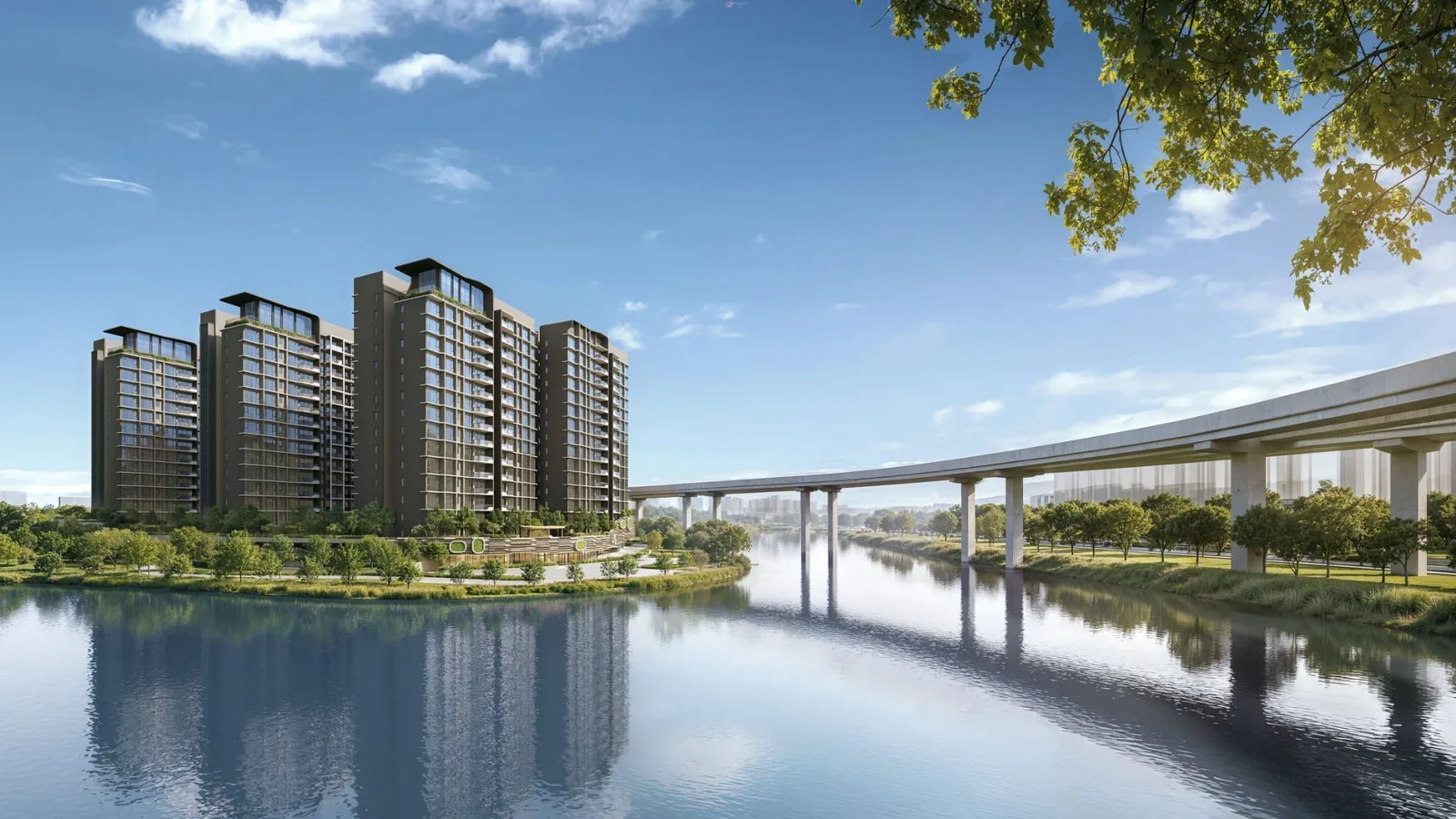
Quick answer: Tengah Garden Residences is 700 units by Hong Leong Holdings, GuocoLand and CSC Land Group in Tengah New Town, about 99% sold, completing around 2028. That completion date is the earliest in this pipeline by a year or two, and it produces a specific situation: a finished building inside an unfinished town.
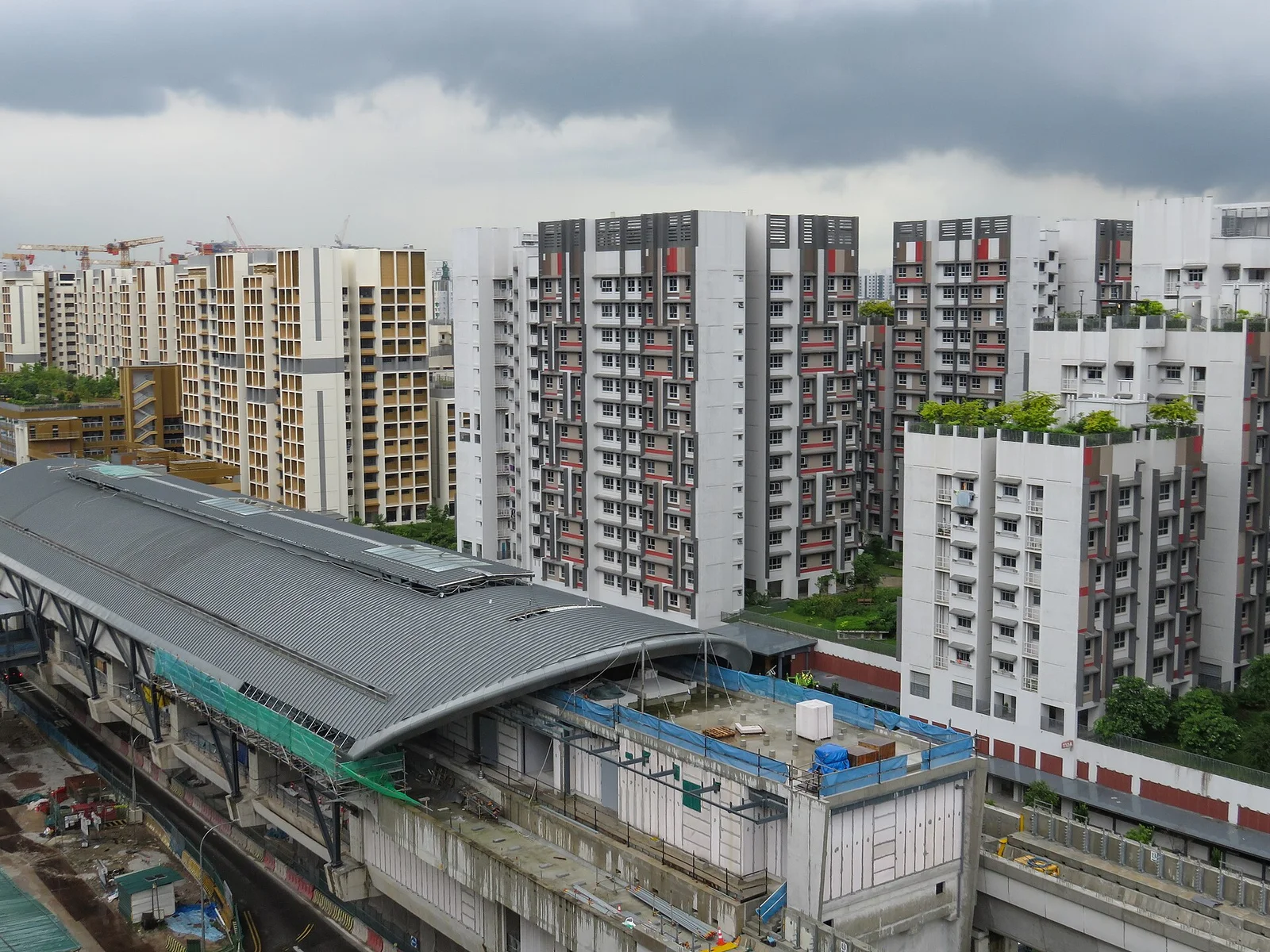
Arriving before the town
New towns in Singapore are delivered over many years, in a sequence that puts housing early and much of the amenity later. Tengah is the current example, planned around forest corridors and car-lite streets, and it is being built now.
A condominium completing around 2028 lands in the middle of that sequence rather than at the end of it. The building is finished; the town is a programme. The practical experience for the first occupants is a good apartment, a working home, and a two-to-three-year period in which the shops, the connections and the neighbouring blocks are still arriving.
| What is complete around 2028 | What arrives after |
|---|---|
| The 700-unit development itself | Much of the surrounding town’s retail and amenity |
| Immediate roads and access | The car-lite network as designed |
| The forest corridor setting as landscape | The corridor as a used, connected public realm |
Nobody is being misled by this. The masterplan is published and the phasing is public. It simply means the brochure describes a place that will exist several years after the keys do, and the two should be underwritten separately.
Why the sequencing matters more to a landlord than an owner
An owner-occupier absorbs an unfinished town as inconvenience and is compensated by being early: they bought before the amenity was priced in, and they are still there when it lands.
A landlord has no such alignment. The lease starts in the window when the town is least attractive, and the tenant is choosing between roughly 700 units completing at the same time in the same estate. Two forces push the same way:
- Supply concentration. Completion is a single event for the whole development, so a share of investor owners list simultaneously.
- Amenity deficit. The features that justify the location are, at that moment, the ones the tenant cannot use yet.
The result is that early-year rents in a new town are usually a poor guide to what the asset yields once the estate matures, and a buyer underwriting on stabilised assumptions is skipping the hardest years.
What “car-lite” asks of an owner
The phrase does real work in Tengah’s design and it deserves more than a brochure line, because it changes the calculation for a specific kind of buyer. A car-lite town moves roads underground or to the perimeter, prioritises walking and cycling routes, and assumes residents will not need a private vehicle for most trips. That is genuinely attractive, and it is also a set of conditions rather than a feature.
The conditions are the bus and rail network reaching the density the design assumes, the retail and services being close enough that walking is the natural choice, and the cycling infrastructure connecting to somewhere people actually want to go. All three are delivered over the same extended programme as the rest of the town. Until they are, a household living here behaves like a household anywhere else in the outer west: it drives, and it parks in an estate whose parking provision was planned on the assumption that it would not have to.
For an owner-occupier that is a temporary friction, and one worth accepting if the design works out. For an investor it is a narrowing of the tenant pool at exactly the wrong moment. The tenants most attracted to a car-lite town are the ones least likely to own a car, and they are also the ones who most need the network to already exist. A buyer underwriting rent from 2028 should assume they are letting to somebody with a car, competing against several hundred identical units, in a town where driving is not what the plan intended.
What a sub-sale actually involves
Because the primary market is closed, most buyers arriving now will be looking at a sub-sale: a purchase of the seller’s rights under their sale and purchase agreement before the building completes. It is a well-established route and it is not the same transaction as buying a completed unit.
The seller assigns their contract with the developer. The buyer takes over the remaining progressive payments, and the developer must consent, usually against a fee. Stamp duty is assessed on the sub-sale price at the buyer’s own profile, so a foreign buyer’s 60% tier applies to the negotiated figure rather than to whatever the original buyer paid in the launch.
Two things deserve attention that would not arise on a resale. The first is the seller’s own duty position: if they exercised their option recently, the seller’s stamp duty ladder may make a sale uneconomic below a certain price, and knowing that number tells the buyer where the negotiation actually ends. The second is the paperwork: the original option, the payment history, and the developer’s consent are the documents that make the transaction real, and a conveyancing lawyer should see all three before any deposit moves.
The compensation for the extra complexity is choice. In a 99% sold development the sub-sale market is where the good stacks appear, because early buyers took them and some of those buyers now have reasons to move on.
Buying into a closed project
At about 99% sold, this is not a launch purchase. The available route is the resale and sub-sale market, which changes the mechanics:
| Launch purchase | Buying now | |
|---|---|---|
| Counterparty | Developer | Another owner |
| Price | Published list | Negotiated |
| Seller’s constraints | None | Possibly inside the SSD window |
| Choice of stack | Whatever remains | Whatever is listed |
The seller’s own duty position is worth establishing early. Under the seller’s stamp duty ladder, a home bought on or after 4 July 2025 carries 16% in year one, stepping down across four years and charged on price rather than profit. A seller inside that window has a floor below which a sale makes no sense for them, and knowing where it sits tells a buyer what is negotiable.
| Reference | psf (S$) |
|---|---|
| Tengah Garden Residences launch guide | 1,400 - 1,600 |
| D24 resale, 2025-26 | 1,232 - 1,520 |
| OCR average, 2026 | 1,050 - 1,360 |
| Indicated launch entry | From (S$) | To (S$) |
|---|---|---|
| 700 units, 99-year leasehold, ~2028 | 1,260,000 | 1,800,000 |
Because this is a negotiated purchase rather than a list price, the foreign tier of additional buyer’s stamp duty applies at 60% to whatever is agreed: a moving target that should be modelled before the offer, not after, using the ABSD guide. Treaty relief under the remission order reaches five nationalities only. Regional bands are in the CCR, RCR and OCR guide, and the other project arriving ahead of its precinct is Chencharu Close.
A buyer arriving now is doing something quite different from the people who queued in 2022. They are purchasing a nearly finished building in a town that is not, from an owner who has their own timetable, at a price that will be negotiated rather than published. Approached that way it can be a good transaction. Approached as a launch, using launch expectations about rent and appreciation, it will disappoint on a schedule the masterplan makes fairly predictable.
Frequently Asked Questions
Around 2028, which is the earliest completion in this pipeline, most 2026-launch projects point at 2029 or 2030. The project is also about 99% sold, so it is effectively closed to primary buyers and the practical route in is the sub-sale and resale market.
That the building finishes before the town does. Tengah's car-lite infrastructure, its retail and much of its surrounding housing are still being delivered, so the first owners occupy a finished condominium inside an unfinished estate, with construction as a neighbour and amenity that arrives after they do.
It depends entirely on the hold period. An owner-occupier moving in around 2028 lives through the construction phase and captures the town when it matures. An investor letting from 2028 is pricing a tenant's willingness to live on a building site, which is a different and weaker proposition than the finished-town brochure describes.
Indicated pricing ran from about S$1,260,000 to S$1,800,000 on a guide of S$1,400 to S$1,600 psf, for 700 units by Hong Leong Holdings, GuocoLand and CSC Land Group on a 99-year leasehold title. D24 resale over 2025 and 2026 ran S$1,232 to S$1,520 psf.
As a resale purchase, not a launch. The counterparty is another owner, the price is negotiated rather than listed, and the seller may be inside the seller's stamp duty window, which shapes what they can accept. Ask when the seller exercised their option before discussing price.
Concentration. Seven hundred units complete together in a town whose amenity is still arriving, and a share of those owners will list for rent in the same quarter. A tenant choosing between them has unusual leverage, and rents in that window are unlikely to reflect the mature-town case the project was sold on.
Get your Singapore property shortlist
Share your budget and target region. We respond within one business day.