
Thomson Reserve Review 2026: From S$1.71m, 500 Units
Thomson Reserve guides about S$300 psf under a tendered parcel two kilometres away. On a collective sale site, the land basis behind that gap is private.
By Invest Singapore Editorial · Updated August 27, 2026 · 9 min read
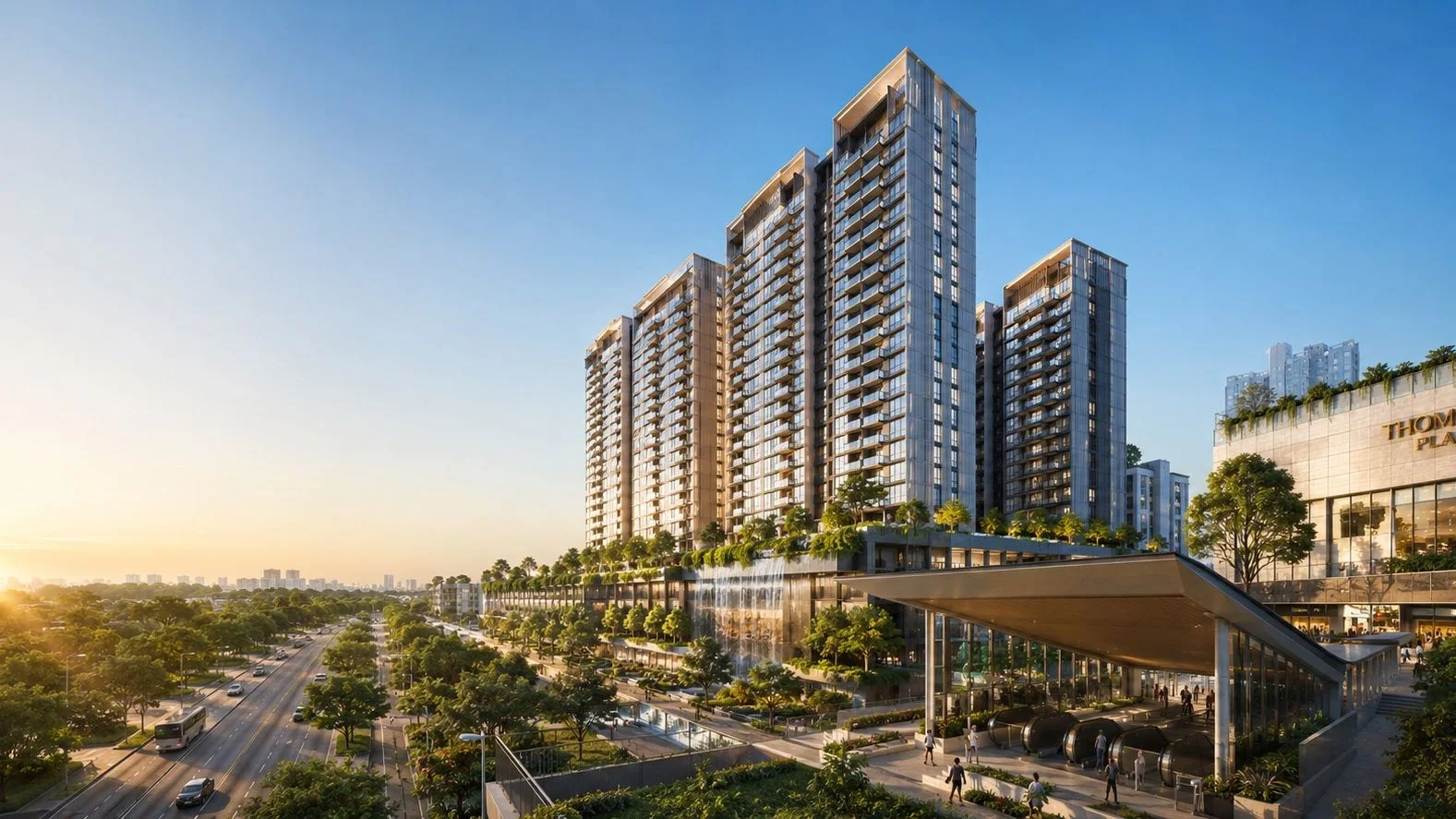
Quick answer: Thomson Reserve is 500 units by UOL Group, CapitaLand Development and SingLand on the former Thomson View site at Bright Hill, guiding S$1,900 to S$2,200 psf from about S$1,710,000 ahead of a third-quarter 2026 launch. Two kilometres up the same MRT line, a state parcel awarded in October 2025 is guiding roughly S$300 psf higher. The reason a buyer cannot resolve that gap is that this site came from a collective sale, and collective sales do not publish a land rate.
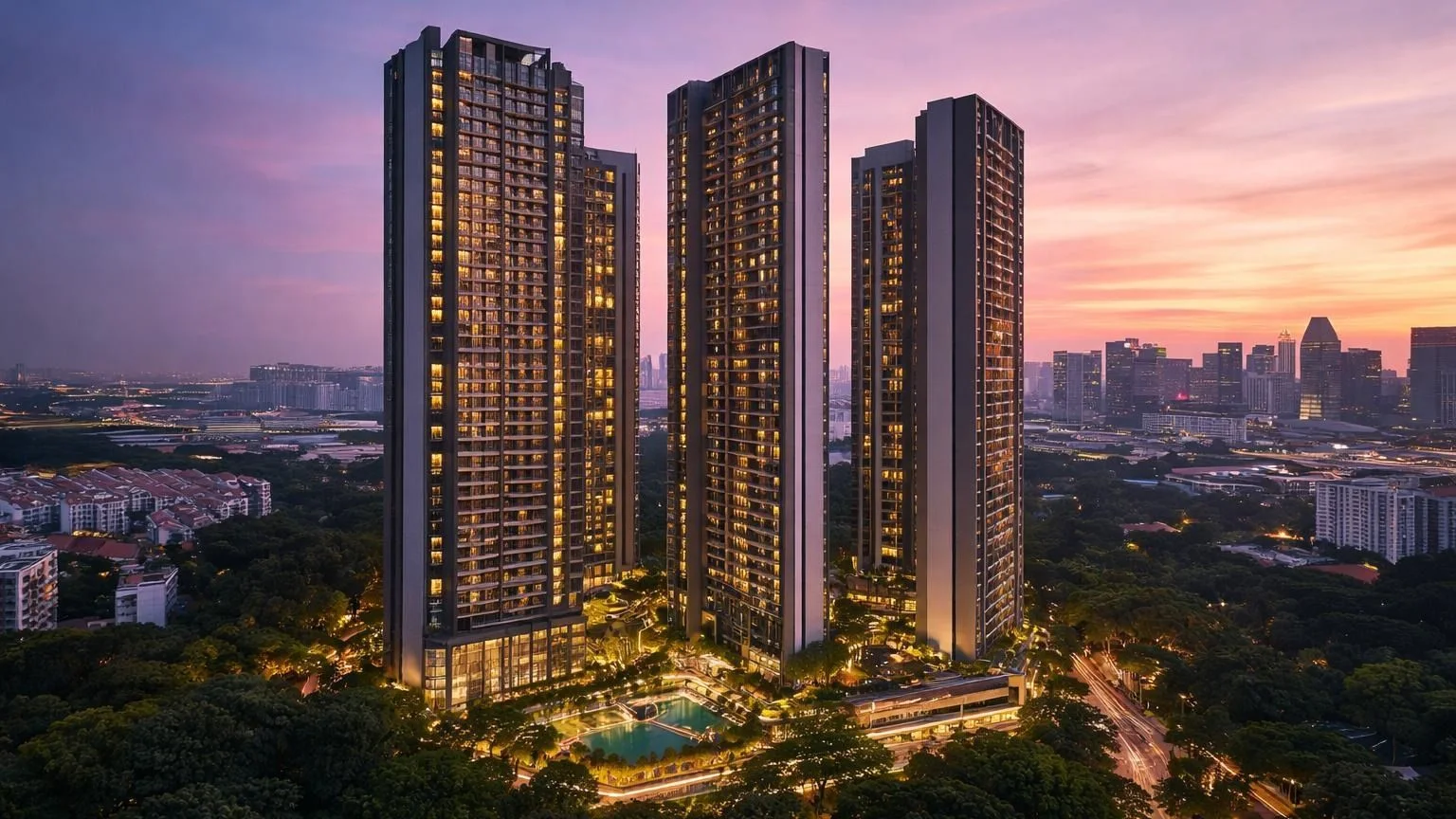
Two sites, one line, one visible number
Set the two Thomson-corridor launches side by side and the asymmetry is immediate.
| Thomson Reserve | Upper Thomson Parcel A | |
|---|---|---|
| Site origin | Collective sale, former Thomson View | State tender, awarded October 2025 |
| Land cost | Not published as a rate | S$613.9m, S$1,062 psf per plot ratio |
| Units | 500 | About 595 |
| Guide | S$1,900 - 2,200 psf | S$2,200 - 2,550 psf |
| Station | Bright Hill | Springleaf, adjacent |
A buyer at the Springleaf site can do the arithmetic that agents rarely volunteer: take the land rate, add construction, finance and marketing, and see how much room sits between that and the asking price. It is an approximation, but it is anchored to a published figure.
At Bright Hill the same buyer has nothing to anchor to. The consortium’s cost is real and was paid; it simply was not paid in a form anyone publishes.
What a collective sale actually involves
The mechanism matters because it explains why no rate exists rather than merely asserting it.
An ageing development’s owners vote to sell the entire estate. Where the development is more than ten years old, consent of 80% by share value and by strata area carries it; below ten years the threshold is 90%. The signed collective sale agreement goes to the Strata Titles Board, and a dissenting owner may object, which can carry the matter to the High Court.
The purchaser’s outlay is then several things at once: the price paid to the owners, a differential premium paid to the state both to restore the lease towards a fresh 99 years and to build at a higher plot ratio than the old estate used, the holding cost of a site that cannot be built on until every household has moved out, and the demolition of whatever stood there. Only the first of those is usually reported, and it is the one least useful on its own.
Three readings of the same S$300
The gap is a fact. Its cause is not, and the candidates point in different directions.
The land was genuinely cheaper. Collective sales are negotiated over long periods and settle against the market of the moment the owners agreed, not the market of the tender that happened later. If that is what happened, the discount is real and durable, and the consortium has room the Springleaf developer does not.
The station position is weaker. Bright Hill is a station near the development; Springleaf is a station beside it, with about 2,000 square metres of commercial space at its foot. Adjacency of that kind prices at a premium everywhere on the network. On this reading the gap is not a discount at all, the two products are differently located and are priced accordingly.
The consortium wants volume. Five hundred units is a large release into a corridor that will shortly receive nearly 600 more. A developer who intends to clear inventory before the competing launch opens has a reason to guide below it, regardless of what the land cost.
These are not equally comfortable conclusions. The first says a buyer is capturing value; the third says a buyer is being recruited into a race. Nothing in the marketing material separates them, which is itself the useful observation.
What Bright Hill gives back
The Thomson-East Coast Line runs the length of this corridor, and Bright Hill sits at the Bishan end of it, within reach of Bishan-Ang Mo Kio Park and the central-north schools that drive family resale demand in D20. Thomson Plaza covers daily retail. The dining belt along Upper Thomson Road, which does much of the corridor’s reputational work, is closer to the northern end.
That is a solid, established setting rather than a scarce one. It supports the price, and it does not by itself explain a S$300 discount to a site on the same line.
The pricing, and the set to check it against
| Bedroom type | Typical size (sq ft) | Guide psf (S$) | From (S$) |
|---|---|---|---|
| 2-bedroom | 765 | 1,900 - 2,050 | 1,453,500 |
| 3-bedroom | 900 | 1,900 - 2,200 | 1,710,000 |
| 4-bedroom | 1,125 | 1,995 - 2,200 | 2,475,000 |
| Reference | psf (S$) |
|---|---|
| Thomson Reserve guide | 1,900 - 2,200 |
| D20 resale condominiums, 2025-26 | 1,672 - 2,090 |
| Upper Thomson Parcel A guide | 2,200 - 2,550 |
Read the middle row carefully. The guide band overlaps existing D20 resale at its lower end and sits above it at the upper end, which is the ordinary shape for a new lease against older stock. What is unusual is the third row: a launch on the same line, in the same year, guiding above the whole of this project’s range.
Eleven hundred units, one corridor, one completion window
The two launches are not only priced against each other. They complete against each other.
Five hundred homes here and about 595 at Springleaf reach their occupation permits within roughly the same span at the turn of the decade. Whatever share of each is bought by investors arrives in the letting market simultaneously, on a stretch of the Thomson-East Coast Line that has not previously absorbed new private supply at that rate.
That concurrency has two ordinary consequences. Rents soften in the first leasing season after completion, because a thousand-odd units chase a tenant pool that grew at its normal pace. And the earliest resellers compete not with older D20 stock but with each other and with unsold developer inventory next door, which is the harder comparison to win.
Neither is a reason to avoid the corridor. Both are reasons to hold past the point where the wave has cleared, and they bear directly on the third reading of the price gap above: a consortium that has done this arithmetic has a motive to be first out of the door.
What is verifiable now, and what waits until 2030
| Question | Answerable at launch | Answerable only later |
|---|---|---|
| Land basis per square foot | No | No |
| Lease commencement date | Yes | , |
| Vacant possession date of the old estate | Yes | , |
| Build quality of the delivered product | No | At handover |
| Whether the S$300 gap was a discount | No | On the first resales, both sites |
The bottom row is the one worth sitting with. The question this page is about will be settled by evidence, and the evidence is several years away: when units at both projects begin trading, the difference between their resale psf will show whether the gap was land, location or urgency. A buyer today is taking a position on that answer without it.
The questions that are answerable
A land rate is not obtainable. These three are, and they narrow the field.
- When was vacant possession obtained? That date, not the launch date, tells you where the project really is in its programme, and how much of the 2030 completion target is already spent.
- What is the lease commencement date? A collective sale site is normally topped back up towards 99 years, but the date the clock starts is a specific fact with a specific effect on resale a decade out.
- How does the gallery explain the Springleaf comparison? The answer will be a sales answer, but the shape of it is informative: a consortium confident in a land-cost advantage says something different from one managing a sell-through window.
Progress payments, balloting and the option period work as they do at any launch and are set out in the new launch guide. For an overseas buyer the duty position is unaffected by any of the above: the ABSD guide has the tiers, and the remission order the treaty nationalities.
Who should be here
Someone who wants D20 at a ticket below the corridor’s tendered stock, intends to hold well past the four-year seller’s stamp duty schedule, and is content that the reason for the price advantage cannot be verified from outside the consortium.
It suits less well a buyer who reasons from developer breakeven, because on this site that calculation cannot be performed. That buyer should be at Upper Thomson Parcel A two kilometres north, where the number exists and the argument can actually be had.
Frequently Asked Questions
Because the site was assembled through a collective sale rather than a state tender. A government land sale closes on a published date with a published award, so the land rate per square foot per plot ratio is a matter of record. A collective sale is a negotiated private contract between a consortium and several hundred existing owners, settled alongside a differential premium paid to the state and whatever the approval process cost in time. No single published figure consolidates those into a comparable rate.
Owners in an ageing development agree to sell the whole estate to a developer, who then demolishes it and rebuilds at a higher density. Consent of 80% by share value and by strata area is required where the development is more than ten years old, and 90% where it is younger. The sale then goes to the Strata Titles Board for approval, and an objection can push it to the High Court. Only after that do the existing residents move out.
The two sites sit on the same MRT line about two kilometres apart, and the guide bands differ by roughly S$300 psf: S$1,900 to S$2,200 here against S$2,200 to S$2,550 at Upper Thomson Parcel A. Three explanations fit the same gap, and they have different consequences for a buyer: a genuinely lower land basis, a weaker station position at Bright Hill, or a consortium simply pricing to sell 500 units quickly. Nothing published distinguishes them.
It has more stages that can slip. A tendered parcel is handed over clean on award; a collective sale site has to be approved, then vacated, then demolished before any construction begins. Those stages sit ahead of the ones a buyer's progress payments are tied to, so by launch they are already behind. Completion here is indicated around 2030.
The published range is about S$1,710,000 to S$2,475,000 across 500 units on a 99-year leasehold title, at a guide of S$1,900 to S$2,200 psf. The developer is a consortium of UOL Group, CapitaLand Development and SingLand, and the launch window is the third quarter of 2026.
Three things, all answerable: when vacant possession of the former estate was actually obtained, whether the lease was topped back up to a fresh 99 years and on what date it starts, and how the sales gallery reconciles its guide band with the Springleaf award on the same line. The answers will not include a land rate, but they narrow which of the three explanations for the gap is operating.
Get your Singapore property shortlist
Share your budget and target region. We respond within one business day.