
Dunearn House Review 2026: From S$2.40m, 350 Units
Dunearn House came from a collective sale, not a tender, so there is no published land rate to test the S$3,000 psf guide against. What to check instead.
By Invest Singapore Editorial · Updated September 23, 2026 · 9 min read
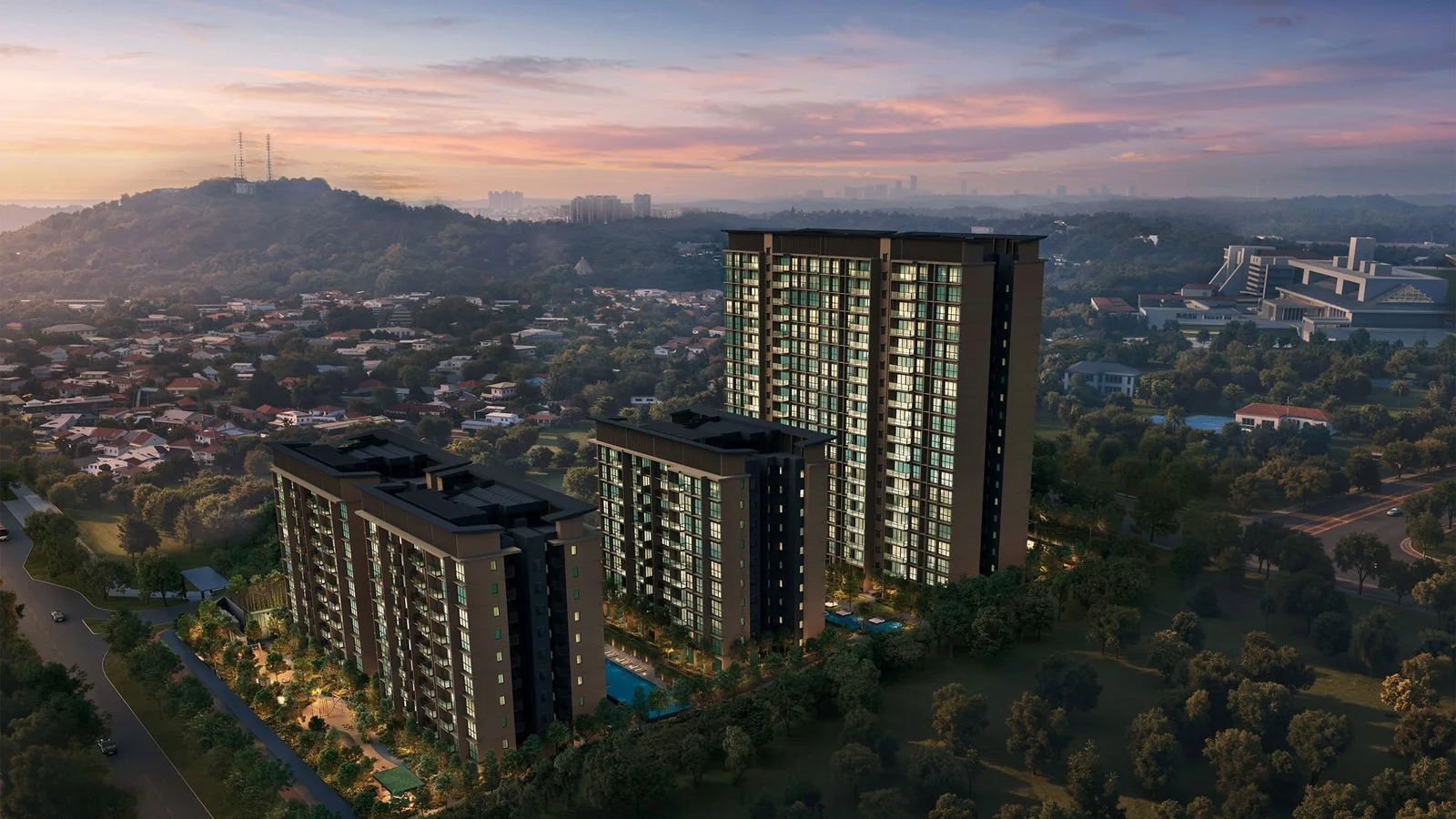
Quick answer: Dunearn House is a 350-unit joint venture by CSC Land Group, Frasers Property and Sekisui House on Dunearn Road, guiding S$3,000 to S$3,600 psf for completion around 2029. It came out of a collective sale rather than a government tender, and that single fact removes the check most buyers use to test whether a launch price is stretched.
The missing number
Most 2026 launches in this pipeline sit on land bought at a public tender, and the winning bid is published. That number is quietly the most useful thing a buyer has, because it makes the developer’s position legible: land cost per square foot of gross floor area, against the price being asked per square foot of saleable area.
Dunearn House came from a collective sale. The land moved between private parties, and no award price or plot-ratio rate entered the public record.
| Nearby 2026 launch | Published land rate (S$ psf ppr) |
|---|---|
| Dorset Road parcel | 1,338 |
| Upper Thomson Parcel A | 1,062 |
| Chencharu Close | 980 |
| Springleaf parcel | 905 |
| Dunearn House | none published |
This is not a criticism of the project. Collective sales are an ordinary and legitimate route to land, and the sellers were compensated at a price they accepted. It is a statement about what a buyer can and cannot verify: at a GLS launch the margin question has a documented starting point, and here it does not.
What is left to check
Three substitutes, in the order they are worth doing.
Resale evidence, by street. The launch guides S$3,000 to S$3,600 psf. D10 resale ran S$2,640 to S$3,420 across 2025 and 2026 and the CCR average S$2,250 to S$3,060. Ask for caveats along Dunearn Road and its immediate turnings dated within 90 days rather than district-wide averages, and see where the launch floor lands against the stock a tenant or a future buyer would actually consider instead.
| Reference | psf (S$) |
|---|---|
| Dunearn House launch guide | 3,000 - 3,600 |
| D10 resale, 2025-26 | 2,640 - 3,420 |
| CCR average, 2026 | 2,250 - 3,060 |
The partners’ completed work. Three names sit on this project and they do different jobs. CSC Land Group and Frasers Property bring development and capital; Sekisui House brings a housebuilding record. For a buyer who cannot check the land economics, the finish and the defects process are where the remaining information lives, and that is the partner to research.
The specification schedule. In the absence of a margin check, the sale documents are the only place where what is being delivered is written down, so read the schedule and give the showflat less weight.
What a collective sale leaves behind
There is a second consequence of the en-bloc route that rarely appears in launch material, and it is about the neighbourhood rather than the price. A collective sale removes an existing community from the site. The households that lived there were bought out, and they mostly bought again in the same part of Bukit Timah, because that is what people do when a building is sold from under them, and some of those purchases are now the resale comparables the launch is priced against.
That matters in a narrow, practical way. The stock a buyer at Dunearn House will compete with at resale is partly stock bought recently by displaced owners with collective-sale proceeds in hand, at prices set in a short window when several of them were bidding at once. Caveats from that period read high for a reason that has nothing to do with the underlying market and everything to do with a temporary cluster of motivated buyers. When the agent produces a comparables table, it is worth asking which transactions fall inside that window.
The other side of it is supply. An en-bloc replaces a low-density older development with a denser new one, so the site returns more units to the same street than it took away. Three hundred and fifty of them arrive around 2029 into a market that had been used to whatever the previous building held. For an owner-occupier that is irrelevant. For anyone underwriting a rental yield or an exit inside five years, the change in local unit count is a more concrete risk than anything in the brochure.
Where the delivery risk actually lands
Without a land rate, the developer’s margin is unknowable, but the buyer’s exposure is not: it sits almost entirely in delivery and in the defects liability period that follows completion around 2029.
That period is the single most valuable consumer protection in a new-build purchase and the one buyers research least. It runs from handover, it obliges the developer to rectify defects notified within it, and its practical value depends on whether the rectification team actually turns up. A joint venture is worth examining specifically here, because responsibility can be diffuse: three partners, one project, and a buyer who needs to know which of them answers the phone in 2030.
The questions are ordinary and the answers are checkable before booking:
- Which partner is the developer of record on the sale and purchase agreement, and which is the contractor?
- What is the defects liability period stated in the agreement, and when does it start?
- On the partners’ previous completed projects, how were defects handled, and can the agent name the projects rather than the reputations?
A buyer who cannot check the land economics can still check all of that, and it is a better use of the time. Land price affects the developer’s return and delivery affects the buyer’s asset, and only one of the two is still open on the day the option is exercised.
What the entry ticket looks like
| Indicated entry across layouts | From (S$) | To (S$) |
|---|---|---|
| 350 units, 99-year leasehold, ~2029 | 2,400,000 | 3,600,000 |
There is one figure here a buyer can compute to the dollar, and it is far larger than the missing one. Foreign ownership attracts additional buyer’s stamp duty at 60%: S$1,440,000 against the S$2,400,000 floor, on top of buyer’s stamp duty. No collective-sale opacity attaches to it, it is arithmetic, published in the ABSD ladder, and it belongs in the model before the land-rate question is even raised. Buyers holding American, Swiss, Norwegian, Icelandic or Liechtensteiner nationality are assessed as citizens under the remission order.
The 2029 completion, read carefully
Completion is indicated around 2029, where most of the surrounding 2026 launches point at 2030. That cuts a year of progressive-payment exposure and puts keys into a slightly earlier leasing window. It also means arriving in a district where neighbouring projects are still finishing, which affects the resale comparison a year later more than it affects the rent.
For how a collective sale works from the seller’s side, see the en-bloc guide; for the buying mechanics, the new launch guide; for exit timing, the seller’s stamp duty ladder; and for the regional frame, the CCR, RCR and OCR guide.
What would change the analysis on this page is disclosure. A published land consideration for the collective sale, or a clear statement of which partner carries the development obligation, would convert two of the open questions into checkable ones. Neither is required of the developer, and neither is unusual to withhold, which is exactly why a buyer should ask for both in writing and treat the answers as part of the price.
Frequently Asked Questions
The project is a collective-sale redevelopment rather than a government land sale, so the land came from the private market through an en-bloc transaction. The practical consequence for a buyer is that no tender award price and no psf per plot ratio were published, which removes the usual way of checking whether a launch price is stretched.
Because on a GLS launch a buyer can compare the developer's land cost against the asking price and see how much margin is embedded. Neighbouring 2026 launches publish theirs: S$1,338 psf ppr at Dorset Road, S$980 at Chencharu Close, S$1,062 at Upper Thomson Parcel A. At Dunearn House there is no equivalent figure, so the launch price has to be judged against resale evidence alone.
A joint venture of CSC Land Group, Frasers Property and Sekisui House, delivering 350 units on a 99-year leasehold title with completion indicated around 2029. Sekisui House is the build-quality signal in that list: a Japanese housebuilder whose reputation travels with the finish rather than with the land price.
Indicated entry runs from about S$2,400,000 to S$3,600,000, on a launch guide of S$3,000 to S$3,600 psf. D10 resale over 2025 and 2026 ran S$2,640 to S$3,420, and the CCR average S$2,250 to S$3,060, so the launch floor sits above the resale midpoint.
Three things: recent D10 caveats by street for the resale comparison, the joint venture partners' completed projects for delivery and defect history, and the specification schedule in the sale documents. Together they substitute for the margin check that a published tender price would otherwise give.
Slightly. Completion is indicated around 2029, where most launches in this pipeline point at 2030. A year earlier means a year less of progressive-payment exposure and an earlier leasing window, but it also means arriving before some neighbouring projects have finished.
Get your Singapore property shortlist
Share your budget and target region. We respond within one business day.