
The Serra Residences Review 2026: From S$2.56m, 133 Units
The Serra is 133 units in D10, a third of the households paying for the same lifts and facade. Why boutique scale is a cost structure, not just an address.
By Invest Singapore Editorial · Updated August 27, 2026 · 9 min read
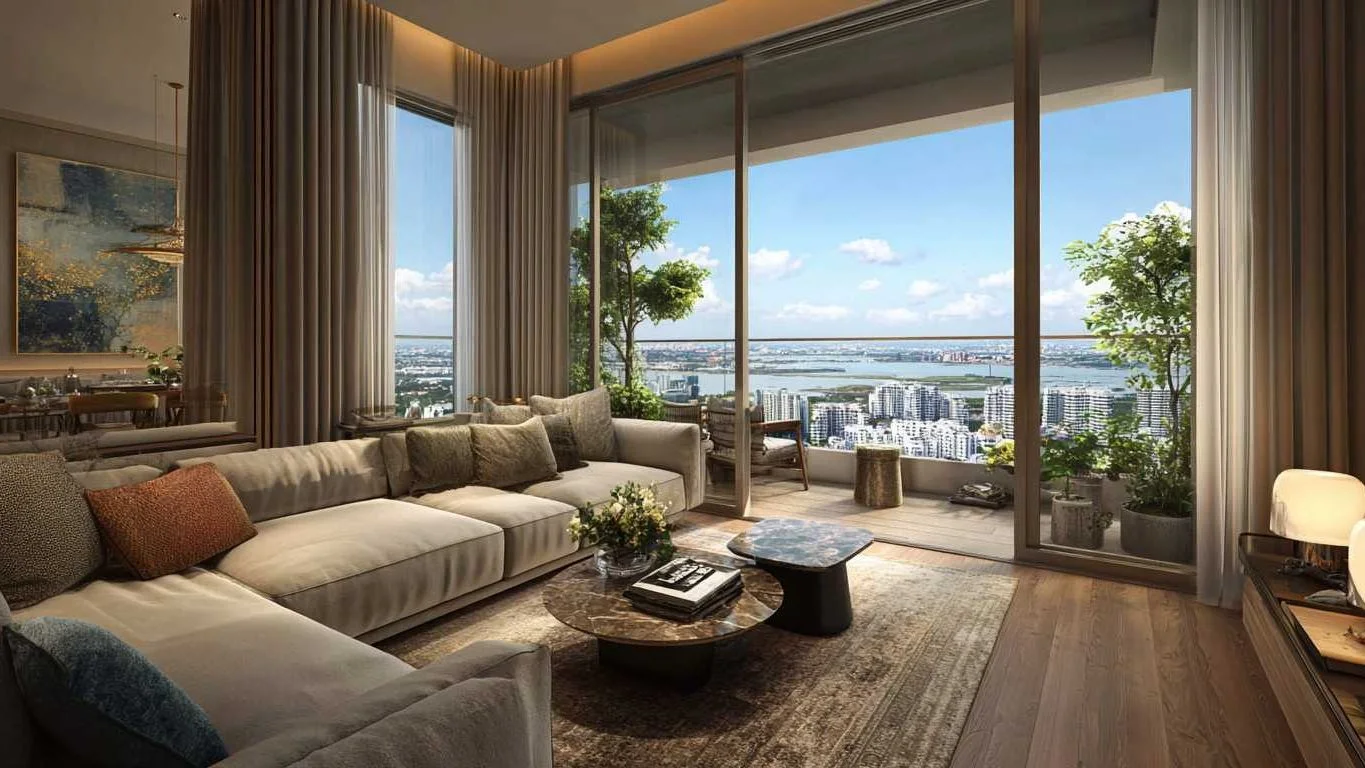
Quick answer: The Serra Residences is 133 units by Far East Organization on the Bukit Timah and Holland corridor, guiding S$3,200 to S$3,800 psf for completion around 2030. It is the smallest development in this pipeline, and the interesting consequence is not the address. It is that a third of the usual number of households will be paying for the same lifts, the same pool and the same facade.
The denominator is the story
| D10 launch | Units | Indicated maintenance (S$/month) |
|---|---|---|
| The Serra Residences | 133 | 320 - 520 |
| Amberwood at Holland | 233 | typical launch band |
| Dunearn House | 350 | typical launch band |
Far East positions this project for landed-adjacent upgraders and school-belt families who want boutique scale rather than a four-hundred-unit tower. That is a real preference and people pay for it. What the brochure does not put beside it is the arithmetic of a management corporation.
A condominium’s running costs do not scale down with unit count in the way owners expect. Lifts, pumps, a pool, landscaping, a security contract, insurance and a facade have costs set by the building, not by how many households share them. Divide those by 133 rather than by 400 and every owner’s monthly share rises, which is exactly what the project’s own indicated range shows, with an upper bound of S$520 against S$450 at larger schemes.
Where it stops being a monthly annoyance
Routine maintenance at S$520 a month is a known, budgetable number. The part that deserves attention before booking is the sinking fund, because that is where small estates behave differently in kind rather than in degree.
Major works arrive on a schedule the building sets: lift replacement, external repainting and repairs, waterproofing, pump and chiller renewal. The cost of each is roughly independent of unit count. On a large estate a S$2 million programme is absorbed by a fund that hundreds of households have been feeding for years. On a 133-unit estate the same programme falls on 133 owners, and if the fund is short the balance is raised as a special levy.
So the questions worth asking are narrow and answerable:
- What is the projected sinking fund contribution per unit, per year, in the first management corporation budget?
- What cyclical works schedule is that projection built on?
- What is the developer’s assumption for the first three years, and what happens to the contribution afterwards?
Those documents exist. They are simply not on the showflat wall.
What the price asks
| Reference | psf (S$) |
|---|---|
| The Serra Residences launch guide | 3,200 - 3,800 |
| D10 resale, 2025-26 | 2,640 - 3,420 |
| CCR regional average, 2026 | 2,250 - 3,210 |
| Indicated entry across layouts | From (S$) | To (S$) |
|---|---|---|
| 133 units, 99-year leasehold, ~2030 | 2,560,000 | 3,800,000 |
The guide starts above the D10 resale midpoint and runs past its ceiling. Some of that is Far East’s delivery reputation, some is the corridor, and some is the scarcity of small developments on good addresses. A buyer paying the top of the range should be able to say which of the three they are paying for.
Before the management corporation budget matters, the duty does. An overseas purchase carries additional buyer’s stamp duty at 60%, or S$1,536,000 against the S$2,560,000 floor, ahead of buyer’s stamp duty. That single line exceeds several decades of the maintenance differential this page is about, which is a useful sense of scale. The ABSD ladder governs it, and the remission order lists the five nationalities assessed as citizens.
Far East as the counterparty
Of the variables a buyer can research before committing, the developer is the one with the most published history here. Far East Organization is a long-established private Singapore developer with a large completed portfolio across residential grades, which means the questions a buyer would ask about a first-time or unnamed developer, can they finish, will they rectify defects, do they hand over on time, have documented answers rather than assurances.
That matters more at boutique scale than at volume. On a 133-unit project there is no large owners’ committee to organise a collective response if handover goes badly, and no scale of buyers to attract attention. The individual owner is more dependent on the developer behaving well, because the alternative remedies are slower and more expensive per household.
The useful research is therefore specific rather than reputational: which comparable small developments the developer has completed, when they were handed over against the dates originally given, and how the defects process ran. Those are checkable through completed-project records and, more usefully, through owners in the buildings themselves.
Resale in a 133-unit market
The final effect of scale appears years later, at exit, and it is the one boutique buyers most often discover rather than plan for. A small development transacts rarely. Where a 500-unit estate might produce twenty resales in a year, a 133-unit one might produce five, and in a quiet year one or two.
Thin trading has two consequences. Valuation becomes harder, because a valuer has few recent transactions inside the development and must reach for comparables in neighbouring buildings that are larger, older or differently specified. And price discovery becomes lumpy: a single motivated seller can set the reference for the whole development for months, in either direction.
Neither is fatal, and boutique stock in good CCR addresses has historically found its buyers. But it argues strongly for a long hold and against any plan that depends on selling inside a particular window. A buyer who needs liquidity on a schedule is better served by a larger development, where the market for their unit is made continuously rather than occasionally.
Who boutique scale is genuinely for
Owner-occupiers who want the address and value low density enough to pay for it monthly as well as at purchase. Families for whom 133 neighbours rather than 400 is the point of the exercise.
It is a poorer fit for a yield buyer, who is accepting a higher fixed cost base against CCR rents, and for anyone who would find a special levy disruptive. Neither of those is a reason to avoid the project; both are reasons to read the management corporation budget before the price list.
The cheaper D10 address, where the discount is the precinct rather than the density, is Amberwood at Holland. What the Central Region means as a classification is set out in the CCR, RCR and OCR guide; booking procedure is in the new launch guide, and the four-year exit penalty in the seller’s stamp duty ladder.
Boutique scale is the most honest thing about this project and it should be bought deliberately rather than absorbed as atmosphere. One hundred and thirty-three households is a smaller, quieter, more expensive way to live in D10, and it is also a thinner market to sell into. A buyer who wants all of that and intends to stay is well matched. A buyer who wants the address and expects it to trade like a large estate has misread the product.
There is one more comparison worth running before a decision, and it is against the rest of the district rather than against other boutique schemes. Amberwood, Dunearn House and Zyon Grand all sit in D10 at 233, 350 and 320 units, and each offers a version of the same address with a broader facilities base and a deeper future resale market. The Serra’s case has to be that low density is worth more to this particular household than any of that, held for long enough that the thinner market never has to be tested in a hurry.
Frequently Asked Questions
Because the facilities and the sinking fund are divided by 133 households instead of 350 or 450. The Serra's own cost schedule shows it: maintenance is indicated at S$320 to S$520 a month against S$280 to S$450 at larger launches in this pipeline. A boutique development is not cheaper to run, it is cheaper to run per pool and more expensive per owner.
Concentration. Major works on a lift, a facade or a pool cost roughly what they cost regardless of unit count, so a 133-unit MCST spreads a large bill across a third of the households a 400-unit estate would. If the sinking fund is under-collected in the early years, the shortfall lands as a special levy per owner rather than as a rounding adjustment.
Indicated entry runs from about S$2,560,000 to S$3,800,000 on a guide of S$3,200 to S$3,800 psf, for 133 units by Far East Organization on a 99-year leasehold title with completion indicated around 2030.
At purchase it is priced as a premium, because low density and a landed-adjacent address are what the buyer is paying for. Across ownership it is a cost, through a higher monthly maintenance base. Both are true, and a buyer should decide which one dominates over their own hold period rather than treating scale as purely a lifestyle feature.
Amberwood at Holland has 233 units and guides from S$2,800 psf, Dunearn House 350 units from S$3,000, and Zyon Grand 320 units from S$3,500. The Serra is the smallest and second most expensive, which is the boutique trade stated plainly.
The management corporation budget and the sinking fund schedule, in writing. On a 133-unit estate those two documents decide more of the ownership cost than the launch psf does, and they are the ones that never appear in a showflat.
Get your Singapore property shortlist
Share your budget and target region. We respond within one business day.