
EC vs Private Condo Singapore: Full Compare Guide 2026
EC vs private condo Singapore: SC eligibility, 5-year MOP, 10-year privatisation, MSR 30% vs TDSR-only, 15-25% launch discount, ABSD, yield 2026.
By Invest Singapore Editorial · Updated September 23, 2026 · 24 min read
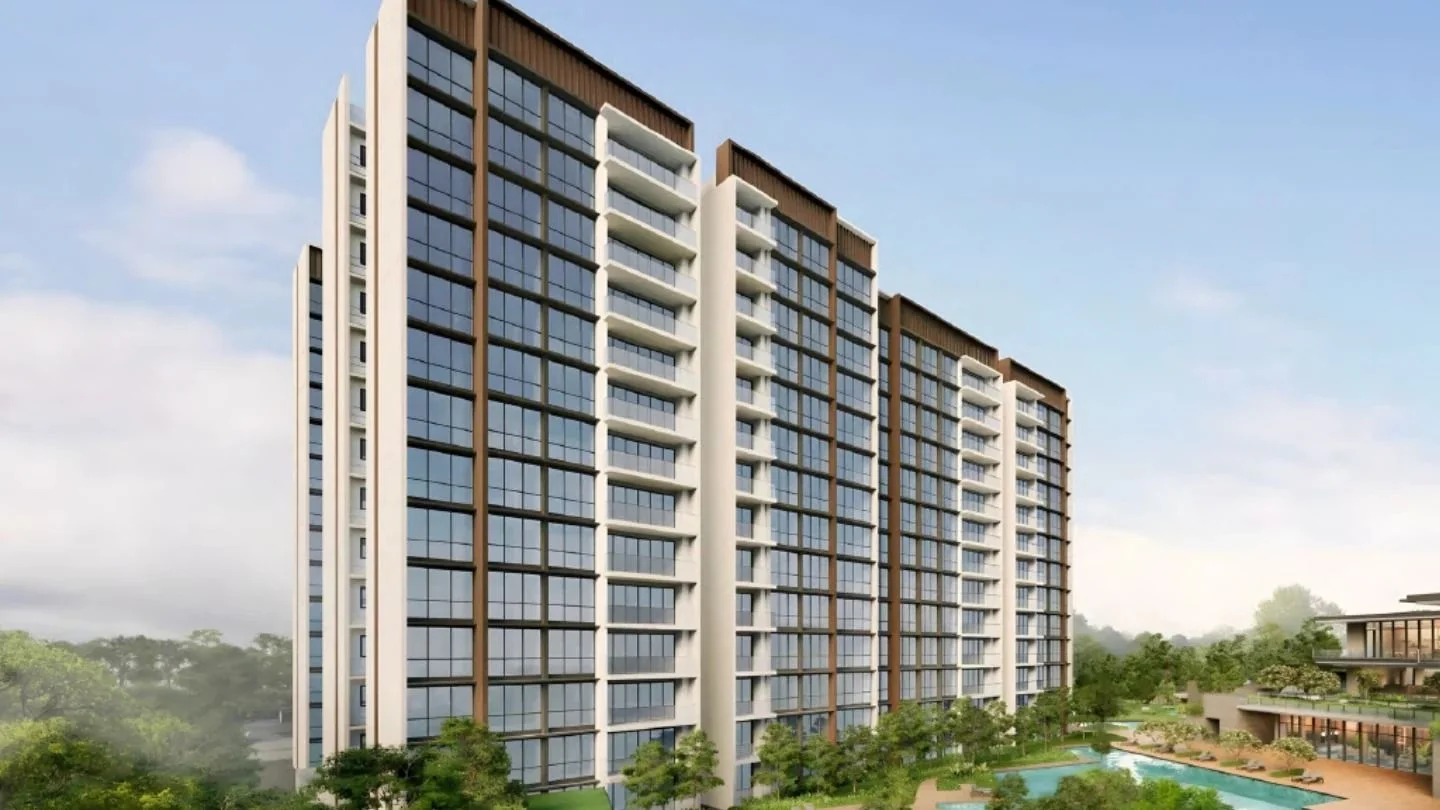
Quick answer: EC vs private condo Singapore, EC launches 15-25% below OCR private (S$1,400-1,700 vs S$2,154 psf), SC-only at launch, 5-year MOP, 10-year privatisation. MSR 30% + TDSR vs private TDSR-only. See EC guide and HDB upgrader.
Singapore’s two-tier condominium market
Singapore operates a deliberate two-tier residential market. At the top sits fully private property: no income ceiling, no nationality restriction, no mandatory hold period. At the hybrid tier sits the Executive Condominium: developer-built and managed like a private condo, but launched under HDB rules that restrict who can buy, how they can finance, and when they can sell.
This two-tier design serves a clear policy purpose. ECs let the government subsidise homeownership for middle-income Singaporeans without spending direct grants, because the subsidy is embedded in the below-market launch price. Developers bid for EC land at lower rates than private residential land, and that saving is passed on as a 15 to 25% launch discount against comparable OCR private condos.
For buyers with SC status, an EC is frequently the single most powerful wealth-building instrument in Singapore property. For foreigners, it does not exist as a live option until 10 years post-TOP, by which point the privatisation re-rating has already happened and the price discount is largely gone.
Understanding where each product sits on this spectrum is the starting point for every decision in this comparison. Our Singapore property investment guide covers the broader portfolio context; this article focuses specifically on the EC-versus-private decision for upgraders and domestic investors.
SC upgrader choosing EC or private OCR? Share income. We compare MSR cap vs launch PSF discount.
Get EC vs private memoEligibility: who can buy each type
The single biggest practical difference between an EC and a private condo is the buyer eligibility gate at launch.
Executive Condominium at launch:
- At least one applicant must be a Singapore Citizen (SC).
- Co-applicant must be SC or Singapore Permanent Resident (PR).
- All applicants must form a valid family nucleus (married couple, fiancee, parent-child, or siblings scheme).
- Household gross monthly income must not exceed S$16,000.
- Applicants must not own or have disposed of a private residential property or an EC within the preceding 30 months.
- Foreigners cannot apply, regardless of how long they have been in Singapore.
EC resale between years 5 and 10 (post-MOP, pre-privatisation):
- SC and PR buyers may purchase on the open market.
- Foreigners still cannot buy during this window.
EC resale after year 10 (fully privatised):
- Any buyer, including foreigners, may purchase.
- Standard private residential ABSD applies to all buyer classes.
Private condominium at launch and resale:
- Open to any buyer: SC, PR, foreigner, or corporate entity.
- No income ceiling.
- No family nucleus requirement.
- Foreigners pay 60% ABSD; FTA nationals from the US, Iceland, Liechtenstein, Norway, and Switzerland pay 0% on a first purchase under treaty.
For the HDB upgrader path that many SC families follow, the eligibility gap is largely irrelevant: they are SC by definition and qualify for ECs automatically, assuming the income ceiling is met. Where the gate matters is for high earners. A household earning S$18,000 per month has no EC option and must go straight to private regardless of citizenship; our HDB upgrader guide covers the full upgrade path mechanics.
| Eligibility factor | New EC | Resale EC (5-10yr) | Resale EC (10yr+) | Private condo |
|---|---|---|---|---|
| Singapore Citizen | Yes, required | Yes | Yes | Yes |
| Singapore PR | Co-applicant only | Yes | Yes | Yes |
| Foreigner | Not eligible | Not eligible | Yes (60% ABSD) | Yes (60% ABSD) |
| Income ceiling | S$16,000/month | None | None | None |
| Family nucleus | Required | Required | Not required | Not required |
| Previous HDB resale levy | Applies (up to S$50,000) | Not applicable | Not applicable | Not applicable |
Pricing: the 15 to 25% launch discount explained
The pricing gap between a new EC and a comparable new launch private condo is structural rather than cyclical. It arises from three factors: government land-sale pricing for EC sites, the income ceiling that restricts the buyer pool, and the MOP that prevents immediate flipping.
In 2026, OCR private condos transact at a median of S$2,154 psf. Recent EC launches in comparable OCR towns have priced between S$1,400 and S$1,700 psf, representing discounts of roughly 21 to 35% on a straight PSF basis. When you adjust for unit size (ECs typically offer larger floor plates than equivalent private launches) and common facility quality (EC facilities match mid-tier private condo standards), the effective per-unit value discount sits in the 15 to 25% range frequently cited by URA and industry analysts.
This discount is not permanent. It compresses in two stages. First, after the 5-year MOP when the resale market opens, ECs trade on comparable fundamentals to private resale condos in the same town. Second, at the 10-year privatisation mark, the last remaining restriction on foreign buyers disappears and the EC is legally indistinguishable from a private condominium. In historically strong EC towns such as Tampines, Sengkang, and Woodlands, the privatisation event has produced appreciation of 40 to 60% from launch price over the 10-year cycle in past cohorts, though past performance does not guarantee future results.
| Price benchmark | 2026 figure | Source |
|---|---|---|
| OCR private condo median PSF | S$2,154 | URA, Q1 2026 |
| Typical EC new launch PSF range | S$1,400 to S$1,700 | Project launch data, 2024-2026 |
| Implied launch discount (PSF basis) | 21 to 35% | Invest Singapore calculation |
| Effective value discount (size/spec adjusted) | 15 to 25% | Industry consensus |
| URA median private rent | S$5.13 psf | URA, Q1 2026 |
| Total URA private residential sales 2025 | 26,492 | URA full-year 2025 |
| Foreign share of total private sales 2025 | 1.2% | URA, 2025 |
For a concrete illustration of current EC pricing, review the project pages for Coastal Cabana EC and Rivelle Tampines EC, both in Tampines where the privatisation premium has historically been among the strongest in OCR.
Financing: MSR versus TDSR
Financing is where the EC-versus-private distinction cuts deepest for buyers who are already leveraged or carrying other debt.
EC financing rules: Both MSR and TDSR apply simultaneously. MSR is almost always the binding constraint.
- MSR: monthly mortgage repayment must not exceed 30% of gross monthly household income.
- TDSR: total monthly debt repayments (mortgage plus car loan, study loan, credit card minimum, personal loan) must not exceed 55% of gross monthly household income.
- Only bank loans are available for ECs. HDB concessionary loans are not permitted.
- LTV is 75% for a first property with no outstanding loans; 45% for a second; 35% for subsequent.
Private condo financing rules: Only TDSR applies. There is no MSR constraint.
- TDSR: total monthly debt repayments must not exceed 55% of gross monthly household income.
- Bank loans only; same LTV schedule as ECs at 75/45/35.
In practice: an EC buyer earning S$10,000 gross per month is capped at a monthly mortgage repayment of S$3,000 by MSR. A private condo buyer at the same income is capped at S$5,500 of total debt service by TDSR, of which their mortgage can absorb most if other debts are low. For a 25-year loan at 3.8% interest, the S$3,000 monthly cap supports a loan of roughly S$570,000. The S$5,500 TDSR cap on a mortgage-only basis supports roughly S$1,040,000. This difference is large enough to affect which project sizes and locations each buyer can reach.
| Financing rule | EC | Private condo |
|---|---|---|
| MSR applies | Yes, 30% of gross income | No |
| TDSR applies | Yes, 55% of gross income | Yes, 55% of gross income |
| Binding constraint | MSR (tighter) | TDSR (looser) |
| HDB concessionary loan | Not available | Not available |
| Max LTV (first property, no loans) | 75% | 75% |
| Max LTV (second property) | 45% | 45% |
| Stress-test rate | 4% or actual +0.5%, whichever higher | Same |
For a detailed breakdown of how these ratios interact with loan quantum and total acquisition cost, see our TDSR explained guide.
The MOP and privatisation timeline
The EC timeline is the most important concept for any upgrader or investor evaluating the product. Unlike private condos, which can be sold the day after completion, ECs lock you in through a mandatory occupation period and then transform through a statutory privatisation event.
Year 0: Key collection (TOP) You receive keys and the 5-year MOP clock starts. You must physically reside in the unit. You cannot rent out the whole unit, sell on the open market, or transfer ownership during this period, although subletting individual rooms is permitted under HDB guidelines.
Year 5: MOP completion You can now sell the unit on the Singapore open resale market, but only to SC and PR buyers. Foreign buyers still cannot purchase. You may also sublet the entire unit from this point. Many upgraders sell at MOP to fund a private condo purchase. The EC-to-private upgrade is the classic Singapore wealth-building ladder: subsidised entry, MOP discipline, then full market exposure.
Year 10: Full privatisation (from TOP date) The EC becomes a fully private condominium. Foreign buyers may now purchase at standard private residential ABSD rates (60% for foreigners, with FTA exemptions where applicable). The property appears in URA private residential transaction data without any EC distinction. Developer maintenance and management transition is typically complete well before this milestone.
Private condo timeline for comparison: There is no equivalent timeline. A private condo may be sold, rented, or transferred from the day of TOP with no regulatory restriction, subject only to Seller’s Stamp Duty if sold within 3 years. There is no privatisation event, and no nationality restriction applies at any stage.
The MOP is a genuine constraint. Buyers who need liquidity within 5 years of key collection are poorly served by an EC. Those who can hold benefit from a forced-savings mechanism that mirrors the discipline of long-term equity investing: you cannot panic-sell into a dip, which historically has meant that EC holders ride through market corrections rather than exiting at the worst time.
ABSD comparison by buyer type
ABSD applies equally to ECs and private condos once the EC eligibility conditions are met. The ABSD schedule is no more generous for ECs, so the price advantage comes entirely from the launch discount.
| Buyer profile | First property ABSD | Second property ABSD | Third and beyond ABSD |
|---|---|---|---|
| Singapore Citizen | 0% | 20% | 30% |
| Singapore PR | 5% | 30% | 30% |
| Foreigner (general) | 60% | 60% | 60% |
| US/Iceland/Liechtenstein/Norway/Swiss national | 0% (FTA) | 20% (FTA) | 30% (FTA) |
| Entity (company, trust) | 65% | 65% | 65% |
Note: SC buyers of a new EC must also factor in the HDB resale levy if they previously owned a subsidised flat. The levy ranges from S$15,000 for a 2-room flat to S$50,000 for a 5-room flat and is payable on top of ABSD and BSD, whereas upgrading to a private condo carries no such levy.
For FTA buyers considering whether to hold an EC at privatisation: the 60% ABSD at year 10 applies on acquisition, not on holding. A foreigner buying a fully privatised EC at year 10 pays 60% ABSD on the transaction price, the same as buying any other Singapore private condo. The economics rarely work for foreign buyers at this entry point unless they have FTA exemptions on a first purchase; full ABSD guidance is in our ABSD foreign buyer guide.
Rental yield and investment returns
At URA’s Q1 2026 median private rent of S$5.13 psf, gross yield is a function of entry price. The lower your acquisition PSF, the higher your gross yield at the same rental level. This is the core yield argument for ECs: buying at S$1,500 psf versus S$2,154 psf on comparable stock, all else equal, produces a materially better gross yield.
Gross yield illustration (1,000 sqft 3BR unit):
- EC buyer at S$1,550 psf: purchase price S$1.55M. Annual rent at S$5.13 psf: S$61,560. Gross yield: approximately 3.97%.
- Private condo buyer at S$2,154 psf: purchase price S$2.154M. Same annual rent: S$61,560. Gross yield: approximately 2.86%.
The yield gap is significant, but EC buyers cannot capture rental income during the MOP unless they rent individual rooms. Full-unit rental becomes available only at year 5, meaning the first 5 years of potential rent are forfeited. A net yield comparison over a 10-year hold must account for 5 years of lost rental income on the EC side versus 10 years of rental income on the private condo side.
However, the EC’s capital appreciation story is typically stronger. Privatisation re-rating at year 10 adds a buyer class (foreigners) and removes the last regulatory discount from the asset. In past Tampines EC cycles, projects have transacted at or above private resale PSF after privatisation, meaning the original 20% entry discount converted almost entirely to capital gain net of MOP rental loss.
For a systematic yield analysis framework, use the Singapore rental yield guide alongside this comparison.
Buyer scenarios: which type is right for you
Scenario A: SC upgrader, combined income S$14,000, selling HDB flat
This is the prototypical EC buyer. Income is below the S$16,000 ceiling. SC status is confirmed. After selling the HDB, the household clears the 30-month restriction on private property. An EC in Tampines or Pasir Ris offers a 3-bedroom unit at S$1,400 to S$1,550 psf, compared with a new launch private condo in Sengkang or Punggol at S$1,900 to S$2,100 psf for a similar size. The MSR constraint at S$14,000 income allows a monthly mortgage of up to S$4,200, which at 3.8% over 25 years supports a loan of around S$795,000. Combined with a 75% LTV and CPF usage, the household can typically access units in the S$1.1M to S$1.4M range. ECs at this price point offer better per-sqft value than most comparable private launches. Recommended: EC.
Scenario B: SC professional, combined income S$22,000, first property
Income above S$16,000 disqualifies this buyer from a new EC entirely. The only option is private. At TDSR of 55% on S$22,000 gross, total debt service capacity is S$12,100 per month, of which mortgage can absorb most given low other debt. At 3.8% over 25 years, this supports a loan of roughly S$2.3M. Combined with 75% LTV and savings, this buyer can access RCR or mid-tier CCR stock. For yield on private, see District 15 East Coast property and District 9 Orchard property. Recommended: private condo.
Scenario C: PR buyer, first property in Singapore
A PR buyer can co-purchase a new EC with an SC applicant but cannot be the sole applicant. As a sole buyer, the PR’s options are private condos with 5% ABSD on a first property. The MSR restriction does not apply to private condo purchases. A PR buying solo should focus on private resale condos in OCR or mature RCR towns for yield, given the 5% ABSD cost that reduces initial return. If purchasing jointly with an SC spouse, the EC path opens and becomes attractive on the same economics as Scenario A. Recommended: private if solo; EC if with SC co-applicant.
Scenario D: US citizen, FTA, first Singapore property
The FTA exemption gives US citizens 0% ABSD on a first purchase of any residential property in Singapore, including a fully privatised EC (year 10+). However, new ECs and resale ECs below year 10 are still not available to foreigners regardless of FTA status. The FTA benefit is most powerful on mid-tier CCR or RCR private condos where the 0% versus 60% ABSD differential is a genuine advantage relative to other foreigners. For a first private condo purchase, the FTA buyer should prioritise yield and exit liquidity rather than EC access, which is structurally closed to them at the relevant investment window. Recommended: private condo; explore FTA guide for stamp duty optimisation.
Scenario E: Investor seeking maximum long-term appreciation, SC, second property
A second property for an SC buyer carries 20% ABSD. Paying 20% ABSD on an EC launch does not make sense unless the projected appreciation substantially exceeds the duty. Historically, EC privatisation gains have been strongest in projects where the launch price was most discounted, which are exactly the projects in less-central OCR towns. However, the combined cost of HDB resale levy (if applicable) plus 20% ABSD on a second property can erode returns. An investor in this position should model the full 10-year all-in cost including ABSD, SSD risk if early exit is needed, and rental income lost during MOP, against the expected privatisation gain. Many SC investors in this scenario prefer a second private condo because MOP-free, rent-from-day-one makes the numbers cleaner even at higher PSF. Recommended: model both; private condo likely wins on liquidity-adjusted return for a second purchase.
Pros and cons: EC vs private condo
Executive Condominium pros:
- Launch discount of 15 to 25% against comparable private condos, the most direct entry advantage in Singapore residential property.
- Privatisation re-rating at 10 years adds a buyer class and often narrows or eliminates the original discount, creating structural capital appreciation.
- CPF usage permitted for both EC and private financing under the same rules.
- Facilities and management quality matches mid-tier private condos.
- First SC/PR buyers at 0% ABSD benefit from a leveraged entry into private-grade assets.
Executive Condominium cons:
- MOP of 5 years eliminates full-unit rental income for the first 5 years of ownership.
- Income ceiling of S$16,000 excludes high-earning households.
- MSR constraint limits loan quantum relative to income compared with private condo financing.
- Foreign-buyer access closed until year 10, which restricts exit pool and pricing support during the MOP window.
- HDB resale levy applies for prior subsidised flat owners, adding up to S$50,000 to acquisition cost.
- New EC supply is government-controlled; any given project may be significantly oversubscribed.
Private condominium pros:
- No eligibility gate: SC, PR, and foreigner can all buy from day one.
- No MOP: full-unit rental income available immediately after TOP.
- TDSR-only financing allows higher loan quantum relative to income than EC MSR constraint.
- Full exit flexibility: can sell to any buyer, including foreigners, from day one.
- Wider geographic range including CCR and RCR, which ECs are structurally excluded from.
- No income ceiling: accessible to all income levels.
Private condominium cons:
- Higher entry PSF at comparable OCR locations (S$2,154 psf median vs EC range of S$1,400 to S$1,700 psf).
- No privatisation re-rating event to drive structural revaluation.
- 60% ABSD on foreign buyers is among the highest globally, compressing the international investor pool and affecting exit pricing for those targeting foreign buyers.
- Seller’s Stamp Duty applies if sold within 3 years: 12% in year one, 8% in year two, 4% in year three.
Insider tip: the privatisation trade and its timing risk
The most common mistake EC investors make is conflating the privatisation re-rating with guaranteed capital gain. The re-rating mechanism is real: adding foreign buyers to the eligible pool at year 10 does expand demand, and the psychological shift from “EC” to “private” in property portals affects how agents and buyers price the asset.
But the re-rating only materialises as a gain if the private resale market is strong at the 10-year mark. An EC that TOP’d in a market peak and privatises in a policy-tightened environment may see limited benefit from the technical re-rating if private PSF has compressed. The historical case is strong for Tampines and Sengkang EC cohorts from the 2005 to 2012 era, but those privatisation events occurred during a prolonged bull cycle. Future cohorts face a different cooling-measure environment and a foreign-buyer pool constrained by 60% ABSD.
The practical implication: do not buy an EC primarily for the privatisation trade if you cannot commit comfortably to a 10-year hold. Buy it for the entry price advantage and the MOP-discipline benefit, and treat privatisation re-rating as a positive optionality rather than a guaranteed return engine. For current EC projects with strong Tampines fundamentals, see Rivelle Tampines EC and Coastal Cabana EC.
Summary table: EC vs private condo at a glance
| Feature | Executive Condominium | Private Condominium |
|---|---|---|
| Launch PSF (OCR, 2026) | S$1,400 to S$1,700 | S$2,154 median |
| Discount vs private | 15 to 25% | Baseline |
| SC/PR buyer eligibility | Required at launch | Open to all |
| Foreigner eligibility | After 10yr privatisation only | From day one |
| Income ceiling | S$16,000/month | None |
| MSR constraint | Yes, 30% | No |
| TDSR constraint | Yes, 55% | Yes, 55% |
| MOP | 5 years | None |
| Full privatisation | 10 years from TOP | Already private |
| Full-unit rental | After 5yr MOP | From TOP |
| ABSD (SC first property) | 0% | 0% |
| ABSD (foreigner) | 60% (after 10yr) | 60% |
| HDB resale levy risk | Yes (if prior subsidised flat) | No |
| SSD window | 3 years | 3 years |
| Median Singapore rent (2026) | S$5.13 psf | S$5.13 psf |
Choosing between EC and private: the three questions to answer first
Before committing to either product, work through three questions in sequence.
Question 1: Do you qualify for a new EC? SC status confirmed, household income at or below S$16,000, valid family nucleus, 30-month HDB restriction cleared. If the answer is no on any count, the decision is made for you: private condo only.
Question 2: Can you commit to a 5-year MOP? You need genuine financial capacity to hold without liquidating the property, not willingness alone. Career stability, second-income insurance, emergency fund adequacy. If there is meaningful probability of needing to sell within 5 years, the MOP creates legal exposure. An EC you cannot hold through MOP is worse than a private condo at higher PSF.
Question 3: What is your primary objective? Capital appreciation over 10 years favours the EC path for qualifying buyers because of the entry discount and privatisation optionality. Rental income from year one favours private. Portfolio flexibility and foreign-buyer exit liquidity favour private. Long-term family living at maximum sqft per dollar favours EC, particularly for households that treat the property as home rather than investment.
For deeper guidance on the upgrade path that many SC families follow, read the HDB upgrader to private condo guide. For the full EC mechanics including grant structures and CPF usage, see the Executive Condominium Singapore guide.
Frequently Asked Questions
An Executive Condominium is a hybrid housing type developed by private builders but governed by HDB rules at launch. New EC units can only be purchased by Singapore Citizens (with SC or PR co-applicant), carry a 5-year Minimum Occupation Period, and become fully privatised 10 years from TOP. Private condos are open to all buyers including foreigners from day one, have no MOP, and carry no income ceiling. ECs typically launch 15 to 25% below comparable OCR private condos, making them the primary wealth-building instrument for SC upgraders.
Foreigners cannot buy new EC units at launch or resale EC units during the first 10 years. After 10 years from the date of TOP, the EC is fully privatised and foreigners may purchase on the open market at the same 60% ABSD rate that applies to any private residential property. In 2025, foreigners accounted for only 1.2% of total private residential transactions across Singapore, largely because the 60% ABSD makes the numbers work for very few non-residents.
EC buyers are subject to both the Mortgage Servicing Ratio (MSR) and the Total Debt Servicing Ratio (TDSR). MSR caps monthly mortgage repayment at 30% of gross monthly household income. Private condo buyers are only subject to TDSR, which caps total monthly debt repayments at 55% of gross income. Because MSR is the tighter constraint, EC buyers typically qualify for a smaller loan relative to their income than buyers of a comparably priced private unit.
New EC units typically launch 15 to 25% below comparable new launch private condos in the Outside Central Region. In 2026, OCR private PSF averages S$2,154 while recent EC launches have priced in the S$1,400 to S$1,700 PSF range for comparable town locations. This discount narrows after the 5-year MOP because ECs are then sold on the open market and compete with private resale stock. By full privatisation at 10 years, the pricing gap shrinks substantially and in strong cycles disappears entirely.
The answer depends on your citizenship, income, and time horizon. ECs deliver the highest capital appreciation potential for SC upgraders because of the launch discount and the privatisation re-rating at 10 years. Private condos offer no eligibility restrictions, no MOP holding obligation, and immediate foreign-buyer access. At OCR median PSF of S$2,154 and median rent of S$5.13 psf, gross yields on both types converge toward 2.8 to 3.2% before costs. EC investors benefit from a lower entry price that improves absolute returns if they can commit to the 5-year MOP.
Singapore Citizens pay 0% ABSD on their first residential property whether it is an EC or a private condo. On a second property, SC buyers pay 20% ABSD; on a third and beyond, 30%. The ABSD schedule is identical for both property types once EC eligibility conditions are met. What differs is the HDB resale levy that applies if the EC buyer previously owned a subsidised HDB flat, which can be up to S$50,000 for a 5-room flat.
EC or private condo for your household?
Share SC status and income. We compare MSR 30% vs private TDSR-only financing.