
Artisan 8 Review 2026: From S$998k, 34 Units, Apex Asia
Artisan 8 is freehold, 34 flats above eight shops and a supermarket, one management corporation for owners who want incompatible things.
By Invest Singapore Editorial · Updated August 27, 2026 · 9 min read
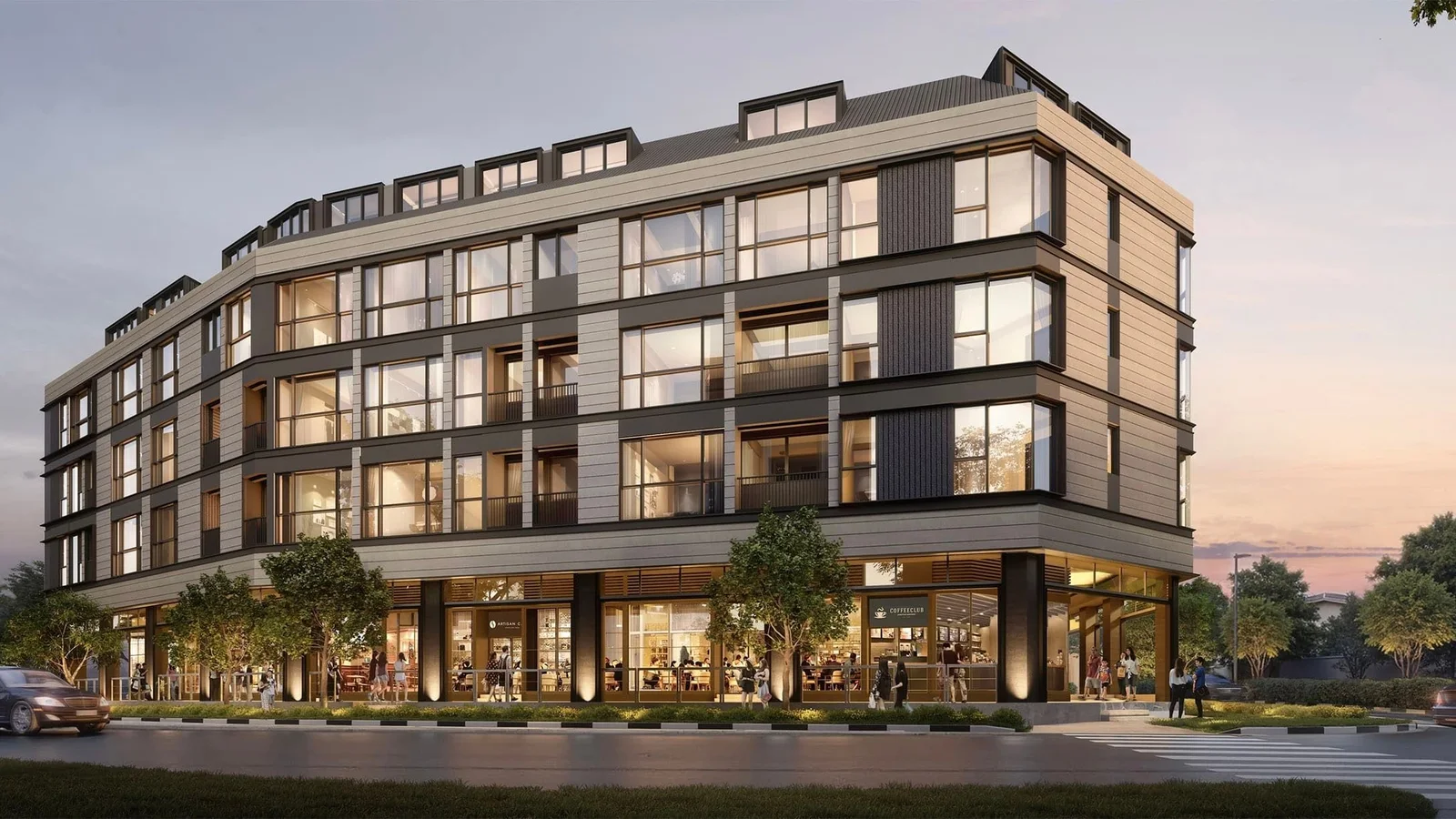
Quick answer: Artisan 8 is a freehold mixed-use redevelopment of the former Sin Ming Centre: 34 apartments above eight commercial units, on roughly 15,425 square feet at 8 Sin Ming Road, from about S$998,000. The freehold title gets the attention. The thing that will shape ownership is that a supermarket votes in the same management corporation as the residents.
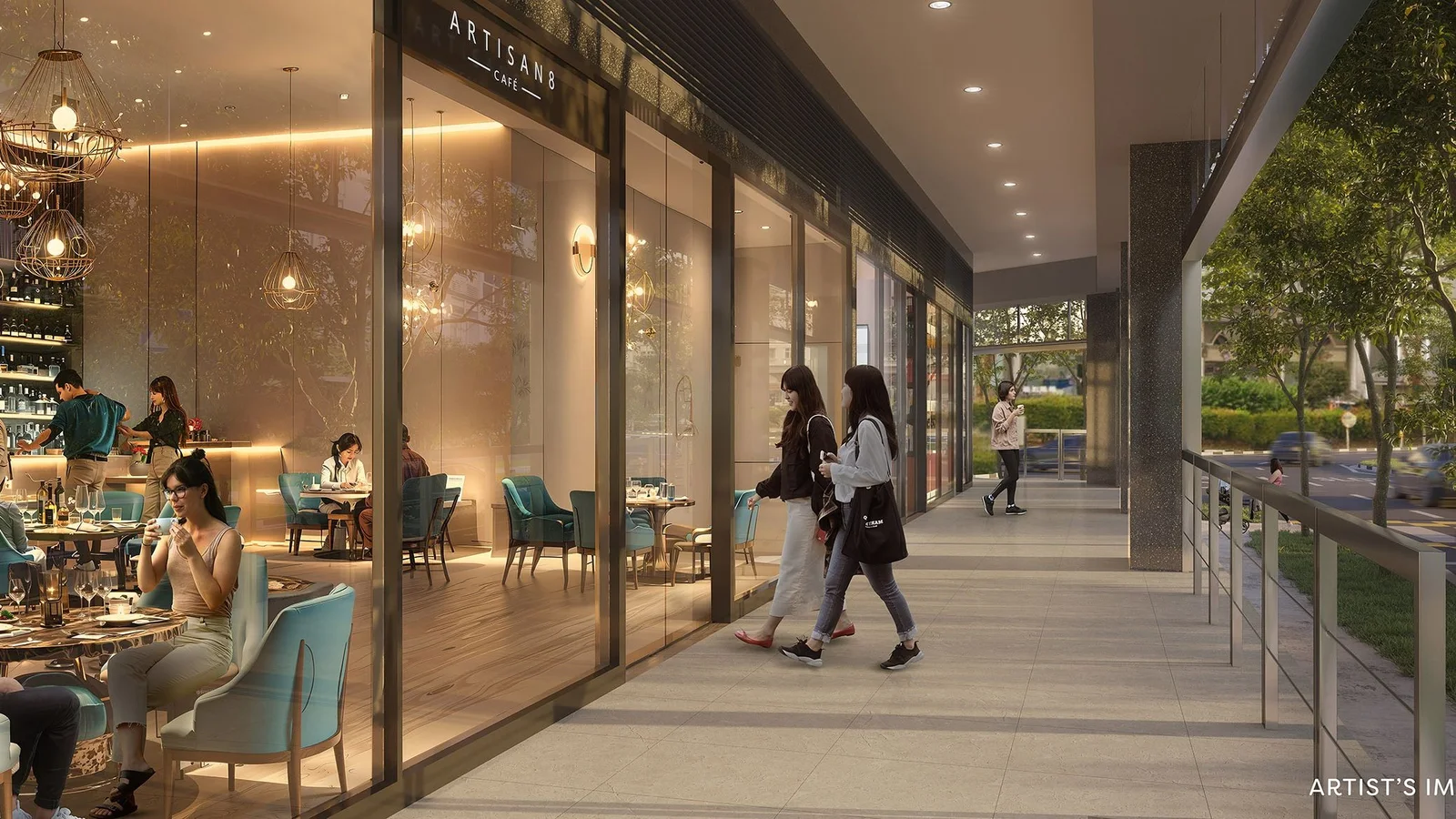
A building with two kinds of owner
Most Singapore condominiums are single-purpose. Everyone who votes at the annual general meeting lives there, or lets to someone who does, and their interests are broadly aligned: keep the place clean, keep the fees reasonable, protect the value.
A mixed-use strata scheme breaks that alignment by design. Artisan 8 has 34 residential lots and 8 commercial lots on one title structure, with shops, a restaurant and a supermarket at street level. Both classes of owner contribute to the same management fund and both vote on how it is spent, and the things they need are not the same things.
| Question the management corporation will face | What the shops want | What the residents want |
|---|---|---|
| Delivery and loading hours | Early and flexible | Late starts, no night noise |
| Refuse handling | Volume, frequent collection | Distance, containment, no smell |
| Signage and lighting | Visible, illuminated, at the frontage | Restrained, not into bedrooms |
| Access control | Open, easy for customers | Restricted, residents only |
| Common-area spend | Frontage and shopfronts | Lobbies, lifts and corridors |
None of these is a scandal. They are the ordinary frictions of a building that does two jobs, and thousands of Singaporeans live above shops perfectly happily. The point is that in a 34-unit scheme these questions are decided by a small number of votes, and a buyer can read the arrangements before committing rather than discovering them at the first general meeting.
The document that actually matters
The strata title schedule allocates share values to each lot. Share values do two things at once: they set how much each owner contributes to the management and sinking funds, and they set voting weight.
So the schedule answers the question this page is really about. If the eight commercial lots carry share values disproportionate to their number, which is common, because commercial lots are often larger and generate more of the building’s wear, then the retail side may hold a blocking position on decisions that affect residents daily. If they carry less, the residents govern and the shops pay.
Alongside it sit the by-laws, which are where operating hours, deliveries, refuse and signage are actually regulated. A buyer should ask for both before the option, and should read them for the specific conflicts listed above rather than in general. This takes an hour and it is the highest-value hour available in this particular purchase.
What the freehold title is doing here
Artisan 8 is one of two freehold titles among these projects, the other being a 246-unit CBD tower at Tanjong Pagar. That scarcity is real: most private housing in Singapore, and almost all recent supply, is 99-year leasehold.
The benefit is the one every freehold buyer is purchasing, which is that the asset never enters lease decay. Financing does not tighten as a tail shortens, valuations do not turn conservative, and the eventual buyer pool is not narrowed to cash purchasers. On a boutique site in an established RCR pocket, that is a coherent long-hold proposition.
What it does not do is resolve the governance question. A freehold share in a building whose management is contested is still a share in a contested building, and the tenure simply means the owner is there for longer. If anything, permanent tenure raises the stakes on the by-laws rather than lowering them.
Where the pricing sits
| Reference | psf (S$) |
|---|---|
| Artisan 8, 2025-26 transactions | 2,100 - 2,456 |
| D20 resale condominiums, 2025-26 | 1,672 - 2,695 |
| Ticket | From (S$) | To (S$) |
|---|---|---|
| 34 units, freehold, ~2028 vacant possession | 998,000 | 2,883,000 |
The sub-S$1,000,000 entry is the headline and it needs a caveat: it buys 398 to 450 square feet. That is a genuinely small apartment, priced at a psf near the top of the district band. Small units in Singapore routinely transact at higher psf than larger ones in the same building, so the low absolute ticket and the high rate per foot are the same fact seen from two ends.
For an overseas purchaser the duty scales with the ticket rather than the rate, and the small entry cuts both ways: additional buyer’s stamp duty at the 60% foreign tier is roughly S$598,800 on a S$998,000 purchase, which is a smaller absolute sum than anywhere else in this pipeline and exactly the same proportion. The ABSD guide sets the tiers and the remission order the treaty exceptions.
Selling a mixed-use flat later
Resale is where mixed-use strata differs most from an ordinary condominium, and it is worth understanding before buying rather than after.
The buyer pool is narrower in both directions. Some purchasers actively want to live above a supermarket: the convenience is genuine, the lift ride to groceries is thirty seconds, and the ground-floor activity makes the street feel safe at night. Others rule it out on sight, for exactly the reasons the by-laws exist to manage. A conventional condominium in the same district is acceptable to almost everybody; this building is strongly preferred by some and excluded by others, which produces a thinner market with more variable outcomes.
Valuation is also harder. There are few directly comparable mixed-use strata schemes of this size in the area, so a valuer will reach for ordinary condominium transactions and apply judgement to the difference. That judgement is not consistent between valuers, and on a 34-unit building there will rarely be a recent in-development transaction to settle the question.
The compensating factor is that the same scarcity works for a seller in a rising market. Buyers who want this specific product have very few places to find it, and a freehold title in the Sin Ming pocket is not something that comes to market often. A long hold suits that dynamic; a forced sale on a timetable does not.
What the Sin Ming pocket is
The address sits on the fringe of Upper Thomson, in an established, low-key part of the RCR that has been quietly reshaped over the past decade by the Thomson-East Coast Line and by the eating and independent-retail belt along Upper Thomson Road.
Sin Ming itself has an older industrial and motor-trade character alongside the residential blocks, which is part of why land here came available for redevelopment at all. That mix is the honest description of the setting: it is convenient, well connected and improving, and it is not a manicured residential enclave. A buyer who visits expecting the second will be disappointed by the first; one who wants an unpretentious address with good access and real amenity on the doorstep will find the trade sensible.
For this particular building, the character of the street matters more than usual, because the ground floor of the development is part of it. The shops are not an amenity bolted on for residents; they are commercial premises trading to the neighbourhood, and their customers are the people already walking past.
Who this suits
A buyer who wants a permanent title in an established pocket, is comfortable living above commercial activity, and will read the by-laws before signing. Small-unit owner-occupiers and long-hold owners are the natural fit.
It suits less well anyone who wants the anonymity and predictability of a large condominium estate, or an investor who has not priced the possibility that management decisions in a small mixed scheme can go against the residential minority. The other freehold option here, pure residential and far larger, is Newport Residences; the neighbouring D20 launches with conventional condominium governance are Thomson Reserve and Upper Thomson Parcel A. Regional definitions are in the CCR, RCR and OCR guide, and an early sale is priced by the seller’s stamp duty ladder.
Frequently Asked Questions
It is a mixed-use strata development, not a condominium with shops attached. Thirty-four apartments sit above eight commercial units including shops, a restaurant and a supermarket, on a compact site of roughly 15,425 square feet at 8 Sin Ming Road. Residential and commercial owners share one management corporation, which is a governance arrangement most Singapore condominium buyers never encounter.
Because the people voting on the building's budget do not all want the same building. A supermarket needs long delivery hours, refuse capacity and signage; a resident on the floor above needs quiet, clean corridors and controlled access. Both pay into the same management fund and both vote at the same general meeting, and with 34 homes against 8 commercial lots the balance of votes is worth checking in the strata schedule before purchase.
Entry starts around S$998,000 for a one-bedroom of roughly 398 to 450 square feet, running to about S$2,883,000 at the top of the range. Recent transactions sat around S$2,100 to S$2,456 psf. It is the only sub-S$1,000,000 entry in this pipeline, which is a function of unit size rather than of a cheap address.
It is the durable one. Artisan 8 and Newport Residences are the only freehold titles among these projects, and freehold in the RCR is scarcer than the marketing usually conveys. But on a 34-unit mixed-use site the governance question is the more immediate risk, because it affects the cost and quality of ownership from the first year rather than from year sixty.
The former Sin Ming Centre, redeveloped by Apex Asia Development after an en-bloc acquisition reported at about S$49 million. The scheme retains a four-storey format with commercial uses at street level and apartments above, which is why the mixed-use character is structural rather than incidental.
The strata title schedule, which sets the share values and therefore the votes and the maintenance contributions, and the draft by-laws covering commercial operating hours, deliveries, refuse and signage. Those two documents decide more about living here than the showflat does, and both exist before launch.
Get your Singapore property shortlist
Share your budget and target region. We respond within one business day.