
Sentosa Cove vs CCR Condo: Investment Comparison 2026
Sentosa Cove vs CCR condo: SLA approval vs open purchase, 1.5-2.5% gross yield, 60% ABSD, liquidity and maintenance cost compared.
By Invest Singapore Editorial · Updated September 23, 2026 · 18 min read
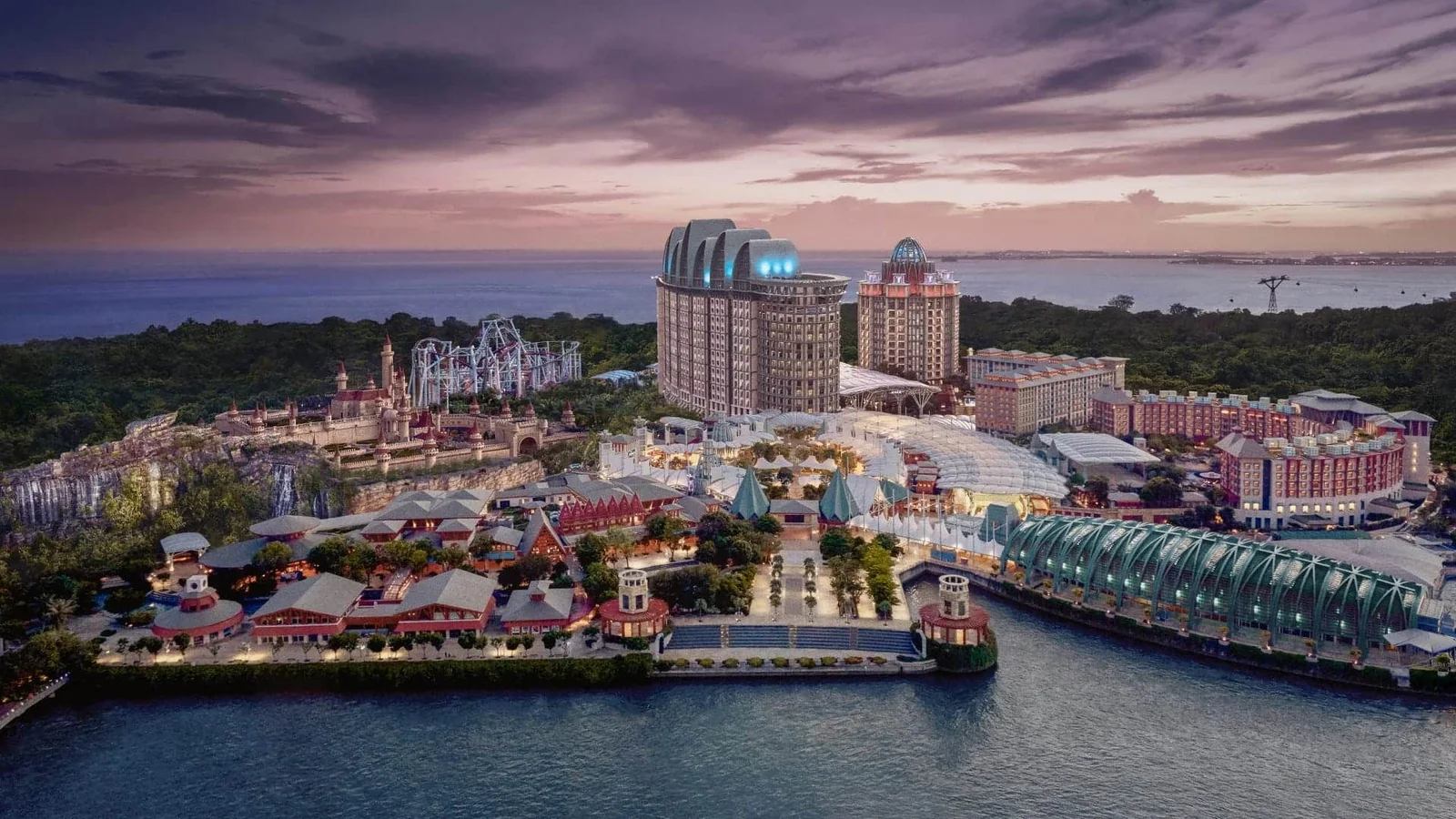
Quick answer: Sentosa Cove is the only place foreigners may buy landed property (with SLA approval). CCR condos in D9/D10 open without SLA. Both face 60% ABSD and 1.5-2.5% gross yield. CCR wins on liquidity; Sentosa on landed lifestyle. See Sentosa Cove guide and Can Foreigners Buy Property.
Singapore’s two prestige residential tiers
Singapore’s prime property market divides into two distinct prestige categories when foreign buyers enter the conversation. Core Central Region condominiums in Districts 9, 10, and 11 represent the standard route to Singapore premium residential ownership: a cash and stamp duty transaction, no government approval for the property type itself, and a resale market that functions across a wide buyer base. Sentosa Cove represents the exception: the single designated area within Singapore where foreigners may own landed residential property, provided the Singapore Land Authority grants approval before the sale completes.
These two options target broadly similar buyer profiles globally: high-net-worth investors and families seeking a Singapore foothold, a wealth-storage asset, or a habitation base in one of Asia’s most stable jurisdictions. The mechanics, costs, yields, and exit conditions differ substantially. Understanding those differences is the first task for any foreign buyer who is deciding between the island’s most prestigious address category and its only foreign-accessible landed tier.
This comparison draws on our detailed Sentosa Cove property investment guide for submarket background, our CCR vs RCR property comparison for regional positioning, and district-level hubs at District 9 Orchard and District 10 Bukit Timah. Yield mechanics including net yield modelling appear in the Singapore rental yield guide.
Deciding between Sentosa landed and Orchard condo? Share nationality. We model ABSD, SLA timeline, and exit liquidity.
Get Sentosa vs CCR shortlistSentosa Cove at a glance
Sentosa Cove occupies the eastern portion of Sentosa Island, approximately 4 km from Singapore’s CBD via the Sentosa Gateway. The submarket comprises roughly 2,500 homes across four property types: bungalows on waterway-facing plots, cluster houses, condominium developments within the gated precinct, and a small number of townhouses. The Marina at Keppel Bay adjacent to the precinct allows berth-owning bungalow residents to arrive by private vessel.
The legal distinction that makes Sentosa Cove unique in Singapore is the Residential Property Act exception. Under the Act, foreigners may not own landed residential property in Singapore except on Sentosa Island, subject to SLA approval. That approval requirement creates a process that does not exist for any other Singapore residential purchase: the buyer must apply to the SLA, demonstrate good character and financial standing, and wait three to six months for a decision before the sale can complete.
Sentosa Cove condominiums within the precinct are not subject to the SLA landed-property approval requirement and can be purchased by foreigners on the same basis as CCR condos. The distinction this article focuses on is Sentosa Cove landed versus CCR condo, which represents the genuine fork in the road for foreign buyers choosing between Singapore’s two prestige residential tiers.
Sentosa Cove bungalow PSF on land area has historically ranged from S$1,400 to S$2,800 psf depending on plot size, waterway frontage, renovation state, and remaining lease on the 99-year leasehold title. Most Sentosa Cove landed stock carries a 99-year lease from around 2006, giving remaining leases in the 79-year range as of 2026. Built-up area PSF for Sentosa Cove bungalows typically runs S$1,200-S$2,200 psf.
| Factor | Sentosa Cove landed |
|---|---|
| Property type | Bungalow, cluster house, townhouse |
| Tenure | Primarily 99-year leasehold (from approx 2006) |
| SLA approval required | Yes, for foreign buyers |
| Typical plot size | 350-900 sqm |
| 2026 transacted PSF (land area) | S$1,400-S$2,800 |
| Indicative gross yield | 1.5-2.0% |
| Foreign buyer access | Yes, with SLA approval |
| Annual maintenance est. | S$30,000-S$60,000+ |
| Marina berth (waterfront) | S$12,000-S$30,000/year additional |
CCR luxury condos at a glance
Core Central Region encompasses Districts 9, 10, and 11 plus the Downtown Core and Sentosa Cove itself. For the purposes of this comparison, CCR luxury condos refers to private condominium developments in the prime residential heartland: Orchard Road and River Valley (District 9), Bukit Timah, Holland Road, and Tanglin (District 10), and the Novena and Newton corridor (District 11).
These districts host Singapore’s most recognised condominium addresses: freehold blocks from the 1980s and 1990s in established positions, integrated luxury developments from the 2010s with direct MRT connectivity, and new launches on the rare land parcels that come to market in these maximised zones. PSF for luxury CCR condos in 2026 runs approximately S$3,000-S$4,500 psf for premium units, with freehold buildings at the upper end of that range.
Foreign buyers may purchase CCR condos without any property-type approval requirement. The transaction follows the standard Singapore conveyancing process: option, 1% booking fee, legal due diligence, stamp duty payment, and completion. No government pre-approval for the property type is required beyond normal stamp duty clearance.
| Factor | CCR luxury condo |
|---|---|
| Property type | Private condominium |
| Tenure | Freehold and 99-year leasehold (both common) |
| SLA approval required | No |
| Typical unit size | 500-2,500 sq ft |
| 2026 PSF estimate (luxury tier) | S$3,000-S$4,500 |
| Indicative gross yield | 2.0-2.5% |
| Foreign buyer access | Yes, standard purchase |
| Annual maintenance est. | S$6,000-S$15,000 |
| Freehold availability | Yes (Districts 9 and 10 in particular) |
Ownership and legal structure: SLA approval versus standard purchase
The SLA approval requirement for Sentosa Cove landed is not a formality. It is a government discretionary process with no guaranteed outcome and a meaningful time horizon. Buyers who proceed to sign an option before receiving SLA approval take the risk that approval may be declined, which would unwind the transaction and forfeit legal costs. Experienced Singapore property lawyers advise structuring any Sentosa Cove landed option with conditional clauses tied to SLA approval.
The practical consequence is a three-to-six-month due diligence and approval window between signing and completion. Sellers and agents familiar with the submarket price this delay into negotiation timelines, but buyers should verify that their financing is confirmed and terms are locked before initiating the SLA process, as conditions can change during a six-month window.
CCR condominium purchases involve no equivalent process. From option to completion typically runs eight to ten weeks under standard Singapore conveyancing. The buyer gains title at completion without any post-completion conditions tied to government approval of the buyer’s nationality.
That timeline difference has practical implications for buyers who are relocating, managing financing facilities, or coordinating a property chain across jurisdictions. For buyers who need certainty of completion within a defined window, CCR condos are structurally more predictable than Sentosa Cove landed.
The SLA approval also means that Sentosa Cove landed properties are not available for foreign buyers to purchase via company structures that might otherwise be used in Singapore’s commercial property market. Residential property policy applies directly, and the foreign buyer of landed must be an individual who meets SLA’s criteria.
ABSD and full acquisition costs: the 60% equation
The June 2023 Additional Buyer’s Stamp Duty increase to 60% for foreign buyers is the dominant cost factor in both submarkets. There is no Sentosa Cove exception and no CCR exception. The 60% applies on top of standard Buyer’s Stamp Duty on any purchase of Singapore residential property by a foreign national.
For US citizens and Swiss citizens, Free Trade Agreements with Singapore provide 0% ABSD on a first residential purchase, which changes the investment calculus materially at either location. That FTA carve-out applies equally at Sentosa Cove and in CCR. All other foreign nationals face the full 60% rate.
| Cost item | Sentosa Cove bungalow (S$8M) | CCR condo 900 sq ft at S$3,500 psf (S$3.15M) |
|---|---|---|
| Purchase price | S$8,000,000 | S$3,150,000 |
| Buyer’s Stamp Duty (indicative) | S$299,600 | S$104,000 |
| ABSD at 60% | S$4,800,000 | S$1,890,000 |
| Legal and misc | S$25,000 | S$15,000 |
| All-in cost (foreign non-FTA) | approx S$13,124,600 | approx S$5,159,000 |
| All-in cost (FTA at 0% ABSD) | approx S$8,324,600 | approx S$3,269,000 |
On a S$8M Sentosa Cove bungalow, a foreign non-FTA buyer deploys over S$13M all-in. Annual gross rent at 1.8% on purchase price of S$8M generates S$144,000. Against S$13.1M all-in cost, that is a 1.1% effective gross yield before maintenance, property tax, vacancy, and agent costs. After deductions, net yield on all-in cost falls below 0.5% for most Sentosa Cove bungalows.
On a S$3.15M CCR condo, the same foreign buyer deploys S$5.16M all-in. Annual gross rent at 2.2% on purchase price generates S$69,300. Against S$5.16M all-in, effective gross yield is 1.34% before deductions, and net yield typically reaches 0.7-0.9% on all-in cost. The CCR condo produces marginally better effective yield, but neither investment is compelling on income alone at non-FTA ABSD rates.
FTA buyers who pay 0% ABSD see the mathematics transform. At S$8M purchase price, the Sentosa Cove bungalow becomes an S$8.3M all-in investment with gross yield of 1.73% on cost and net yield approaching 1.0% after running costs. A CCR condo at S$3.15M becomes S$3.27M all-in with gross yield of 2.12% and net yield in the 1.3-1.6% range. For FTA buyers, CCR condo still produces better income yield; the Sentosa Cove argument shifts to lifestyle utility, landed exclusivity, and capital appreciation expectation.
Yield reality: prestige markets at 1.5-2.5% gross
Both submarkets sit in what Singapore agents describe as prestige or ultra-premium territory, where gross yield is compressed by price levels that the rental market does not proportionally support. Understanding why gross yield is structurally limited in both tiers is important before building an investment case on income return.
Why Sentosa Cove yields trail CCR condos
Sentosa Cove landed properties are large format. A 5,500-8,000 sq ft built-up bungalow in a marina setting targets a tenant profile that is extremely thin globally: a family that wants gated island living, a boat berth, pool, and garden within 4 km of the CBD. That tenant profile typically consists of senior banking executives or private equity professionals on regional headquarters contracts, ultra-HNWI families, or diplomatic missions with specific housing requirements.
Monthly rents for Sentosa Cove bungalows typically run S$18,000-S$35,000 depending on size, frontage, and renovation quality. At S$25,000 monthly on an S$8M bungalow, gross yield is 3.75%. But an S$8M Sentosa Cove bungalow is on the lower end of the price range; premium waterway-facing bungalows transact at S$12M-S$20M. At S$15M with S$25,000 monthly rent, gross yield falls to 2.0%. Vacancy periods between tenants in this thin market can run three to six months, which further compresses effective annual yield.
CCR luxury condo yields
CCR luxury condos in the S$3,000-S$4,500 psf band target a broader tenant pool. Corporate housing packages for regional headquarters executives at S$7,000-S$14,000 monthly, diplomatic tenants on government housing allowances, and senior financial sector professionals on Orchard or River Valley addresses each contribute to tenant depth that Sentosa Cove landed cannot match.
A 1,200 sq ft CCR condo at S$3,500 psf (S$4.2M) leased at S$12,000 monthly generates 3.43% gross yield on purchase price. A smaller 700 sq ft unit at the same psf (S$2.45M) at S$6,500 monthly produces 3.18% gross. The 2.0-2.5% range quoted for CCR luxury reflects the premium tier within CCR where PSF is highest and tenant rent does not fully compensate the price premium; units in the 700-900 sq ft bracket at more accessible CCR addresses can exceed this range.
| Submarket | Purchase price example | Monthly rent | Gross yield on purchase | Net yield estimate |
|---|---|---|---|---|
| Sentosa Cove bungalow | S$12,000,000 | S$22,000 | 2.2% | under 1.0% |
| Sentosa Cove bungalow | S$8,000,000 | S$20,000 | 3.0% | approx 1.2% |
| CCR condo 1,200 sq ft | S$4,200,000 | S$12,000 | 3.4% | approx 1.8% |
| CCR condo 900 sq ft | S$3,150,000 | S$8,500 | 3.2% | approx 1.7% |
| CCR condo 700 sq ft | S$2,450,000 | S$6,500 | 3.2% | approx 1.6% |
Note: Net yield estimates assume annual maintenance, property tax, 8% vacancy on Sentosa Cove, 5% on CCR, and agent renewal fee. ABSD not included in purchase price for this table.
Liquidity: who buys on exit
Liquidity is the most structurally important difference between these two submarkets, and it consistently favours CCR condominiums.
CCR condo exit market
When a CCR condo owner in District 9 or District 10 decides to sell, the buyer pool includes Singapore citizens paying zero ABSD on a second property, permanent residents at 30% ABSD on a second purchase, FTA-eligible foreign nationals at 0% ABSD, non-FTA foreign nationals at 60%, and local investors who have cleared prior property ownership. That pool is wide, particularly for units priced below S$3M where Singapore citizen and PR demand is deepest.
Well-located freehold CCR condos in Districts 9 and 10 have demonstrated consistent demand from Hong Kong-based, Indonesian, and European high-net-worth buyers who seek Singapore’s legal stability. Resale activity in these districts is supported by multiple real estate agencies maintaining active buyer mandates, developer resale programs, and institutional platforms. Marketing a CCR condo through professional channels to completion typically takes 3-12 months depending on market conditions and pricing.
Sentosa Cove landed exit market
Selling a Sentosa Cove bungalow requires finding a buyer who is either a Singapore citizen, a Singapore PR, or a foreign national willing to go through SLA approval. Singapore citizens and PRs can buy Sentosa Cove landed without SLA approval, but the price range and lifestyle specificity mean that local demand is also thin for these properties. The total addressable buyer pool for a S$10M Sentosa Cove bungalow is a fraction of the pool for a S$10M CCR condo.
In weak market conditions, Sentosa Cove landed properties have sat unsold for 12 to 24 months without credible offers. Forced sellers in this submarket face either extended holding periods or significant price discounts to find the narrow buyer profile willing to transact. For investors who may need to liquidate on a defined timeline, that illiquidity carries meaningful risk.
Tenancy: who rents and for how long
Sentosa Cove tenants
The Sentosa Cove tenant pool draws from a small set of high-income profiles. Senior partners at law firms, private bank MDs, family office principals, and diplomatic mission representatives are the primary corporate tenant categories. A subset of ultra-HNWI tenants rents Sentosa Cove bungalows as a transitional residence while their own permanent property is under renovation elsewhere in Singapore.
The marina and outdoor lifestyle amenities are genuine draw factors for this tenant group. Tenants who actively use a boat berth and value the Sentosa security perimeter, club facilities, and quiet residential environment are stable tenants who often renew for multi-year periods. But finding the first tenant can be protracted. A Sentosa Cove bungalow with a six-month vacancy between tenants incurs carrying costs of S$15,000-S$40,000 per month in mortgage interest, maintenance, and fees.
Vacancy in the Sentosa Cove submarket tends to cluster around corporate housing budget cycles. Post-2020 rationalisation of expatriate housing packages has reduced the number of corporations paying S$25,000 monthly housing allowances, which disproportionately affects a submarket where that tenant tier is the primary demand driver.
CCR condo tenants
CCR luxury condo tenants include the same senior executive tier as Sentosa Cove, plus a broader professional tier that Sentosa Cove cannot reach. Regional headquarters professionals at S$7,000-S$12,000 monthly, mid-senior banking executives on S$9,000-S$14,000 packages, international school families in the Tanglin-Bukit Timah corridor, and Novena medical professionals all contribute to a tenant pool that replenishes faster after a vacancy event.
Tenant lead time to placement for a well-presented CCR condo at a competitive rent is typically four to eight weeks through professional agents. Multiple agencies run active tenant mandates for CCR residential, particularly in Districts 9 and 10. For Sentosa Cove landed, agent lead time to tenant placement averages three to five months.
Maintenance and running costs
Running costs in the prestige property market are a material component of total holding cost. The difference between Sentosa Cove landed and CCR condo maintenance is not marginal.
Sentosa Cove landed running costs
A Sentosa Cove bungalow of 5,500-8,000 sq ft requires active maintenance across multiple systems: private swimming pool servicing at S$300-S$600 monthly, tropical garden and landscaping at S$1,500-S$3,500 monthly, pest control and building maintenance at S$500-S$1,500 monthly, air-conditioning servicing across typically 8-12 units at S$200-S$600 monthly, and periodic capital works on roof, timber decking, and facade. Annual running costs exclusive of marina berth typically total S$30,000-S$60,000. Waterway-facing bungalows with active berths add S$12,000-S$30,000 in marina fee and boat maintenance.
Property tax on a Sentosa Cove bungalow assessed at a high annual value can exceed S$40,000 annually for non-owner-occupied status. Landlords who let their Sentosa Cove properties must budget for this charge alongside the maintenance base.
CCR condo running costs
CCR luxury condominiums have strata-managed facilities shared across all owners. Monthly management fund contributions for a luxury CCR building typically run S$500-S$1,200 per unit monthly, covering shared pool, gym, landscape, and building systems. Annual costs per unit therefore range from S$6,000 to S$14,400. Sinking fund contributions for capital replacements are additional but typically lower.
Non-owner-occupied property tax on a CCR condo at annual value of S$60,000 (representative of a S$3M-S$4M unit rented at market rates) runs approximately S$8,400-S$11,200 annually under 2026 property tax rates. Total annual holding costs on a CCR luxury condo typically range S$18,000-S$30,000 inclusive of maintenance, tax, and agent renewal, compared to S$70,000-S$100,000 or more for a Sentosa Cove bungalow at similar market value.
Capital appreciation thesis
The capital appreciation history of these two submarkets diverges significantly since the early 2010s, and that history is the strongest argument for CCR condos over Sentosa Cove landed in a pure investment frame.
Sentosa Cove capital appreciation record
Sentosa Cove landed prices peaked in 2012-2013 when global ultra-HNWI capital flowed into Singapore ahead of the ABSD escalations and when the submarket was still relatively new. Prices have not recovered to those 2013 levels in nominal terms across most of the bungalow segment as of 2026. The 2013-2023 decade saw Sentosa Cove underperform Singapore’s overall private residential index, affected by the progressive ABSD increases that each removed a layer of foreign buyer demand, by the corporate housing rationalisation that reduced the rental yield floor, and by the 99-year leasehold clock that progressively reduces financing flexibility.
The appreciation thesis for Sentosa Cove in 2026 rests on scarcity: there are a finite number of Singapore landed properties available to foreign buyers, and that number will not increase. If Singapore’s ABSD policy ever reverses for a specific nationality tier or if a new FTA is signed, Sentosa Cove is first in line for foreign demand recovery. That optionality is real, but it is policy-dependent and timeline-indeterminate.
CCR condo capital appreciation record
CCR condominiums have tracked Singapore’s private residential price index more closely across market cycles. URA data shows that while CCR has not always led the quarterly percentage gains (RCR and OCR have posted stronger percentage moves in recent quarters), CCR absolute PSF has held and grown, with well-located freehold blocks in Districts 9 and 10 surpassing their 2013 nominal peak prices in the 2021-2024 cycle.
CCR condominiums benefit from a capital appreciation floor provided by local Singapore-citizen demand for investment and upgrader properties in prime addresses. That floor does not exist for Sentosa Cove landed, which is structurally dependent on foreign buyer demand given the large format and niche lifestyle positioning.
For buyers underwriting a 10-15 year hold, the CCR condo historical trajectory is more consistent and better supported by broad buyer pool dynamics than the Sentosa Cove landed trajectory.
Side-by-side comparison
| Dimension | Sentosa Cove landed | CCR luxury condo |
|---|---|---|
| Foreign access | SLA approval required | Standard purchase |
| Purchase process | 3-6 months (SLA review) | 8-10 weeks |
| Typical ticket (foreign buyer) | S$8M-S$20M | S$2.5M-S$6M |
| All-in at 60% ABSD | S$13M-S$33M | S$4.1M-S$9.9M |
| Gross yield on purchase price | 1.5-2.0% | 2.0-2.5% |
| Net yield on all-in (foreign non-FTA) | under 0.5% | 0.7-0.9% |
| Annual maintenance | S$30,000-S$60,000+ | S$6,000-S$15,000 |
| Liquidity on exit | Thin; SLA-limited buyer pool | Wide; PRs, citizens, FTAs, investors |
| Tenant pool depth | Very thin (ultra-HNWI/corporate) | Broad (corporate, diplomatic, professional) |
| Vacancy risk | High (3-6 months between tenants) | Moderate (4-8 weeks placement) |
| Capital appreciation since 2013 | Below URA private residential index | Generally in line with index |
| Freehold availability | Rare (most 99-year from 2006) | Yes (Districts 9 and 10) |
| Lifestyle factor | Marina, gated island, boat berth | Urban premium, MRT access, Orchard/Bukit Timah |
Who should choose each option
Sentosa Cove makes sense for
An ultra-HNWI buyer who will use the property personally for a meaningful portion of each year and who values the landed-property right, the marina lifestyle, and the Singapore island address as components of a global lifestyle portfolio rather than a standalone investment. For this buyer, the SLA process is an acceptable step, the maintenance cost is managed, and the liquidity constraint is tolerable given a long hold intention.
A Singapore PR or citizen who wants landed property without the cost and scarcity of mainland Singapore landed stock. PRs and citizens do not require SLA approval and face lower ABSD tiers. The investment case improves substantially for a PR buying a first Sentosa Cove property at 5% ABSD, where gross yield on all-in cost improves meaningfully compared to the foreign-buyer scenario.
An FTA-eligible buyer (US or Swiss citizen) making a first Singapore residential purchase who specifically wants the Singapore landed experience. At 0% ABSD, the all-in cost on an S$8M Sentosa Cove bungalow is S$8.3M, and a gross yield of 2.0% on purchase becomes 1.9% on all-in cost before running costs. Still not a strong income case, but the lifestyle utility adjusts the calculus if the property will be actively used.
CCR condo makes sense for
A foreign buyer who wants Singapore prime residential exposure without the SLA process, the liquidity constraint, or the maintenance burden of Sentosa Cove landed. A 900 sq ft CCR condo at S$3.15M is a S$5.15M all-in investment for a non-FTA foreign buyer: a more accessible capital commitment that delivers central Singapore address quality and a broader exit market.
An investor with a 7-12 year capital appreciation horizon who wants a defensible property in Singapore’s most historically consistent residential zone. CCR freehold condos in Districts 9 and 10 have demonstrated price resilience across multiple economic cycles and ABSD regimes. The store-of-value thesis is stronger for CCR freehold than for 99-year Sentosa Cove leasehold approaching its 30th year from grant.
A buyer who needs financing certainty and transaction timeline certainty. Banks are accustomed to financing CCR condos and will provide valuations and loan approvals within standard timelines. Sentosa Cove landed financing can face additional complexity given the SLA condition and the thinner comparables market.
Verification checklist before committing
Request URA REALIS transaction data for Sentosa Cove or the specific CCR building over the last eight quarters. Look at both volume of transactions and transacted PSF range. Thin transaction history in Sentosa Cove is expected; zero transactions in a six-month window for your specific unit type is a caution.
For Sentosa Cove landed, consult a lawyer who has handled SLA applications before signing any option. Confirm the option’s conditions regarding SLA approval, the refund mechanism if approval is declined, and the timeline.
For CCR condos, request MCST financials to verify sinking fund adequacy. Older CCR buildings on prime sites have occasionally carried deferred capital maintenance that translates to special levies for owners.
Obtain a bank valuation pre-approval before proceeding. CCR luxury condos above S$4M can face bank valuations that lag transaction price on thin comparable data, affecting the financed amount. Sentosa Cove landed valuations are inherently more variable given sparse transactions.
Walk the Sentosa Cove property during a weekday. The 15-20 minute peak-hour commute to the CBD via Sentosa Gateway and Ayer Rajah Expressway can extend significantly under congestion. Verify the tenant profile assumptions against actual rental listings on PropertyGuru and 99.co at the time of your purchase, not at the time an agent presents historical figures.
For yield modelling in either submarket, use the net yield framework in the Singapore rental yield guide which separates gross, operating, and effective yield on all-in cost across ABSD tiers.
Closing perspective
Sentosa Cove and CCR luxury condos both sit at the top of Singapore’s residential market in terms of address prestige, buyer profile, and absolute price. The investment mechanics diverge in almost every other dimension: legal process, liquidity, maintenance cost, yield structure, and capital appreciation history.
For foreign buyers at 60% ABSD who are evaluating the investment case on financial return alone, neither submarket produces a compelling income yield on all-in cost. The investment thesis in both cases is capital preservation, lifestyle utility, and appreciation over a long hold period. On those criteria, CCR condominiums have the stronger historical track record, the broader buyer pool, and the lower ongoing cost base.
Sentosa Cove landed is for buyers who specifically want the landed-property right in Singapore, the marina lifestyle, and the island security that no CCR condominium can replicate. That differentiation has value for a defined and narrow buyer profile. It does not translate into a conventional investment return that would justify the additional SLA process, maintenance burden, and liquidity constraint relative to a prime CCR condo in the same capital commitment range.
For most foreign investors approaching Singapore prime property for the first time, CCR condominiums offer the better entry point: accessible transaction process, freehold tenure options, stronger resale liquidity, and a yield and appreciation trajectory that can be underwritten with confidence against URA historical data.
Frequently Asked Questions
No. Sentosa Cove is the only area in Singapore where foreigners may purchase landed residential property, but Singapore Land Authority approval is mandatory before completion. The SLA review typically takes three to six months. Approval is not automatic; buyers must demonstrate good character and financial standing. Foreigners cannot purchase landed property anywhere else in Singapore, making this approval pathway unique to Sentosa Cove.
Both submarkets operate in the prestige bracket where gross yield runs approximately 1.5-2.5%. Sentosa Cove bungalows and cluster homes typically achieve 1.5-2.0% gross given large floor plates that attract niche tenant profiles. CCR luxury condos in Districts 9, 10, and 11 typically achieve 2.0-2.5% gross at current PSF levels, benefiting from slightly broader tenant demand relative to the purchase price. Neither submarket produces a meaningful income yield after 60% ABSD and holding costs.
Yes. The 60% Additional Buyer's Stamp Duty introduced in June 2023 applies to all residential purchases by foreign buyers in Singapore, including both Sentosa Cove properties and CCR condominiums. The ABSD is calculated on the purchase price or market value whichever is higher. There is no carve-out for Sentosa Cove. US and Swiss nationals qualify for 0% ABSD on a first residential purchase under their Free Trade Agreements with Singapore, which applies equally in both submarkets.
CCR condominiums are significantly more liquid than Sentosa Cove properties. CCR condo buyers include Singapore PRs, local investors, FTA-eligible foreigners, and institutional buyers across a wide price range from S$2M to S$10M. Sentosa Cove landed properties require foreign buyers to go through SLA approval, which substantially narrows the buyer pool. CCR freehold condos in Districts 9 and 10 attract global HNW demand from Hong Kong, Indonesia, and Europe, while Sentosa Cove bungalow marketing campaigns typically require 12-24 months in weak market conditions.
Sentosa Cove landed properties carry substantially higher maintenance costs than CCR condominiums. A 6,000 sq ft Sentosa Cove bungalow typically costs S$30,000-S$60,000 per year in upkeep including pool maintenance, tropical landscaping, pest control, and structural wear. Marina berth fees for waterfront bungalows add S$12,000-S$30,000 annually. CCR condo maintenance fund contributions for luxury buildings typically run S$6,000-S$15,000 annually for strata-managed facilities. The landed property cost base is three to five times higher, which further compresses net yield.
CCR condominiums have delivered more consistent capital appreciation than Sentosa Cove over the past 15 years. Sentosa Cove saw peak prices around 2012-2013 followed by a prolonged correction, underperforming the broader CCR trend through the 2015-2022 period. CCR condos in Districts 9, 10, and 11 have generally tracked Singapore's private residential price index more closely, with well-located freehold blocks surpassing prior nominal peaks in the 2021-2024 cycle. As of 2026, Sentosa Cove landed prices remain below 2013 peak levels in nominal terms for many units.
Sentosa Cove appeals to a very specific buyer profile: ultra-high-net-worth individuals who want Singapore landed property access, a marina lifestyle, and are comfortable with thin liquidity, high maintenance costs, and a long investment horizon. As a pure yield investment for foreign buyers with 60% ABSD, the numbers are challenging. Net yield after ABSD, maintenance, and vacancy can fall below 0.5% on all-in cost. The investment case rests on lifestyle utility and long-hold store-of-value rather than income return. Buyers who do not plan to use the property personally should scrutinise the hold-period arithmetic carefully before committing.
Sentosa landed or CCR condo?
Share budget and hold period. We compare SLA path, ABSD, liquidity, and net yield on both prestige tiers.