
Bayshore Road GLS Review 2026: From S$2.10m, 515 Units
Bayshore is OCR on paper and guides S$650-1,000 psf above the Bedok average. The S$658.9m land bid, not the region label, is what a buyer finances.
By Invest Singapore Editorial · Updated August 27, 2026 · 10 min read
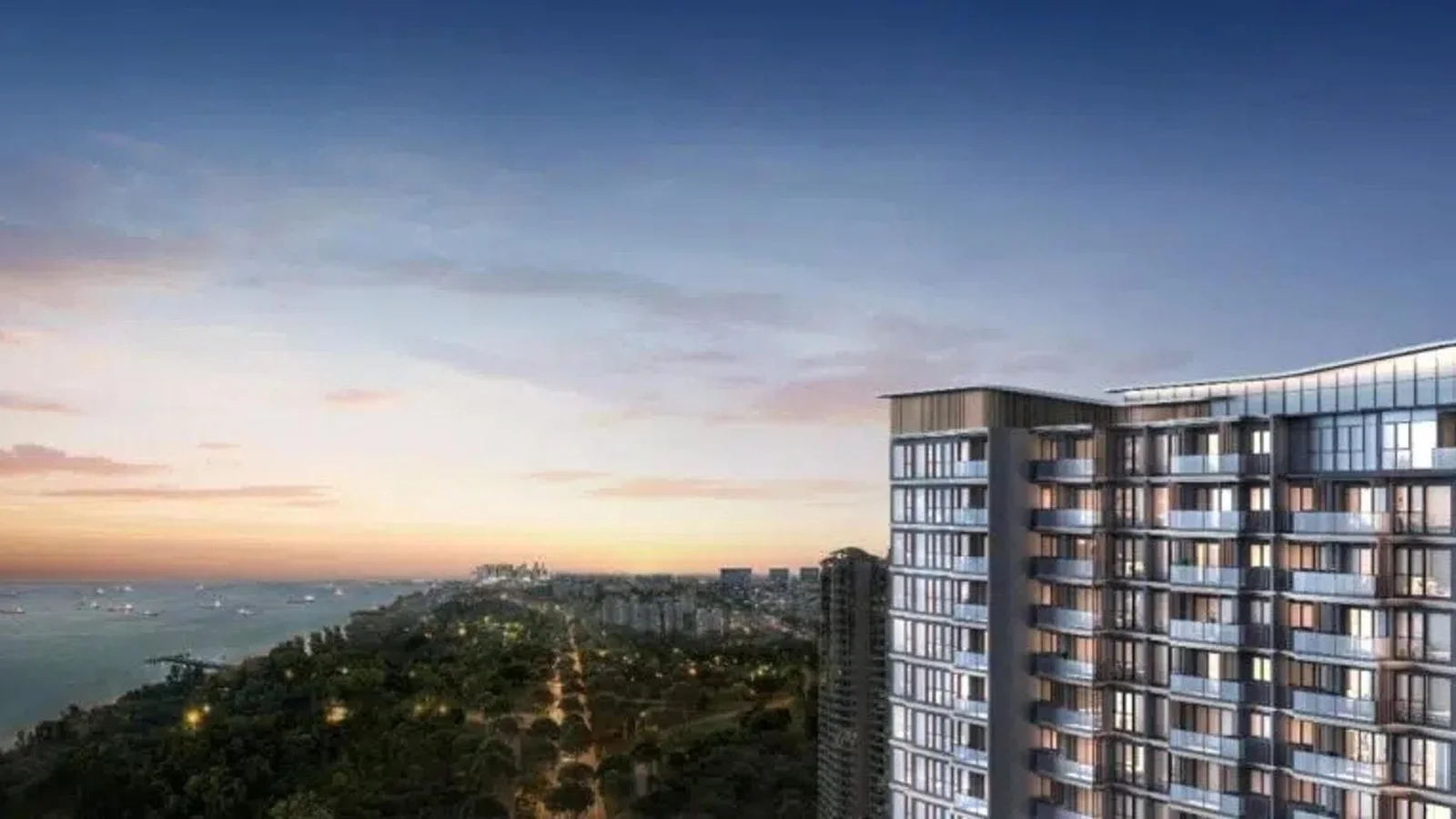
Quick answer: Bayshore Road GLS is a pipeline project of about 515 units on a coastal parcel that SingHaiyi Group and Haiyi Holdings secured for roughly S$658.9 million, guiding S$2,800 to S$3,200 psf. The district code says Outside Central Region. The land bid says something else, and it is the land bid a buyer will be financing.
The region label is the wrong instrument
Singapore’s three-region classification is a planning convenience. It divides the island into Core Central, Rest of Central and Outside Central, and it is used for statistics, for policy and, unhelpfully, for buyer expectations.
Applied here it produces a nonsense. This parcel is Outside Central Region and guides above the Rest of Central Region average, because the classification measures distance from the centre and the market is pricing a coastline. Those are different variables and they happen to disagree at exactly this address.
| Reference | psf (S$) | What it describes |
|---|---|---|
| Bayshore Road GLS launch guide | 2,800 - 3,200 | This coastal parcel |
| D16 Upper East Coast resale, 2025-26 | 2,300 - 2,500 | The coastal strip |
| D16 Bedok town average, 2026 | 2,154 | The inland town, same district |
| Pinery Residences, D16 inland launch | 1,750 - 2,000 | A new launch on the inland side |
Read the top and bottom rows together: two 2026 launches, one district code, roughly S$1,000 psf apart. The label is carrying none of that information. Anyone budgeting from a regional average will either dismiss this project as absurdly priced or, working the other way, assume the inland launch is a bargain.
What S$658.9 million buys and obliges
The tender result is the most solid fact available about this project, and it is worth treating as the anchor rather than as trivia. Roughly 112,992 square feet of coastal land changed hands for S$658.9 million, and that cost has to be recovered across approximately 515 units together with construction, financing across the build period, marketing and margin.
That arithmetic constrains the developer more than it constrains the buyer. A land bid of this size removes the option of launching cheaply to clear stock quickly: the floor beneath any price list is set years before the first buyer walks into a showflat. For a purchaser, the practical implications are two.
First, the guide range is unlikely to soften much. Discounting into a high land basis is how developers lose money, and a consortium that bid competitively for a coastal parcel did so with a pricing plan already in mind.
Second, the risk is concentrated at the top of the range rather than the bottom. If the coastal premium the bid assumed does not hold, if buyers decline to pay S$3,200 for an address whose district code says OCR: the units that struggle are the expensive ones, and the resale evidence a future seller relies on will be set by whatever cleared instead.
Pipeline means the product does not exist yet
There is no showflat, no authorised price list, no floor plans and no confirmed completion year in the material available here. That is normal for a parcel at this stage and it changes what a buyer can actually do.
What can be researched now:
- The land consideration and the site area, both public
- The approximate unit count, and therefore the implied density
- The coastal location itself, which can be walked today
- The transport programme for the corridor, which is published
What cannot be researched yet:
- Layouts, efficiency, ceiling heights, orientation of individual stacks
- The actual price per unit, as opposed to a guide range
- The facilities provision and the resulting maintenance base
- The developer’s release strategy and the timing of the launch
The honest position for anyone interested is that this is a project to track rather than to decide on. The useful preparation is to learn the coastal strip properly now, walk it, price the existing stock, understand what S$2,300 to S$2,500 psf currently buys there, so that when the price list appears the comparison takes an afternoon rather than a month.
What the coast is actually worth
The premium being asked rests on adjacency to East Coast Park and on the corridor’s rail programme. Both deserve to be assessed on their own rather than accepted as a package.
The park is real, permanent and unusually good: a long continuous stretch of coastal parkland with cycling and running routes, food centres and beach access, and it is the reason the Upper East Coast has always priced above inland Bedok. It is also already reflected in the S$2,300 to S$2,500 resale band, so a buyer at S$2,800 to S$3,200 is paying for the park plus something else.
That something else is the rail programme and the newness. A station on the corridor changes a coastal address that has historically depended on buses and cars, and it is a genuine structural improvement rather than a cosmetic one. It is also, at pipeline stage, a future event whose timing a buyer does not control, which is the same category of risk that any masterplan-led purchase carries.
Five hundred and fifteen units on a coastal strip
Density is the other consequence of a large land bid, and it is worth reading alongside the price. Roughly 515 homes on about 112,992 square feet is a substantial insertion into a strip whose existing character is lower-rise and, in parts, landed.
For the buyer that produces two effects pulling in opposite directions. A larger development supports better facilities and a broader maintenance base, so the monthly cost per household is more comfortable than in a boutique scheme and the amenity provision can be genuinely good. Against that, 515 units complete together and reach the coastal rental and resale market in one window, in a location where the existing stock turns over slowly and where the comparable evidence is thin to begin with.
Thin comparables plus concentrated supply is a combination worth naming. When a valuer looks for evidence to support a price in this development, the most recent transactions will frequently be other units in the same building, sold in the same period, by owners facing the same competition. That is a self-referential market for the first few years, and it tends to resolve in the buyer’s favour only once the initial cohort has cleared.
Who a coastal address actually serves
The tenant and buyer pool on the Upper East Coast is distinctive and does not overlap much with inland Bedok. It draws households that specifically want the park, the sea air and the slower feel of the strip, and are willing to accept a longer or less direct journey into town in exchange. Historically that has meant families, expatriate households on longer postings, and Singaporeans trading a central address for space and outlook.
What it has not historically meant is a rail-commuting professional, because the rail was not there. If the corridor’s station opens as programmed, that changes: the address becomes viable for a group that previously discounted it entirely, and the demand base widens rather than merely strengthening.
That is the strongest version of the bull case for this parcel, and it is worth stating precisely because it is testable. A buyer can look at what happened to comparable coastal or fringe addresses when rail arrived, and can form a view about how much of that repricing has already been anticipated in a S$658.9 million land bid made with full knowledge of the programme. The developer has already taken that view. The question for a purchaser is whether to take it at the developer’s price.
The duty position, on a price that does not exist
An unusual feature of buying at pipeline stage is that the largest single cost cannot yet be computed. Additional buyer’s stamp duty for an overseas purchaser is assessed at 60% of the eventual transacted price, so on this guide range it lands somewhere between roughly S$1,680,000 and S$1,920,000 on a S$2,800,000 to S$3,200,000 unit: a S$240,000 spread that depends entirely on a price list nobody has seen. The tiers are set out in the ABSD guide, and the treaty exceptions in the remission order.
What the regions were built to measure is set out in the CCR, RCR and OCR guide, procedure in the new launch guide, and the cost of a change of mind in the seller’s stamp duty ladder. But the page that actually tests the argument here is Pinery Residences: the same three letters, the same district, and a price roughly S$1,000 psf lower. The difference between them is the sea.
Frequently Asked Questions
Because the land did. SingHaiyi Group and Haiyi Holdings paid about S$658.9 million for the roughly 112,992 square foot parcel, and that cost sits inside every unit price. The launch guide of S$2,800 to S$3,200 psf runs S$650 to S$1,000 above the S$2,154 Bedok town benchmark, which is the land bid asserting itself over the region label.
Administratively yes, economically not really. D16 is classified Outside Central Region, but this parcel sits on the coastal Upper East Coast strip beside East Coast Park, and the comparable resale band there is S$2,300 to S$2,500 rather than the inland S$1,540 to S$1,900. A buyer applying OCR expectations to this address will find the pricing incomprehensible.
Pipeline. There is no showflat, no price list and no launch date in the material available for this page, only the land award, an indicated 515 units and a guide range. Everything a buyer would normally compare is therefore still an estimate, including the unit mix and the completion year.
A Bayshore station is planned for the corridor, and the coastal strip has historically been served by bus rather than rail. Rail arriving at a coastal address is a genuine change in accessibility rather than a marginal improvement, and part of the land bid is a view about that. It is also a future asset, not a present one.
A developer's land cost, before a product exists. Until the price list is published, the only hard numbers are S$658.9 million for the site and roughly 515 units, and the question is whether the eventual asking price leaves a margin over that or consumes it. The land rate is public; the pricing decision is not yet made.
Pinery Residences guides S$1,750 to S$2,000 psf inland in Bedok town. Bayshore guides S$2,800 to S$3,200 on the coast. Same district code, roughly S$1,000 psf apart, and the difference is the coastline rather than the product.
Get your Singapore property shortlist
Share your budget and target region. We respond within one business day.